Watch Motian in Motion (2020) Online Free
Motian In Motion is a documentary film about iconic jazz drummer Paul Motian, with rare footage of Paul playing and recording at the world renowned Village Vanguard, Birdland and other venues.
Cast
Bob Arkin, Carla Bley, Steve Cardenas, Chick Corea, Marilyn Crispell, Anat Fort, Bill Frisell, Lorraine Gordon, Arlo Guthrie, Jerome Harris, Frank Kimbrough, Joe Lovano
More Like This
Notre Enfance
For two weeks, around twenty young musicians from the northern districts of Marseille come to train every day and rehearse three jazz pieces.
2026
Kolmesti: Mikko Sarvanne Garden
Did you look at the sun for too long, until the shapes of the surrounding world stretched and the colors became distorted? In this music documentary, the band Mikko Sarvanne Garden performscompositions set to contemporary poetry: Heräämisen valkea myrsky, Valo jota pöly juo, and Hiljainen kuin metsä.
2025
Tutta vita
The film chronicles a unique artistic experiment: pianist Stefano Bollani (the director’s husband) brings together an ensemble of Italian jazz legends and rising stars in a home studio to prepare for a one-of-a-kind concert.
2025

Tarik Shah: Don't Play Like Them
Tarik Shah, supremely talented Muslim American jazz bassist, endured 15 years of unjust imprisonment. Shah toured with jazz legend Betty Carter and was invited to play at President Bill Clinton's inauguration, only to be unfairly targeted by the FBI after 9/11. This is the inspirational true story of his music, resilience, and unconquerable spirit
2025

Jazzeventyret
From the sound of mountains and endless expanses, to the heavy pulse of the big city. Norwegian jazz is loved by fans all over the world. How did small Norway become a big jazz country?
2024
Don't Fall in Love with Yourself
A documentary about the life and music of Justin Pearson. An enigmatic underground musician and owner of Three One G records.
2022
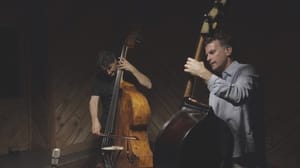
Walking the Changes - Legends of Double Bass in Jazz
Be it the musical expression of Dave Holland, the melodic phrasing of Scott LaFaro, the inventiveness of Charles Mingus or the flawless technique and artistry of Ray Brown, in jazz, as in most music, the bass is the bottom line. Walking the Changes centres around pivotal moments in the history of the double bass in jazz. Featuring exclusive interviews with the bass players who’ve pushed the boundaries of rhythm-section playing, elevating the instrument from a mere time-keeping role, to visionary composers and improvisors. With never-before-seen performance footage, studio outtakes and rare photos, this film unpacks the music of the best jazz bassists of all time.
2021
A World Without Beethoven?
"What would the world be like without Beethoven?" That’s the provocative question posed by this music documentary from Deutsche Welle. To answer it, the film explores how Ludwig van Beethoven's innovations continue to have an impact far beyond the boundaries of classical music, 250 years after his birth.
2020
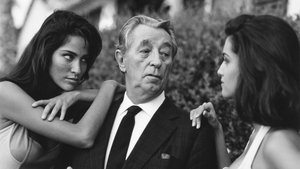
Nice Girls Don't Stay for Breakfast
In the late 1990s, iconic photographer Bruce Weber barely managed to convince legendary actor Robert Mitchum (1917-97) to let himself be filmed simply hanging out with friends, telling anecdotes from his life and recording jazz standards.
2019
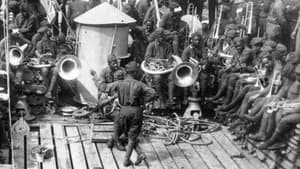
Noble Sissle's Syncopated Ragtime
Combining footage unseen since WWI with original scores from the era, this film tells the story of Noble Sissle's incredible journey that spans "The Harlem Hellfighters" of World War I, Broadway Theatre, the Civil Rights movement, and decades of Black cultural development.
2018
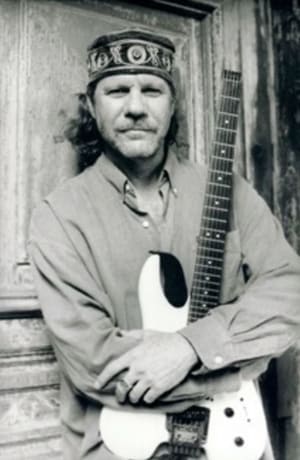
So Near... So Far
The young American Pablo Menéndez came to Cuba to study Music at the National School of Art. Here he formed a family and became one more Cuban. Member of the Sound Experimentation Group of ICAIC and promoter of the teaching of the electric guitar in Cuba, he is, together with his group Mezcla, one of our most original musicians.
2017
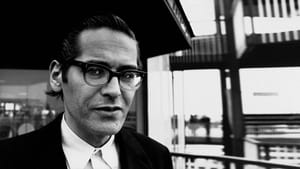
Bill Evans Time Remembered
A biographical film featuring the music and times of Bill Evans with interviews from Tony Bennett, Jack Dejohnette, Billy Taylor, Paul Motian, Jon Hendricks, Orin Keepnews, Bobby Brookmeyer, Pat Evans and more, including family and friends who knew Bill Evans well.
2015
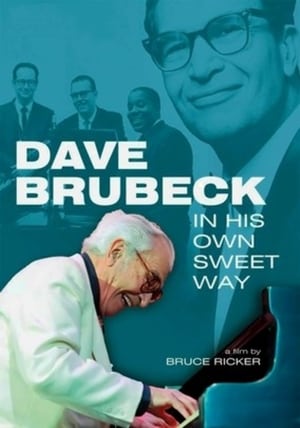
Dave Brubeck: In His Own Sweet Way
A chronological look at the life and career of jazz musician, composer, and performer Dave Brubeck (1920-2012 ), presented through contemporary interviews, archival footage of interviews and performances, and commentary by family, fellow musicians, and aficionados. Emphases include his mother's influence, his wife's invention of college tours, his skill as an accompanist, the great quartet (with Desmond, Morello, and Wright), his ability to find musical ideas everywhere, his orchestral compositions, his religious conversion, and his unflagging sweet nature.
2010

City of the Winds
Documentary about the Chicago jazz scene.
2003
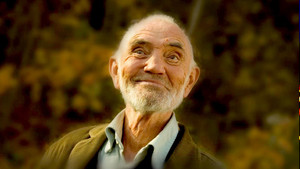
Odd Børretzen: Mer enn helt all right
A portrait of Norwegian poet Odd Børretzen in his own words, featuring musical highlights from Børretzen's work with musicians Alf Cranner and Lars Martin Myhre.
2001
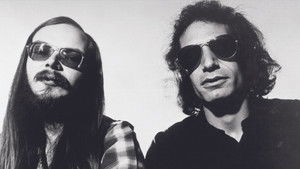
Steely Dan: Two Against Nature
Steely Dan has not had a new studio album in twenty years--"Two Against Nature" was worth the wait! This concert, recorded live in New York at the Sony Studios, contains new songs as well as classic hits from the minds of Donald Fagen and Walter Becker. Together, they deliver a unique music experience that is truly unforgettable. Songs: Green Earrings, Cousin Dupree, Bad Sneakers, Janie Runaway, Josie, FM, Gaslighting Abbie, Black Friday, Babylon Sisters, Kid Charlemagne, Jack of Speed, Peg, What a Shame About Me, Pretzel Logic.
2000

ECM: The Most Beautiful Sound Next To Silence
Record label manager and producer Manfred Eicher established the record label ECM in 1969. He has been a key promoter of European - and Norwegian - jazz.
1987

Saxophone Colossus
Tenor saxophone master Sonny Rollins has long been hailed as one of the most important artists in jazz history, and still, today, he is viewed as the greatest living jazz improviser. In 1986, filmmaker Robert Mugge produced Saxophone Colossus, a feature-length portrait of Rollins, named after one of his most celebrated albums.
1986
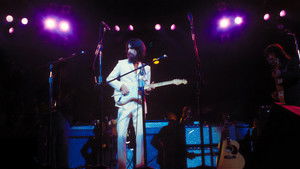
The Concert for Bangladesh
A film about the first benefit rock concert when major musicians performed to raise relief funds for the poor of Bangladesh. The Concert for Bangladesh was a pair of benefit concerts organised by former Beatles guitarist George Harrison and Indian sitar player Ravi Shankar. The shows were held at 2:30 and 8:00 pm on Sunday, 1 August 1971, at Madison Square Garden in New York City, to raise international awareness of, and fund relief for refugees from East Pakistan, following the Bangladesh Liberation War-related genocide.
1972
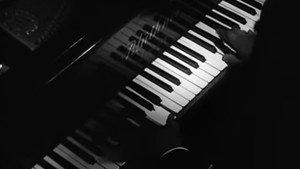
Stop for Bud
Stop for Bud is Jørgen Leth's first film and the first in his long collaboration with Ole John. […] they wanted to "blow up cinematic conventions and invent cinematic language from scratch". The jazz pianist Bud Powell moves around Copenhagen -- through King's Garden, along the quay at Kalkbrænderihavnen, across a waste dump. […] Bud is alone, accompanied only by his music. […] Image and sound are two different things -- that's Leth's and John's principle. Dexter Gordon, the narrator, tells stories about Powell's famous left hand. In an obituary for Powell, dated 3 August 1966, Leth wrote: "He quite willingly, or better still, unresistingly, mechanically, let himself be directed. The film attempts to depict his strange duality about his surroundings. His touch on the keys was like he was burning his fingers -- that's what it looked like, and that's how it sounded. But outside his playing, and often right in the middle of it, too, he was simply gone, not there."
1963