Watch Mother, May I? (2023) Online Free
More Like This

Red Delicious
After a relapse, 39-year-old Amaro moves back in with his mother — only to confront the inherited patterns that shaped him.
2027

Ümami
2025

Naître à Bethléem
2025

Mulher Não Tem Graça
2024

La decisión
2024

Mamífera
Lola (40) enjoys a happy life until an unforeseen pregnancy throws her plans into disarray. Resistant to motherhood and confronted by societal expectations, Lola and her boyfriend, Bruno, deal with the situation. As Lola confronts her inner fears about the repercussions of not embracing motherhood, she embarks on a quest for answers. Unexpectedly, Bruno reveals his desire to become a father, adding further tension and complexity to Lola's search for clarity about her future amidst pressure to conform to societal norms.
2024
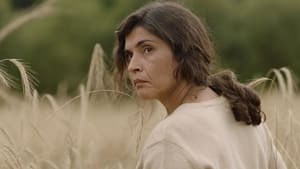
The Rye Horn
Maria is a shellfisherwoman and midwife in a small village in the Illa de Arousa in 1970s Galicia. After an unexpected event, she is forced to flee to Portugal.
2023

Maternité : le grand saut
2022
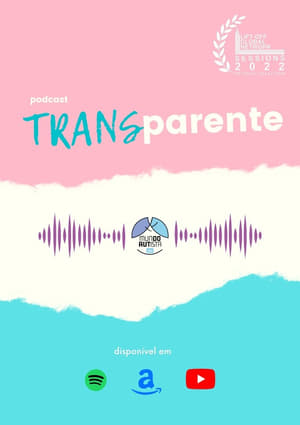
TransParente
By approaching the process of sexual reassignment, the work mixes data and experiences, focusing on family relationships and the nuances of the feminine.
2022
Mia
Alba, a young woman, lives with her boyfriend in a small apartment. One morning she receives terrible news along with the few month-old baby Mía, who is dropped off in her life. Upon her arrival, Alba experiences a series of insecurities and fears that will cause her into a mental breakdown. After her father is dead, Alba is forced to take care of the baby he left, even though the baby represents imbalance in her life.
2020
(M)Other
Being mother is the most natural thing in the world. Or so it seems. Yet the demands on women with children have rarely been as overloaded and contradictory as they are in today’s Western world. Promises of happiness are often followed by disadvantages, excessive demands and feelings of guilt. The mother has become an artificially glorified ideal, which nevertheless is often legitimized by the „nature of the woman“. We live in a time when three people could claim to be the same child’s mother: egg donors give their genes to beget children, surrogate mothers deliver babies which they give away immediately after birth, and men raise children by themselves – without a woman at their side. Hence the question arises: What makes a human being a real mother?
2019
De Peito Aberto
2018
Mater Amatisima
Given the fetishizing and normalizing character that is given to motherhood in patriarchy in order to perpetuate the social order, do we truly choose to be mothers? Why is care, of fundamental vital labor, presupposed as an especially appropriate task for women?
2017
The Midwife
Claire is a midwife and has devoted her life to others. At a moment when she is preoccupied by the imminent closure of the maternity clinic where she works, her life is further turned upside down when Béatrice, her father's former mistress, turns up on the scene. Béatrice is a capricious and selfish woman, Claire's exact opposite.
2017

Baby Blues
Natalia is a 17-year-old mom living with her mother and son, Antos. She wanted to have a baby because it was a “cool” thing to do, and because she feels she has someone to love; someone who can love her in return. Everything changes when Natalia’s mother decides to move out, giving Natalia a chance to lead a “normal life.”
2013
Miracle
This student film by the award-winning Helena Třeštíková bears many of the hallmarks of her later work. Made as a graduation piece when she was at the FAMU Film and TV Academy in Prague, we see the director developing the distinctive observational style of filmmaking that she has used so effectively throughout her career. Over the course of several months, she follows a young pregnant woman as she becomes slowly acquainted with the joys and responsibilities of motherhood.
1975
Tu leurs diras toi, comment meurent les fantômes
Odayaka
Saeko and Yukako live together in a small apartment complex in Tokyo. After the Tohoku earthquake in 2011, both live in a state of unease. Saeko, who is in a divorce, is worried that her daughter is exposed to radiation. Yukako is also afraid of radiation and tries to convince her husband to move. The two become friends after Yukako tries to save Saeko after a suicide attempt.
2012

A Happy Event
She drove me into a corner, then forced me to go beyond my limits. She made me confront the absolute: love, sacrifice, tenderness, abandonment. She dislocated me, transformed me. Why didn't anyone warn me? Why doesn't anyone ever talk about this?" Un heureux événement, or an intimate view of motherhood, sincere and with no taboos.
2011
Alma et les autres...
After giving birth to her first child at age 20, Mona Achache had the idea to make a film on childbirth. She filmed the work of midwives to produce this documentary, which became a reference in more than 500 maternity wards and private midwives' offices in France during birth preparation sessions.
2004