Watch Modern Heroes Modern Slaves Online Free
Each day, thousands of people leave countries like the Philippines to seek work abroad. They work as nannies, domestics, clerks and labourers for low wages and with few rights. What little money they earn they send home to their families. This contribution to their country’s economy has prompted the Philippine government to call these contract workers “modern day heroes.” But that’s only half the story.
More Like This
CODA
An intimate portrait of Victoria Chorale — a Singaporean, alumni community choir led by Nelson Kwei, as he prepares them for a return to the international competition stage in Tokyo for the first time in 18 years. And possibly also their last ever. CODA is an observation of the relationship between the music and its Singaporean makers.
2025

Morena
MORENA tells the uplifting story of the Philippine National Surf Athlete Ikit Agudo, who overcame the pressure to blend into a society obsessed with skin whitening. Within the ocean, she found happiness, strength, and pride in her roots. Inspiring young girls around the world to embrace who they truly are. In the Philippines, skin-whitening remains a billion-peso industry, a legacy of colonial beauty ideals that for generations have led many to neglect their true identity and natural beauty.
2025

seaward
Singapore’s coastlines are always in flux - a delicate dance between the receding tides and the rising earthmovers. 'seaward' drifts through the peripheries of this very landscape, offering a quiet meditation on the life that endures at the edges of a changing island.
2025

We Were the Scenery
In 1975, soon after the end of the Vietnam War, Hoa Thi Le and Hue Nguyen Che fled the country on a small boat. After nine days at sea, they docked in the Philippines, where they were utilized as background extras for “Apocalypse Now.”
2025
Unknownature
A wildlife enthusiast, Jean-Pierre Bosquet brings us on a journey to Singapore's Sungei Buloh Wetland Reserve to uncover some of the unknown nature in the midst of our metropolis city. Subaraj Rajathurai, a veteran wildlife consultant speaks on behalf of these animals and the threats they face.
2019

ICYMI: I See Me
A music documentary on MNL48, a franchise of the highly successful Japanese idol group, AKB48. The film looks into the girls as they perform within a music subculture that tries to get a foothold in a market of an overtly critical audience.
2019
War Baby
Meet Duewand Collier Jr.-Male, 68 years old, American Citizen, a child conceived in the backdrop of the Philippines-American Mutual Defense Treaty, born and raised with Catholic guilt. He has made peace with his past and now tells his story-a story of love.
2019
Pagrara Sang Patipuron
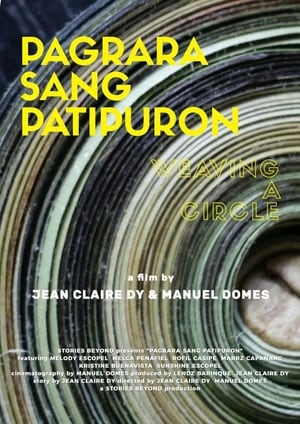
Filmed in the mountains of Barotac Viejo, Iloilo, Pagrara Sang Patipuron revolves around a group of indigenous women who work as weavers. This documentary follows their creative process and how they maintain their place in an increasingly modern world.
2017

Kupkop
Kupkop, which literally means to “adopt”, follows three abandoned children with cerebral palsy who find love and affection through their foster kin.
2017
The Recycled Spirits of Roel Cabato
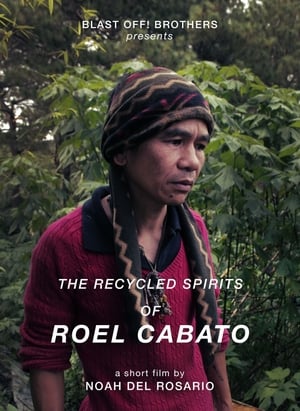
Roel Cabato, a Baguio-based Ilocano-Ifugao artist-environmentalist who creates artwork from rummaged materials and showcases them in his home and art space, Hanan’chi. Through his creations, he conveys his spiritual connection with his Ifugao background, as well as his campaign for environmentalism and recycling.
2017

The Girl and the Typhoons
French actress Marion Cotillard travelled to the Philippines to meet with children and young people on climate change and what they want big-polluting governments to do about it. One of the girls she met is Marinel, a survivor of the Super Typhoon disaster in the Philippines in 2013, who is taking action on climate change in her own community. She participates in Plan International’s climate change adaptation projects and now teaches at youth camps to pass on everything she has learnt to the younger children. Marinel travelled to Paris with Plan International for the United Nations Framework Convention on Climate Change (UNFCCC) 21st Conference of the Parties (COP21) in December 2015.
2015
Storm Children
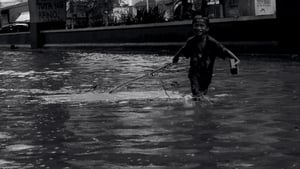
The Philippines is visited by an average of 20~28 strong typhoons and storms every year. It is the most storm-battered country in the world. Last year, Typhoon Haiyan, considered the strongest storm in history, struck the Philipines, leaving in its path apocalyptic devastation.
2014
The Women of Malolos
A musical docudrama about the brave and outstanding Women of Malolos to whom Jose Rizal addressed his famous letter in Feb 22, 1898.
2014
Bukit Orang Salah
At various points in its history, tiny St. John's Island was where Singapore's colonial founder Sir Stamford Raffles docked his ship upon arrival, a quarantine centre for immigrants and pilgrims returning from Mecca, a penal colony for political detainees and secret society leaders, and a sleepy holiday resort. Unlike its neighbouring islands, however, St. John's was never fully developed. It occupies an in-between space, the vestiges of its history scattered around the land. Its indeterminacy stands in sharp contrast to Singapore, where land use is meticulously planned to fulfil economic and social functions. In this film, St. John's Island - otherwise known as 'Bukit Orang Salah', a nickname coined by the people who were quarantined there - becomes a site of and for reflection, prompting questions about our history, heritage and identity.
2013

The Guerilla is a Poet
The tale of an activist’s journey during the turbulent years of Martial Law, until his capture in the mountains and the dark, nine years of imprisonment that followed, leading to his birth as a poet.
2013

Singapore GaGa
Singapore GaGa is a 55-minute paean to the quirkiness of the Singaporean aural landscape. It reveals Singapore's past and present with a delight and humour that makes it a necessary film for all Singaporeans. We hear buskers, street vendors, school cheerleaders sing hymns to themselves and to their communities. From these vocabularies (including Arabic, Latin, Hainanese), a sense of what it might mean to be a modern Singaporean emerges. This is Singapore's first documentary to have a cinema release. With English and Chinese subtitles.
2005
Im Luxuszug durch das Herz Asiens
2004
Hearts of Darkness: A Filmmaker's Apocalypse
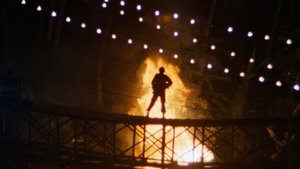
A chronicle of the production problems — including bad weather, actors' health, war near the filming locations, and more — which plagued the filming of Apocalypse Now, increasing costs and nearly destroying the life and career of Francis Ford Coppola.
1991

Die Scooterfahrer
In the north of the Philippines lies the area of Banaue, known for its rice cultivation. Roger lives here in a small village. Roger is thirteen and has five brothers and sisters. As the oldest, he is responsible for the daily firewood. To get this, Roger sets off into the mountains every other day. At seven in the morning, they start. A truck takes Roger and his four friends out into the steep, forested slopes above the rice terraces. With them on the back of the truck are the 'scooters', homemade wooden scooters with which the firewood is driven down to the valley. Once they reach the top, they cut down smaller logs, chop them up and pack their scooters full of them. After this strenuous work, the great fun begins. On bumpy paths and at breakneck speed, they make their way back to the village. Races and tricks are part of the fun, of course.
1988
Appointment in Tokyo
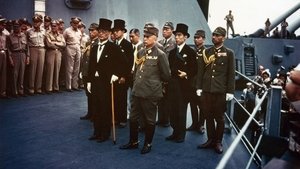
Produced by the Army Pictorial Service, Signal Corps, with the cooperation of the Army Air Forces and the United States Navy, and released by Warner Bros. for the War Activities Committee shortly after the surrender of Japan. Follow General Douglas MacArthur and his men from their exile from the Philippines in early 1942, through the signing of the instrument of surrender on the USS Missouri on September 1, 1945. Preserved by the Academy Film Archive in 2013.
1945