Watch Mitterrand et la télé (2021) Online Free
May 10th, 1981. François Mitterrand is elected President of the Republic. The “soviet tanks” supposedly coming upon the Champs-Élysées dressed in red, feared by some, did not march. Serge Moati takes a personal look at this episode, focusing on the relationship the president had with television, that he witnessed and played a role in.
Cast
Serge Moati, François Mitterrand, Charles de Gaulle, Alain Peyrefitte, Georges de Caunes, André Harris, Danielle Mitterrand, Georges Pompidou, Michel Bassi, Valéry Giscard d'Estaing, Anne-Aymone Giscard d'Estaing, Julien Besançon
More Like This

Un été à la ferme - L'âge d'or
A documentary following 12-year-old Paul and his brother Germain during a transformative summer in rural France. The film explores the loss of innocence as Paul confronts the harsh financial and physical realities of his family's farming livelihood, highlighting the father-son bond and an uncertain future.
2026
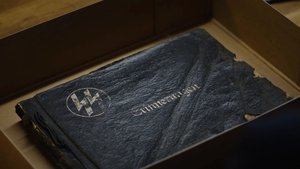
The Lost Album of the SS
In 2016, an album containing 250 previously unseen photos of Nazi officials was discovered in the USA by Stephan Hördler, a prominent Holocaust historian, who immediately understood the album's inestimable value. The album brings together photographs of a "group of friends," all from the same region of Germany, all of whom became SS men. From 1928 to 1943, the photo album allows us to follow their journey. Hördler conducted the investigation, comparing the photos in the album with other, better-known ones, the faces of these men with those of concentration camp officials, and ultimately revealed that it was at Lichtencburg that these young men were trained, a "school" for future camp executioners, and the bonds of camaraderie and informal network that would allow them to help each other, even after the war.
2025

Passeurs de vies
2024
Mes indésirables
"Before I left today, I almost forgot to answer a lot of e-mails."
2023
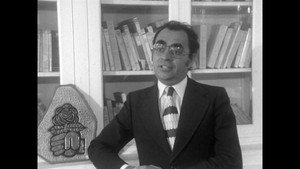
Pierre Bérégovoy, la tragédie du pouvoir
2023
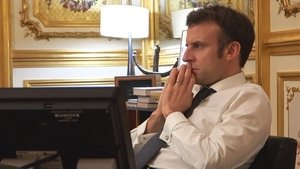
A President, Europe and War
They call each other Emmanuel and Vladimir - but despite the informal tone, a fateful negotiation is taking place. During France's presidency of the EU, President Macron takes on the task of negotiating with President Putin in an attempt to prevent an invasion of Ukraine. For the first time, we get to follow the diplomatic game behind the scenes and hear parts of their phone conversations.
2022
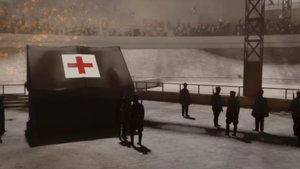
La Rafle du Vel d'Hiv, la honte et les larmes
In 1942, more than 8,000 Jews were arrested on 16 and 17 July and sent to the Vélodrome d'Hiver sports center in the 15th district, a stone's throw from the Eiffel Tower, before being deported. The expression "Vel d'Hiv round-up" has become part of our collective memory, to the point of becoming the main memorial reference point for France during the dark years. Based on research carried out in unpublished or rarely explored archives, this film retraces the history of this roundup as experienced by hunted Jews and police trackers, from its planning in the Vichy offices to its hour-by-hour unfolding in the streets of Paris.
2022
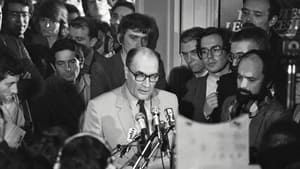
10 mai 1981 : Changer la vie ?
Fourty years ago, in May 1981, with François Mitterrand's election, some people were letting themselves dream about a better life while others were predicting the coming of soviet tanks upon the Champs-Élysées. If we gladly remember the turning point of austerity in 83, there were also the wage rises, the fifth week of paid leave, the abolition of death penalty, the decriminalisation of homosexuality, or the advent of independent radio stations. Rare archives and accounts by those who were at the heart of this story give an overview of it and shed light on lesser-known aspects.
2021
Une chance sur un million
2019
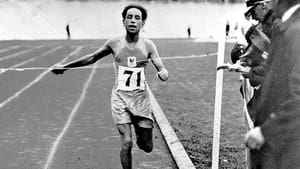
El Ouafi Boughera, The marathon runner of history
On August 5, 1928, after 2 hours and 32 minutes of racing, the 71st rooster wearing the bib entered the Olympic stadium in Amsterdam. Ahmed El Ouafi Bouguéra wins the gold medal and becomes the first Olympic champion from the African continent. He achieved his feat under the tricolor flag. The start of his real marathon is underway. The history of sport extends to the history of Algeria and France. This documentary retraces the different stages of the life of this great champion, not only the history of sport but also the great story. Archival photographs and interviews mingle with the painted paintings. The series thus once again gives voice to this forgotten hero, one of the great heroes of immigration who defended France for more than a century.
2018

Our President
In South Korea, 2002, the Democratic Party put the presidential nomination to a plebiscite for the first time. Amongst numerous candidates, the one who brought about the most unexpected result was a fringe candidate named Roh Moo-hyun.
2017

The President
Cameroonian filmmaker Jean-Pierre Bekolo's newest work uses split-screens (at times, up to four images simultaneously) to present a fake documentary in which "the president" has disappeared; talk-show hosts, rivals, politicians and even rappers chime in on what may have occurred, and what their president for life has—or has not—done for Cameroon.
2013

The Messenger: The Story of Joan of Arc
In 1429, a French teenager stood before her King with a message she claimed came from God; that she would defeat the world's greatest army and liberate her country from its political and religious turmoil. As she reclaims God's diminished kingdom, this courageous young woman has various amazing victories until her violent and untimely death.
1999
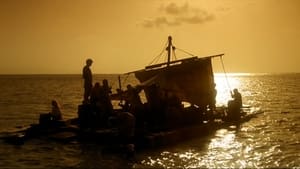
Le radeau de la Méduse
Iranian Iradj Azimi directed this French historical drama re-creating events depicted in the famous 1819 painting The Raft of the Medusa by Jean Louis Andre Theodore Gericault (1791-1824). The ill-fated voyage of the frigate Medusa begins when it departs Rochefort for Senegal in 1816. After striking a sandbar off the African coast, 150 civilians row safely to shore, but Captain Chaumareys (Jean Yanne) orders 140 soldiers and sailors onto a raft (minus supplies) and has it cut loose. Only 14 survive from the 140, creating a scandal back in France. Gericault (Laurent Terzieff) later talks to three of the survivors while researching his painting. Work on this film began in 1987, but sets destroyed by Hurricane Hugo caused delays, so the film was not completed until 1990. However, it then remained undistributed until an incident in which writer-director Azimi slashed his wrists in front of French Ministry of Culture officials.
1998
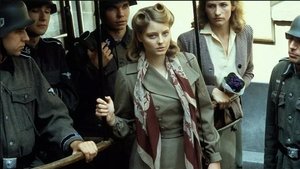
The Blood of Others
In the German-occupied Paris, Helene is torn between the love for her boyfriend Jean, working for the resistance and the German administrator Bergmann, who will do anything to gain her affection.
1984

Montgomery Clift
A documentary incorporating footage of Montgomery Clift’s most memorable films; interviews with family and friends, and rare archival material stretching back to his childhood. What develops is the story of an intense young boy who yearned for stardom, achieved notable success in such classic films as From Here to Eternity and I Confess, only to be ruined by alcohol addiction and his inability to face his own fears and homosexual desires. Montgomery Clift, as this film portrays him, may not have been a happy man but he never compromised his acting talents for Hollywood.
1983
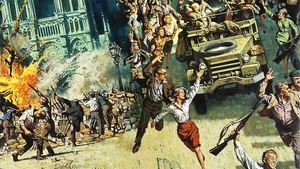
Is Paris Burning?
Near the end of World War II, General Dietrich von Choltitz receives orders to burn down Paris if it becomes clear the Allies are going to invade, or if he's unable to maintain control of the city. After much contemplation, Choltitz ignores orders, enraging the Germans and giving hope to various resistance factions that the city will be liberated. Choltitz, alongside Swedish diplomat Raoul Nordling, helps a leader organise his forces.
1966
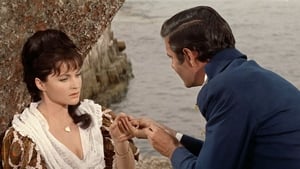
The Count of Monte Cristo
Young sailor Edmond Dantès is wrongfully imprisoned, escapes, finds treasure, and reinvents himself as the wealthy Count of Monte Cristo to exact revenge on those who betrayed him.
1961
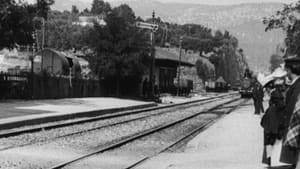
The Arrival of a Train at La Ciotat
A group of people are standing along the platform of a railway station in La Ciotat, waiting for a train. One is seen coming, at some distance, and eventually stops at the platform. Doors of the railway-cars open and attendants help passengers off and on. Popular legend has it that, when this film was shown, the first-night audience fled the café in terror, fearing being run over by the "approaching" train. This legend has since been identified as promotional embellishment, though there is evidence to suggest that people were astounded at the capabilities of the Lumières' cinématographe.
1896