Watch Mission Gombessa - Die Jagd nach dem Methusalem der Meere (2010) Online Free
More Like This
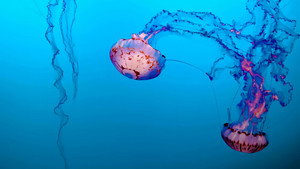
Jellyfish, The new Rulers of the Ocean
Jellyfish blooms are making headlines around the world. This is due to the damage they cause to tourism, fishing and our health. How can these creatures, which are over 98% water and have no shell, skeleton or brain, expand so rapidly? Although this is a normal stage in the life cycle of these gelatinous animals, we have to admit that blooms have become much more frequent and massive in recent decades. We're even witnessing jellyfish populations appearing in more and more regions where fish have been replaced by them, such as off the coast of Namibia, in the Black Sea, in the Sea of Japan and in certain areas of the Baltic Sea. What causes this? Why has the role of jellyfish in the ocean been underestimated, even though they outlived the dinosaurs? Are jellyfish on their way to dominating the oceans as they once did? What if they were to be the only ones left?
2026
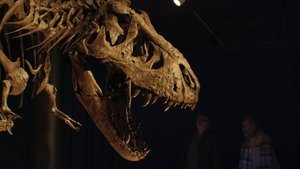
The Bones
Following the journey of fossils from their discovery in remote corners of the earth to laboratories, museums, auction houses and collectors’ living rooms, the film weaves together interlocking stories of eccentric characters caught between the demands of commerce and the basic human drive to unlock the most profound mysteries of life. THE BONES takes us deep into the Gobi, Sahara, and North American badlands, and through laboratories, museums, high-end auction houses, and grungy hotel rooms at the Tucson gem show. Wrapped in elusive questions about the origins of life on earth, and its potential future demise, THE BONES unearths the deep passions at the heart of the dinosaur world.
2024
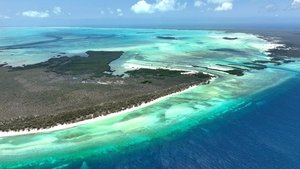
Einsame Atolle, unbekannte Tiefen
The endless expanses of the Indian Ocean are home to the last natural paradises: Remote atolls surrounded by coral reefs in crystal clear water. Whole regions of this ocean are still unexplored, many reefs are not marked on any map. The departure of the research vessel Agulhas II from the island of La Réunion marks the beginning of one of the greatest scientific adventures of our time. The expedition, initiated by Monaco Explorations with the support of the Prince Albert II of Monaco Foundation, lasted six weeks and led into the Western Indian Ocean along the Mascarene Plateau.
2023
Tukdam – Between Worlds
Most of us think of death as something clear-cut, and that medical science has it neatly figured out. This feature documentary explodes such assumptions through its exploration of a phenomenon that blurs life and death to an unprecedented degree. In what Tibetan Buddhists call tukdam, advanced meditators die in a consciously controlled manner. Though dead according to our biomedical standards, they often stay sitting upright in meditation; remarkably, their bodies remain fresh and lifelike, without signs of decay for days, sometimes weeks after clinical death. Following ground-breaking scientific research into tukdam and taking us into intimate death stories of Tibetan meditators, the film juxtaposes scientific and Tibetan perspectives as it tries to unravel the mystery of tukdam.
2022
A Trip to Infinity
Does infinity exist? Can we experience the Infinite? In an animated film (created by artists from 10 countries) the world's most cutting-edge scientists and mathematicians go in search of the infinite and its mind-bending implications for the universe. Eminent mathematicians, particle physicists and cosmologists dive into infinity and its mind-bending implications for the universe.
2022

Drummies
In a meditation on the meaning behind sports in a Post-Apartheid South Africa, three young girls muse on their hopes and dreams as aspiring Drum Majorettes.
2022
Jaws vs. Kraken
Something shocking is happening in the abyss around Guadalupe Island. Photos of great whites with strange scars believed to be from giant squids have surfaced. Dr. Tristan Guttridge leads a mission to get a glimpse into the battles between the two beasts.
2022
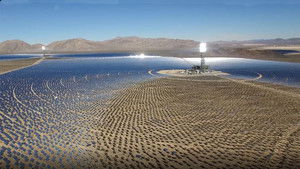
Bright Green Lies
Bright Green Lies investigates the change in focus of the mainstream environmental movement, from its original concern with protecting nature, to its current obsession with powering an unsustainable way of life. The film exposes the lies behind the notion that solar, wind, hydro, biomass, or green consumerism will save the planet. Tackling the most pressing issues of our time will require us to look beyond the mainstream technological solutions and ask deeper questions about what needs to change.
2021
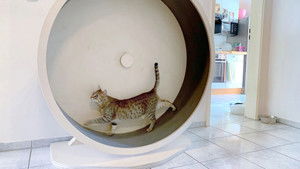
Das geheime Wesen der Katzen
Cats are the most popular pet in Europe. Around 14 million house pets live in German households alone. But hardly anything is known about the nature of cats - their emotional life has been little studied by science. Until now! Scientists all over the world have begun to explore the secret nature of cats.
2021
Life in the Blue
This films reveals the extraordinary variety of life found in the vast blue expanses of the open ocean. Here, all the action takes place in a 10 metre deep band of water, just under the surface. Many species use this section of water to migrate and hunt while others use ingenious ways to stay hidden where there appears to be no shelter.
2016
Swimming with Legends
A biographical documentary about the Belgian free-diver Fred Buyle and his art of silent diving.
2014
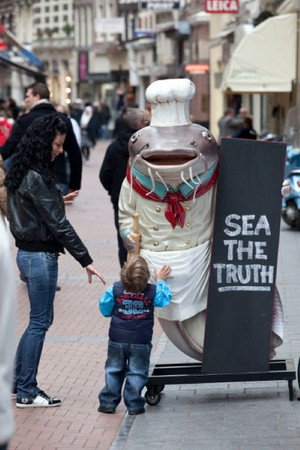
Sea the Truth
This is the planet we still know so little. We call it Earth but less than 1/3 is land, over 2/3 is water and we use that water as a dumping site for our waste and as if it's an inexhaustible "horn of plenty" for humans. Our most important ecosystem is on the verge of collapse unless we act now. At this very moment the main problem with the oceans is that they're getting emptier and emptier. If we don't do anything then we face one of the biggest disasters in history of mankind.
2010
Grand Canyon Adventure: River at Risk
A documentary about a 15-day river-rafting trip on the Colorado River aimed at highlighting water conservation issues.
2008
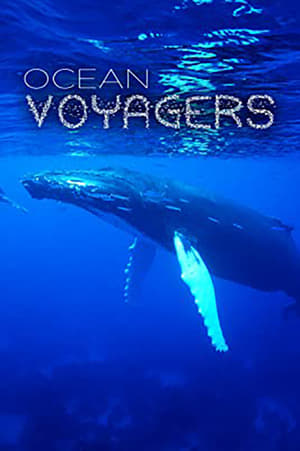
Ocean Voyagers
Ocean Voyagers explores the familiar themes of motherhood and parenting in a world as unfamiliar as it is breathtaking. Featuring a precocious newborn humpback calf and his enormous 40 ton mother, we are taken on a journey of discovery into their world.
2007

Ithuteng (Never Stop Learning)
Tells the stories of four students who are turning their lives around at the Ithuteng Trust School.
2005

2 or 3 Things I Know About Him
What would your family reminiscences about dad sound like if he had been an early supporter of Hitler’s, a leader of the notorious SA and the Third Reich’s minister in charge of Slovakia, including its Final Solution? Executed as a war criminal in 1947, Hanns Ludin left behind a grieving widow and six young children, the youngest of whom became a filmmaker. It's a fascinating, maddening, sometimes even humorous look at what the director calls "a typical German story." (Film Forum)
2005
Dive to Bermuda Triangle
There is a mystery there and the answer lies somewhere between Bermuda, Puerto Rico and Miami. Hundreds of boats and planes have disappeared in the ocean with little or no trace at all. Most of these cases can be explained quite easily by human error or bad weather. But there are some that defy all explanation. Theories abound on these causes: Aliens, massive gas eruptions and freak waves. The documentary reveals that the boats and planes face a real danger in a triangle, but the true threat is often as strange as the wildest theory.
2004
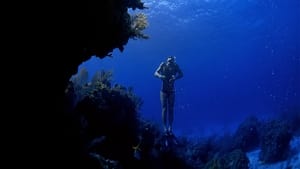
Ocean Men, Extreme Dive
For more than 10 years, world champion freedivers Pipin Ferreras and Umberto Pelizzari have been vying for world records. Their love of the sea without compromise is what unites these two rivals. However, it is their different personalities and opposing diving philosophies that separate them. Pipin is the "No Limits" man who wants to go deeper and deeper. Umberto, the purist, seeks harmony in the ocean's depth. Ocean Men takes you into the world of these two awe-inspiring freedivers through the use of breathtaking underwater photography, enchanting music, and insightful animation.
2002
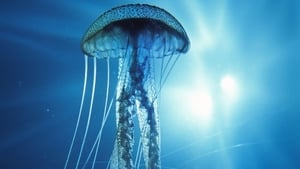
Into the Deep
An underwater exploration beneath kelp forests in the Pacific Ocean off the coast of Southern California. The film captures the birth of a shark, squids mating, a lobster molting, a fish protecting its nest from an octopus and a sea urchin, and the sea bed covered with brittle stars.
1994
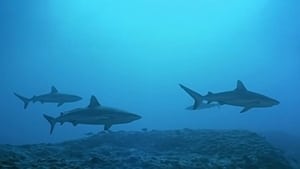
Atlantis
Atlantis is filmmaker Luc Besson's celebration of the beauty and wonder of the world beneath the sea, expanding upon themes touched on in his film The Big Blue. Combining stunning underwater cinematography and a hypnotic score by Eric Serra, Besson's singular vision defies dialogue or narrative structure to explore ocean life as you've never seen it before. Following the colossal success of The Big Blue, Luc Besson crisscrossed the world's seas and oceans to film the beauty and diversity of marine life: from the giant octopuses of Vancouver to the manta rays of the Pacific (New Caledonia), and the grey sharks of Tahiti. A film with no actors or sets other than the underwater world. A breathtaking view of marine species: sharks, dolphins, manatees, octopuses. An exploration of the seabed in the Bahamas, the Galapagos, Vancouver, and Tahiti.
1991