Watch Minutes (1964) Online Free
Loading Cinehub...
Another early Aleksandar Petrovic documentary, done for Dunav film in 1964. It is made as a kind of a road movie through socialist Yugoslavia, registering numerous bizarre sites and events, with strong irony both in the selection of scenes and in the background commentaries. Originally filmed in 16mm.
More Like This
The cats, the sea, and everything in between.
In 2022, when the economic crisis in her native country was at its peak, she decided to visit her family there. She turned her short trip into a collage-like diary in which she reflects on her relationship with her homeland, which is in a state of protracted decay. The film is composed of spontaneous snapshots capturing the author's stay, interspersed with inserted captions serving as personal, often poetically formulated comments and observations. As a result, the film does not hide its strongly subjective perspective, but at the same time builds on it to make an important statement that shows the transformation of Lebanese society in everyday details such as the appearance of the city itself or in the intimate sphere of the author's family life.
2025

Don't You Feel Lovely Today
Why wouldn't you? Is there any reason not to? We've got so much at our disposal, so, why don't you? Won't you tell me? Won't you please tell me? To have you down is simply unacceptable. Just look at this; or this; at all these hallmarks to guide you and convey to you the prime ways to feel lovely. Just follow them and you'll be set. So, I ask you again... Don't you feel lovely today?
2024
Secos
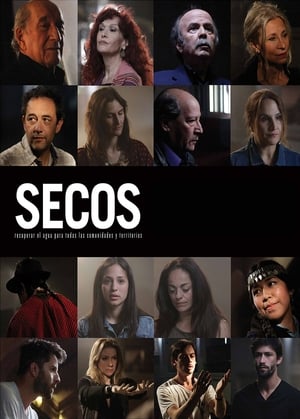
Chile is the only country that has privatized its waters, in favor of large corporations, to the detriment of homes in rural and urban communities. Secos is a short that makes this reality visible, through the dialog between anonymous fighters from the most heavily affected provinces, with renowned actors and actresses in the country. The objective is to activate the topic of water as a human right, to achieve in the future the recovery of this vital element as a common good for all communities and territories.
2017
Rubble Kings
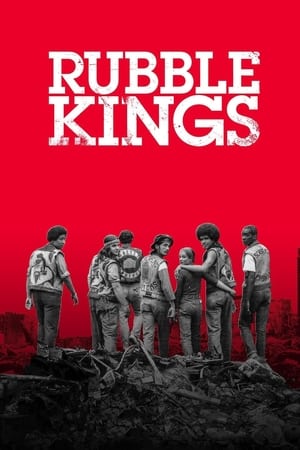
Through archival footage Nicholson tells the story of the real Warriors that walked the streets of New York City in the 1970s and the harsh reality of gang life in a city that seemed to be falling apart.
2015
Requiem for the American Dream
Through interviews filmed over four years, Noam Chomsky unpacks the principles that have brought us to the crossroads of historically unprecedented inequality – tracing a half-century of policies designed to favor the most wealthy at the expense of the majority – while also looking back on his own life of activism and political participation. He provides penetrating insight into what may well be the lasting legacy of our time – the death of the middle class, and swan song of functioning democracy.
2015
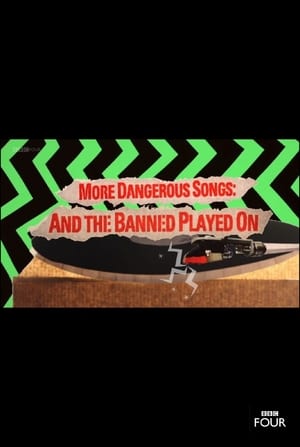
More Dangerous Songs: And the Banned Played On
More Dangerous Songs: And the Banned Played On features previously banned songs by the BBC including "Lola" by the Kinks, "Jackie" by Scott Walker and "(We Don't Need this) Fascist Groove Thang" by Heaven 17.
2014
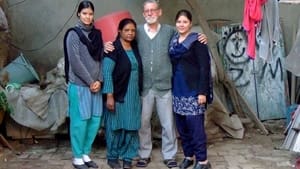
Displaced Perssons
Per Persson left Sweden 40 years ago. In Pakistan he fell in love and became the father of two daughters. Trouble starts when the girls grow up and the family decides to emigrate to Sweden. When they end up living in a caravan outside Hässleholm, all their expectations are dashed.
2013
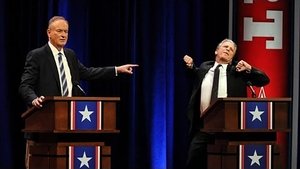
The Rumble in the Air-Conditioned Auditorium: O'Reilly vs. Stewart 2012
Bill O'Reilly, Jon Stewart, 2 podiums, 1 air-conditioned auditorium... In "O'Reilly vs. Stewart 2012: The Rumble in the Air-Conditioned Auditorium," O'Reilly & Stewart take an entertaining and comedic approach to today's pressing political issues, in an attempt to find the best direction for America. The debate, which was streamed live online, was recorded on Saturday, October 6th, 2012, at the Lisner Auditorium at The George Washington University, in Washington, D.C. The proceeds from the sale of the debate go to multiple charities picked by both O'Reilly & Stewart, including the Fisher House Foundation, Doctors Without Borders, and the USO.
2012
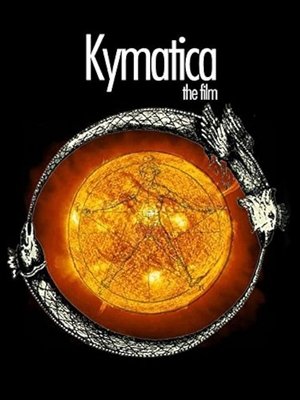
Kymatica
Ben Stewart, the bright young musician and philosopher who brought us the sleeper hit "Esoteric Agenda", unveils his new work, Kymatica!. Kymatica will venture into the realm of Cymatics and Shamanic practices. It will offer insight into the human psyche and discuss matters of spirituality, altered states of consciousness and much more! Not to be missed!
2009
Information Violence
2002
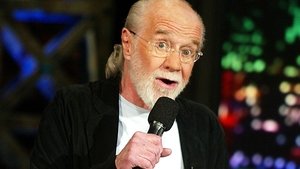
George Carlin: Doin' It Again
George Carlin brings his comedy back to New Jersey and this time talks about Offensive Language, Euphemisms, They're Only Words, Dogs, Things you never hear, see or wanna hear, Some people are stupid, Cancer, Feminists, Good Ideas, Rape, Life's moments, and organ donors.
1990
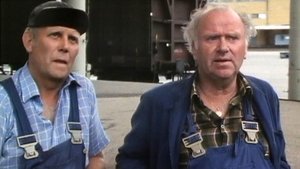
The Inner Harbor
A documentary about the dockworkers in Gothenburg, and the future of the shipping industry in the city.
1990

The Decline of Western Civilization Part II: The Metal Years
An exploration of the heavy metal scene in Los Angeles, with particular emphasis on glam metal. It features concert footage and interviews of legendary heavy metal and hard rock bands and artists such as Aerosmith, Alice Cooper, Kiss, Megadeth, Motörhead, Ozzy Osbourne and W.A.S.P..
1988
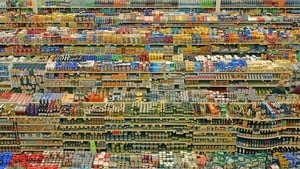
Koyaanisqatsi
Takes us to locations all around the US and shows us the heavy toll that modern technology is having on humans and the earth. The visual tone poem contains neither dialogue nor a vocalized narration: its tone is set by the juxtaposition of images and the exceptional music by Philip Glass.
1983
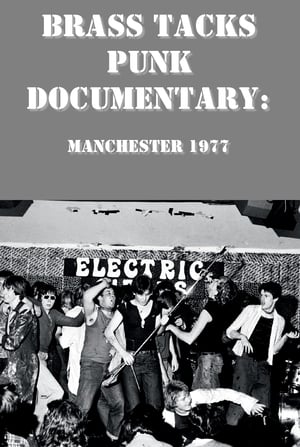
Brass Tacks: Punk Rock
Brass Tacks was a current affairs programme shown on BBC2 between 1977 and 1988. On this episode called Punk Rock, broadcast on 3rd August 1977, it focuses on the Manchester Punk scene, bands and its iconic club, The Electric Circus.
1977
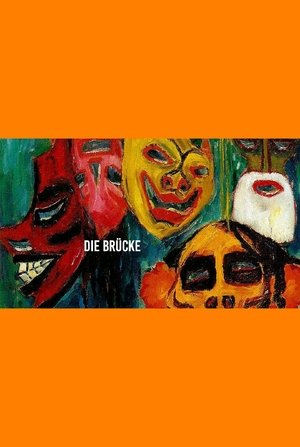
Die Brücke: The Birth of Modern Art in Germany
This movement marks the beginning of modern art in Germany. It is the German equivalent of French Fauvism, from which it draws its main inspiration, but it carries an Expressionist and social emphasis that is characteristic of Nordic 'angst.' The artists of Die Brucke were restless creatures, over-sensitive, haunted by religious, sexual, political or moral obsessions. Dramatic landscapes and nudes, mystical and visionary compositions, scenes of the countryside, the streets, the circus, the cafe-dansants and the demi-monde were their principal subjects. Their pure colours blaze in acid stridency, encompassed by rough, dry contours which show the influence of African art and primitive woodcuts. The work of the following is shown: Kirchner, Fritz Bleyl, Erich Heckel, Schmidt-Rottluff, Otto Muller, Emil Nolde and Max Pechstein.
1972
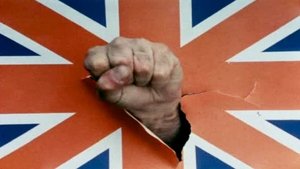
British Sounds
Jean-Luc Godard brings his firebrand political cinema to the UK, exploring the revolutionary signals in late '60s British society. Constructed as a montage of various disconnected political acts (in line with Godard's then appropriation of Soviet director Dziga Vertov's agitprop techniques), it combines a diverse range of footage, from students discussing The Beatles to the production line at the MG factory in Oxfordshire, burnished with onscreen political sloganeering.
1970

BETWEEN
Initially embarking on an unplanned personal filmmaking project, Ilias Boukhemoucha finds himself drawn to the overlooked corners and marginalized communities within Canadian cities.

Under the Protection of the State
The film was shot in an old, decrepit building where dozens of guest-workers' families live. The owner, a local influential politician, has avoided paying for the maintenance of the building under the legal standards by using his connections to proclaim the building a national cultural heritage. However, the rent he has been charging was as if the building were an object that offered standard comfort. The only German tenant takes the crew around and speaks of his battle against the landlord’s manipulation.
1975
The City
A prescient documentary about city planning, which presents idyllic suburbs and nuclear families as a solution to the chaos, poverty and social decay of industrialized inner cities.
1939