Watch Men Are All Brothers (1960) Online Free
Loading Cinehub...
More Like This
Conversation avec Andreas Dresen
For more than thirty years, Andreas Dresen has been exploring the question of what makes someone German. Without resorting to patriotism, Dresen's cinema addresses the soul of his country through space, but also through time. The era of East Germany, a divided then reunified country, has an impact on characters who live their intimate, friendly, and romantic lives fiercely...
2025

September 1923
Based on the murder of nine street peddlers in the aftermath of the Great Kanto earthquake.
2023
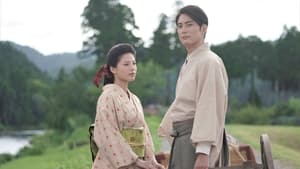
The Broken Commandment
At the strong insistence of his father, Ushimatsu Segawa conceals his origins from a “buraku” area of low-class “untouchables,” leaving his hometown to serve as an elementary school teacher where he excels and is loved by his students. But he constantly struggles with the secret of his low-birth status and is disturbed by all of the discrimination levelled upon his class. It prevents him from pursuing a romance with Shiho, whom he meets at the temple where he resides, but who descends from a samurai family.
2022
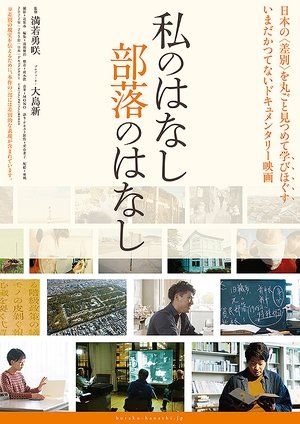
Watashi no hanashi buraku no hanashi
"Buraku" or "Buraku-min" are the terms used for ethnic Japanese people who are believed to descend from the pre-Meiji castes. Today, neither "Buraku" nor "Burakumin" exist anymore in terms of laws and social systems. However, many Japanese people still have a deep-rooted sense of discrimination towards people who descend from those families. Why does something that should not exist continue to exist? How did this discrimination begin in the first place? This film takes a variety of approaches to unravel the history of accumulated discrimination and its intricately intertwined context, from its origins and evolution, vividly depicting the structure of discrimination that often remains hidden from the public eye.
2022
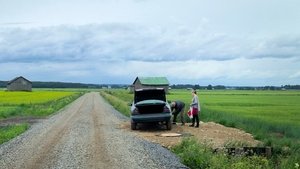
A People’s Radio – Ballads from a Wooded Country
A People’s Radio – Ballads from a Wooded Country is a carnivalesque portrayal of the Finnish landscape of the soul and abode. The short film is based on the iconic YLE programme “People’s Radio”, and its visual material has been created by the road movie method of driving across summery Finland. The film paints a panorama of what Finland looks like today. Its narration progresses through humour into civic anarchy, ultimately also towards the longing for human connection.
2021
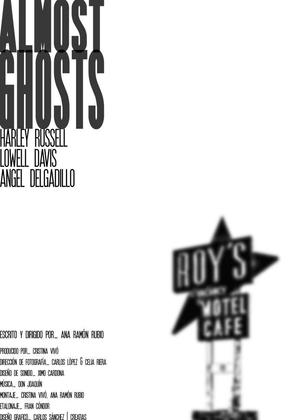
Almost Ghosts
Harley Russell, 73, lives only on the tips he receives at his wacky store at Erick (Oklahoma) with his Mediocre Music Maker show. Ángel Delgadillo, 91, the last barber of Seligman (Arizona), continues shaving drivers who go out of the interstate highway to visit his town. Lowell Davis, more than 80, is the first inhabitant of Red Oak II (Missouri), a ghost town which he rebuilt through the restoration of its old houses. Three stories of perseverance and overcoming in what was once the road that connected the United States from East to West. Three survivors that managed to save the most well-known route in America.
2019

The Vanquishing of the Witch Baba Yaga
A descent into Eastern Europe's haunted woodlands uncovers the secrets, fairy tales, and bloody histories that shape our understanding of man's place in nature.
2014

Coach Zoran and His African Tigers
Documentary following Serbian football coach Zoran Đorđević as he helps form South Sudan's first national football team.
2014
As the Palaces Burn
As the Palaces Burn is a feature-length documentary that originally sought to follow Lamb of God and their fans throughout the world, to demonstrate how music ties us together when we can’t find any other common bond. However, during the filming process in 2012, the story abruptly took a dramatic turn when lead singer Randy Blythe was arrested on charges of manslaughter and blamed for the death of one of their young fans in the Czech Republic. What followed was a heart-wrenching courtroom drama that left fans, friends, and curious onlookers around the world on the edge of their seats.
2014
Itinerary of Jean Bricard
The film is a commemoration of the lost livelihood of the earth, the lost lives of the War and to the work of two of the cinema’s greatest artists.
2008
The Making of 'The Queen'
Documentary on the making of the 2006 film 'The Queen'.
2007
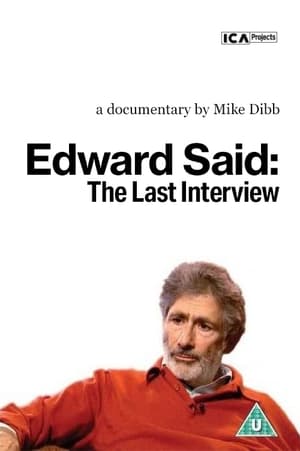
Edward Said: The Last Interview
Edward Said, Professor of English & Comparative Literature at Columbia University, was a prominent literary critic of the late 20th century and a leading spokesperson for the Palestinian cause in the US. Born to a Palestinian family in Al-Quds (Jerusalem) in 1935, he and his family were dispossessed in 1948 and settled in Cairo. Educated in the US, he lived in New York for many years. Said was a member of the Palestine National Council. After resigning from the PNC in 1991, Said wrote critically about the post-Oslo peace process, the political failures of Yasser Arafat and the PLO. Said was diagnosed with leukemia in 1991 and struggled with the disease while continuing to write and teach. He stopped giving interviews but made an exception less than a year before his death in 2003, speaking about his illness, work, Palestine, politics, life, and education. The last interview is the final testament of this passionately committed intellectual.
2004
Chaplin Today: The Kid
This documentary is featured on the two-disc Chaplin Collection DVD for "The Kid" (1921), released in 2004.
2003
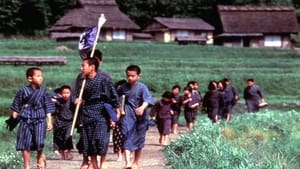
The River with No Bridge
A widow and her two sons, Seitaro and Koji, live in the small town of Komori, where Buraku people are forced to reside. The two boys are continuously harassed by their teachers and classmates through their childhood as a result of their Buraku heritage. In the midst of the 1918 Great Rice Riots in Osaka, Seitaro meets with Asako, the daughter of a rice shop owner, and falls in love with her. She too is of Buraku descent. At the same period, Hideaki, an old friend of the brothers returns to Komori, and he along with Koji and the townspeople create "Zenkoku Suiheisha", the National Levelers Association, an organization pledged to build a bridge over the river of discrimination, making all people equal in every way.
1992
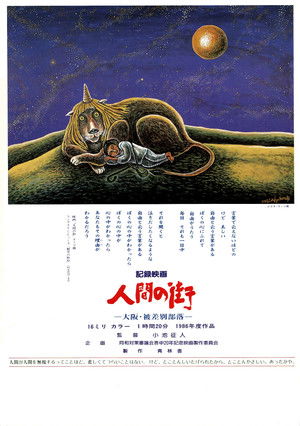
Ningen no machi
Interviews with Burakumin in Osaka, victims of discrimination
1986
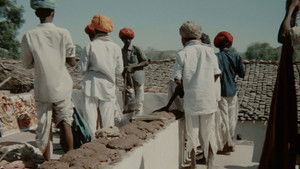
Mati Manas
In a poetic hour and a half, director Mani Kaul looks at the ancient art of making pottery from a wide variety of perspectives.
1985
Animated Motion: Part 1
The first part of this series by Norman McLaren deals only with tempo. It starts by showing the disc travelling in one move (1/24 of a second) from A to B, and progressively demonstrates slower and slower tempos.
1976
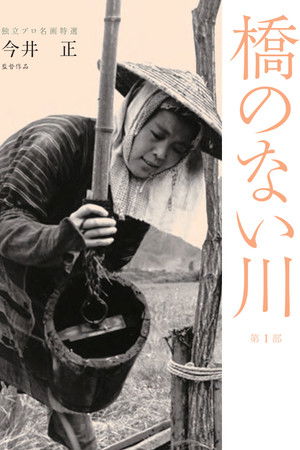
River Without a Bridge
Brothers Koji and Seitaro Hatana, belong to the "outcast" caste. Despite their personal qualities—intelligence and fairness—they encounter numerous obstacles due to their caste affiliation. Together with other "outcasts," the brothers take up the fight for their human rights.
1969
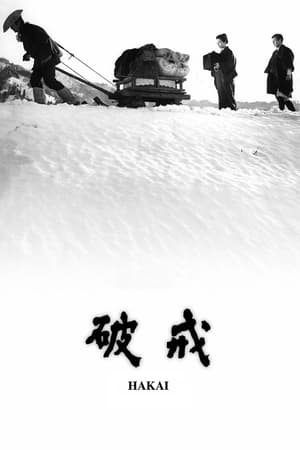
The Broken Commandment
Ushimatsu's father told him never to reveal his lower-caste heritage; years later, he now contemplates confiding in an activist fighting against such discrimination.
1962
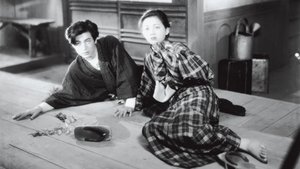
Apostasy
In the Meiji period, a schoolteacher tries to hide his lower-class upbringing as he supports a visiting liberal intellectual.
1948