Watch Memory for Max, Claire, Ida and Company (2005) Online Free
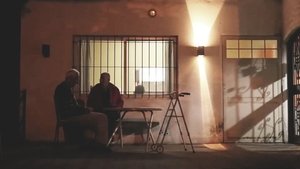
At Baycrest, an old-age home in Toronto, we follow a social worker as she talks to residents, particularly Max, Claire, Ida, and Rachel. The film opens on Claire's birthday, she's 89; Max, a tiny cheerful man, is her close friend. Rachel is lonesome, missing her son, complaining he rarely visits. Ida relies on memory for her solace. Helen has no memory and doesn't recognize her daughter; her moods swing. Murray keeps his cap on and likes women. Staff members bring medication, provide care, and offer small talk. Memory is fleeting: Claire re-experiences the death of a close companion several times, each time without remembering her previous grieving. Lives are circumscribed
More Like This

Madame Favre's
In a nursing home, a young man visits his grandmother. As she constantly repeats that she wants to go home, his grandson visits her now empty apartment, seeking to capture memories of a fading past.
2026

The Cherry Picker: A Portrait of Frank Piliero
Francis "Frank" Piliero, at the age of 78, explores his lifelong relationship with hockey and what healthy aging means to him.
2025
The Last Chapter
A documentary film that follows the lives of first-generation retired immigrants living in Finland.
2025
Het Muziekmedicijn
The threat of dementia is affecting more and more people. As they slowly lose their memories and physical abilities, music proves to be a miraculous source of comfort, vitality, and hope. How is it, for example, that people with dementia often remember music longer than their own names?
2025

Als ich für acht Stunden verschwand
During a canoe trip, neurologist Magnus Heier suffers from sudden amnesia: for eight hours, he records nothing. Everything he does is immediately forgotten. This episode becomes the starting point for an exploration of his own memory. How can his functioning explain the incident he suffered? And what happened to the doctor during those lost hours? To understand the amnesia that has affected him, Magnus Heier embarks on an investigation among his peers. His journey takes him to Finland, Germany and Italy, where he visits researchers working on the astonishing brain faculty of memory.
2024
The Eternal Memory
Augusto and Paulina have been together for 25 years. Eight years ago, he was diagnosed with Alzheimer's disease. Both fear the day he no longer recognizes her.
2023
(Im)mortals
What happens after death? Lila Ribi's 100-year-old grandmother Greti always has the same answer: There is nothing after death. The filmmaker sees things differently.
2022

Mary Bauermeister - Eins plus eins ist drei
Mary Bauermeister is considered the mother of the Fluxus movement. In an attic on Cologne's Lintgasse, she made art history in the early 1960s alongside personalities such as Karlheinz Stockhausen and Nam June Paik. Today, at the age of 85, she has no intention of stopping. From morning till night, this extraordinary artist works in her studio near Cologne: a magical place.
2021
Spaces
Aged around 20, Simon has a brain tumour that is gradually destroying his memory and has condemned him to live in the immediate present. From this painful experience, his sister, Nora Štrbová, a filmmaker, has made an organic short animated documentary, which succeeds with a rare formal relevance to represent the inexorable loss of the being.
2020
Manlife
For over 80 years, Merle Hayden has crusaded to recruit members to the utopian movement Lawsonomy. Founded by aircraft pioneer Alfred Lawson, Lawsonomy advocates for economic reform and clean, communal living that transforms followers into a "New Species" that will benefit the human race either in this life or the next. Merle joined Lawson as a teenager and never looked back. His high school sweetheart Betty Kasch, however, is tired of Lawson coming between them. Reunited after over 60 years apart, non-believer Betty wants Merle to join her in Florida. Merle's commitment to preserving Lawson's legacy, artifacts currently rotting in a barn alongside a Wisconsin highway, has Betty worried Merle may leave her for Lawson once again.
2017
Terry Pratchett: Back in Black
A poignant and humorous film telling the life story of the hugely popular author of the discworld series of books, in his own words.
2017
Who Wants to Live Forever? The Wisdom of Aging.
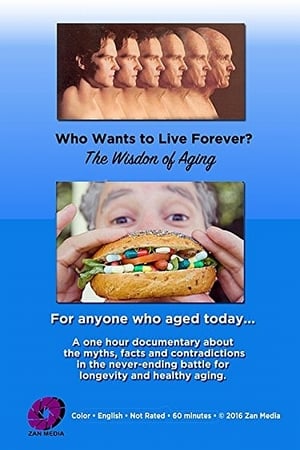
Who Wants to Live Forever, the Wisdom of Aging is a one hour documentary film about the myths, facts and contradictions in the never-ending battle for both longevity and healthy aging.
2016
Tricky Memory
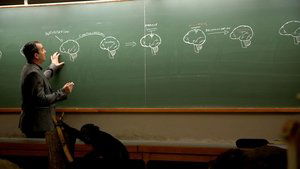
The lastest neuroscience discoveries show surprising results: false memories, distortion, modification, déjà vus. Our memory is affected in many ways, and deceives us every day. The very fact of recalling souvenirs modifies them. The everyday consequences are manyfold. To what extent can we rely on our souvenirs? How much credit can we give them during trials? Even more shocking, scientists have proved to be able to manipulate our memory: creating artificial souvenirs, deleting, emphasizing or restoring them on demand.
2016

Tracing Roots
A new documentary that follows master Haida weaver Delores Churchill on a journey to replicate a spruce root hat discovered with the Long Ago Person Found. The 300-year-old traveler was discovered in British Columbia and DNA testing discovered living descendants in Canada and Alaska. Her search crosses cultures and borders, and involves artists, scholars and scientists. The project raises questions about understanding and interpreting ownership, knowledge and connection.
2014

Tender
A big hearted community celebrates life by fronting up to death. Set against the stunning backdrop of the industrial seaside town of Port Kembla, a feisty and resilient community group have determined to take back the responsibility that most of us leave to someone else — to care for their own dead. Scattered throughout are stories that cut to the core revealing why this small band have decided to take on a practice that for most is taboo. As their plans for community-based funerals gather momentum one of their own is diagnosed with a life-threatening illness. Tender is at once a heartbreakingly beautiful and beautifully funny glimpse of an extraordinary community taking on one of the most essential challenges of human life … its end.
2014
Hunting Down Memory
The true story of Øyvind Aamot, who suddenly lost 27 years of his memory.
2009
Methadonia
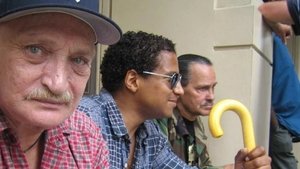
Shot over the course of 18 months in New York City's Lower East Side, METHADONIA sheds light on the inherent flaws of legal methadone treatments for heroin addiction by profiling eight addicts, in various stages of recovery and relapse, who attend the New York Center for Addiction Treatment Services (NYCATS).
2005
Dying at Grace
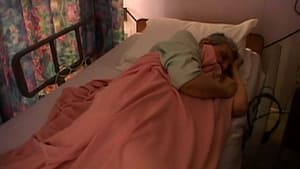
This film is about the experience of dying. Five terminal patients in a Palliative Care Unit share the last days of their lives and deaths with a film crew.
2003
Silent Pioneers
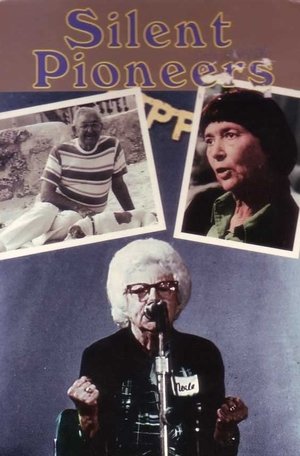
Contrary to the public stereotype of a youthful homosexual community, gay men and women do grow old. Silent Pioneers presents an upbeat focus on the lives of these people today, showing them living full and diverse lives and sharing concerns on ageing, health and housing, with other senior citizens. It also considers how support networks within the gay and lesbian community have enriched and strengthened their individual lives.
1985