Watch Medea (1973) Online Free
Ben Caldwell’s Medea, a collage piece made on an animation stand and edited entirely in the camera, combines live action and rapidly edited still images of Africans and African Americans which function like flashes of history that the unborn child will inherit. Caldwell invokes Amiri Baraka’s poem “Part of the Doctrine” in this experimental meditation on art history, Black imagery, identity and heritage.
More Like This

Tarik Shah: Don't Play Like Them
Tarik Shah, supremely talented Muslim American jazz bassist, endured 15 years of unjust imprisonment. Shah toured with jazz legend Betty Carter and was invited to play at President Bill Clinton's inauguration, only to be unfairly targeted by the FBI after 9/11. This is the inspirational true story of his music, resilience, and unconquerable spirit
2025
Daughters
Four young girls prepare for a special Daddy Daughter Dance with their incarcerated fathers, as part of a unique fatherhood program in a Washington, D.C., jail.
2024
Who We Are: A Chronicle of Racism in America
Jeffery Robinson's talk on the history of U.S. anti-Black racism, with archival footage and interviews.
2022
Hidden Colors 5: The Art of Black Warfare
The history of warfare as it relates to global Black society, broken down into 7 chapters that examines the ways the system of racism wages warfare from a historical, psychological, sexual, biological, health, educational, and military perspective.
2019
Aos de ontem, aos de sempre
Short film about racism.
2018
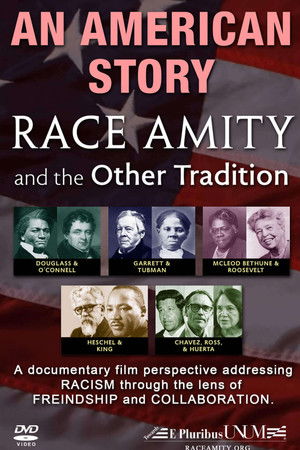
An American Story: Race Amity and The Other Tradition
In contrast to the lens that focuses exclusively on the racist traditions that are rooted in America’s social history, the moral counterweight of close, loving, friendship and collaboration, which have always been present in our history, represents “the other tradition.” This “other tradition” is a source of inspiration and presents models of behavior that are instructional and include unknown and uncelebrated legacies to be absorbed and emulated across generations of present day Americans. The documentary discusses the “better in us” a needed collective perspective in the current climate of national disunity across racial, religious, and political lines. This has significant implications for addressing public issues from immigration to health care and the myriad of governmental, educational, business, and religious challenges that we must successfully meet to weave the fabric of unity which is indispensable to survival as a nation.
2018
Little White Lie
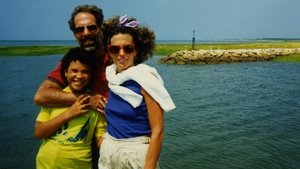
Lacey Schwartz grew up in a typical upper-middle-class Jewish household in Woodstock, NY, with loving parents and a strong sense of her Jewish identity - despite the open questions from those around her about how a white girl could have such dark skin. She believes her family's explanation that her looks were inherited from her dark-skinned Sicilian grandfather. But when her parents abruptly split, her gut starts to tell her something different. At age of 18, she finally confronts her mother and learns the truth: her biological father was not the man who raised her, but a black man named Rodney with whom her mother had had an affair.
2014

Mr. Dynamite: The Rise of James Brown
James Brown changed the face of American music forever. Abandoned by his parents at an early age, James Brown was a self-made man who became one of the most influential artists of the 20th century, not just through his music, but also as a social activist. Charting his journey from rhythm and blues to funk, MR. DYNAMITE: THE RISE OF JAMES BROWN features rare and previously unseen footage, photographs and interviews, chronicling the musical ascension of “the hardest working man in show business,” from his first hit, “Please, Please, Please,” in 1956, to his iconic performances at the Apollo Theater, the T.A.M.I. Show, the Paris Olympia and more.
2014
Coach Carter
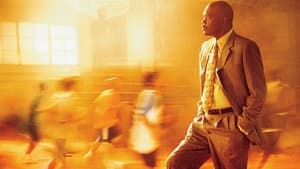
Based on a true story, in which Richmond High School head basketball coach Ken Carter made headlines in 1999 for benching his undefeated team due to poor academic results.
2005
Cry Freetown
An account of the victims of the Sierra Leone Civil War and depicts the most brutal period with the Revolutionary United Front (RUF) rebels capturing the capital city on January 1999.
2000

The Shooting on Mole Street
On March 1, 1996, 15-year-old Shafeeq Murrel was killed on the street in South Philadelphia — innocently caught in the crossfire between rival pairs of crack dealers out for revenge. Shafeeq’s murder was one of 435 in Philadelphia that year, and it was soon shelved as a cold case. Then, detectives David Baker and Julie Hill took it on— two middle-aged white cops working a Black neighborhood in their battered Plymouth Gran Fury. Filmed like a taut police procedural, THE SHOOTING ON MOLE STREET chronicles the investigation, as Baker and Hill knock on doors, shake down dealers, and beg, threaten and cajole residents in an effort to get someone — anyone — to talk. Baker rejects any accusation of police racism in the unsolved murders of young Black men. Isn’t he out here trying to close the case? But racism is more complicated than intent.
1998
The Color of Fear 2: Walking Each Other Home
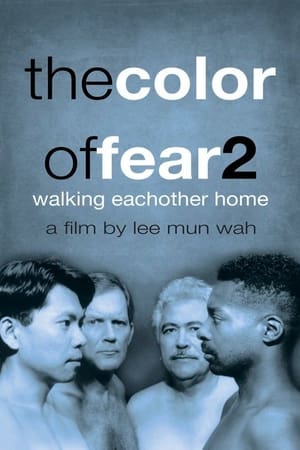
In THE COLOR OF FEAR, eight American men participated in emotionally charged discussions of racism. In this sequel, we hear and see more from those discussions, in which the men talk about about how racism has affected their lives in the United States. We also learn more about the relationships between them, and about their reactions during some of the most intense moments of that discussion.
1997
Wylie Avenue Days
The Pittsburgh History Series is an ongoing series of hour-long documentaries that highlight various parts of our city's history. Since 1988, these documentaries have captivated local audiences by mixing memories, old films, [mementos], home movies, snapshots and new interviews.
1991
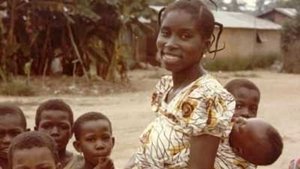
Ôrí
A look at the Brazilian black movement between 1977 and 1988, going by the relationship between Brazil and Africa.
1989
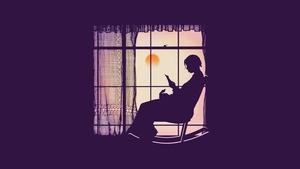
The Color Purple
An epic tale spanning forty years in the life of Celie, an African-American woman living in the South who survives incredible abuse and bigotry. After Celie's abusive father marries her off to the equally debasing 'Mister' Albert Johnson, things go from bad to worse, leaving Celie to find companionship anywhere she can. She perseveres, holding on to her dream of one day being reunited with her sister in Africa.
1985
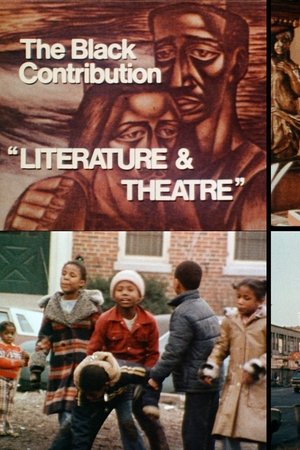
The Black Contribution: Literature and Theatre
The Black Contribution – Literature and Theater 1978 is a rare documentary highlighting the voices and cultural impact of African American writers and performers during the civil rights era. Introduced by NAACP leader Benjamin Hooks and narrated by Roscoe Lee Brown, the film weaves together dramatic readings, theatrical excerpts, and candid urban street footage. Margaret Walker’s poem For My People is performed alongside scenes of daily Black life in New York City — children playing, families on stoops, open fire hydrants, and the realities of poverty in 1970s neighborhoods. James Baldwin appears in interview footage, while signs for his play The Amen Corner and stage excerpts from Lorraine Hansberry’s A Raisin in the Sun underscore the powerful presence of Black voices in American theater. With rare shots of Harlem life, literature, and performance, this film documents the enduring contributions of African American artists to U.S. culture and history.
1978
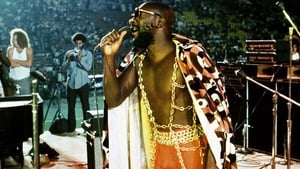
Wattstax
A documentary film about the Afro-American Woodstock concert held in Los Angeles seven years after the Watts riots. Director Mel Stuart mixes footage from the concert with footage of the living conditions in the current-day Watts neighborhood.
1973

Rivers of Fire and Ice
A Wildlife Safari through Africa.
1968
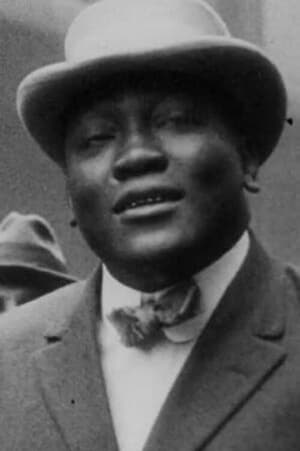
Jack Johnson Paying a Visit to Manchester Docks
The legendary world heavyweight boxing champion, John Arthur 'Jack' Johnson, visits Manchester.
1911
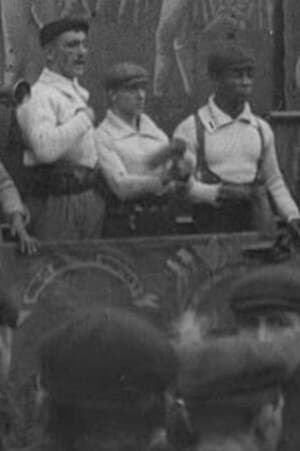
Hull Fair
The ornate pavilions of cinematographs, boxing booths and menageries at Hull Fair.
1902