Watch Maya Land: Listening to the Bees Online Free
A story about the environmental conflict between GM soy growers and Maya Beekeepers in the Yucatán Peninsula of Mexico. It reflects on what the environment and economy could look like if bee health was considered as a criterion of sustainable development. The film explores the pre-colonial and ongoing relationship between Maya people and their environment, in particular the milpa agricultural system (and its main crop, maize), sacred sinkholes (called cenotes), and sacred stingless bees, the Melipona.
More Like This

The Barn is Burning
After a devastating fire ravages a milking parlor, a family and its community rally together. This short documentary showcases a journey of resilience, as a family farm rises from the ashes into a new era of cutting-edge robotic technology. The film explores the innovation in modern agriculture, shedding light on the strength of farming communities and the power of perseverance in the face of adversity.
2025
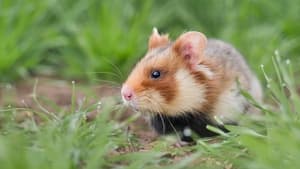
The Last Common Hamsters
For almost three years, nature filmmaker and ecologist David Cebulla has been observing wild Common hamsters. He not only tries to learn more about the species, but also documents why hamsters are globally threatened with extinction. David travels from the western border of the distribution area in France via Germany, Poland, Austria and Hungary to the eastern border of the distribution area in the Kazakh steppe. In the process, he manages to capture some unique and fantastic images. But during the project, it becomes increasingly difficult to find animals living in the wild.
2025
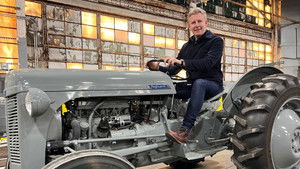
Tractor Wars: Ferguson vs Ford
Patrick Kielty explores the untold story of Harry Ferguson and Henry's Ford's remarkable handshake agreement and how it led to a $250 million lawsuit.
2022
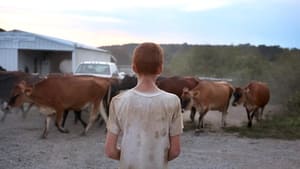
Farmsteaders
Clear-eyed and intimate, Farmsteaders follows Nick Nolan and his young family on a journey to resurrect his late grandfather’s dairy farm as agriculture moves toward large-scale farming. A study of place and persistence, Farmsteaders points an honest and tender lens at everyday life in rural America, offering an unexpected voice for a forsaken people: those who grow the food that sustains us.
2018
Les Champs de la colère
2017

Un jour en Italie
2017
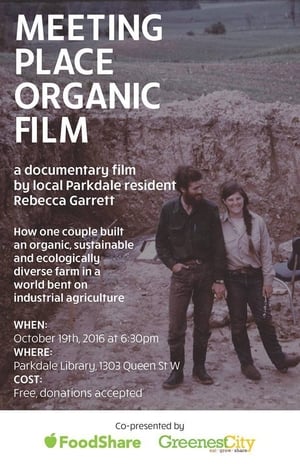
Meeting Place Organic Film
Local, organic, and sustainable are words we associate with food production today, but 40 years ago, when Fran and Tony McQuail started farming in Southwestern Ontario, they were barely spoken. Since 1973, the McQuails have been helping to build the organic farming community and support the next generation of organic farmers. This is a documentary about the McQuails that explores the very real ways their farm has contributed to the long term ecological viability of agriculture in Ontario. It is a call to action for all those who believe there is a better way to take care of our planet and feed the world.
2016

Anais Goes to War
Anaïs is 24 and nothing can stop her. Neither the bureaucratic rules of administration, nor the misogynistic teachers, nor the out-of-order tractor, nor the whims of the weather. One day she will be a farmer and grow her own aromatic and medicinal herbs. The film follows this hard liner, all alone against the rest of the world. She doesn’t care.
2014
Dirt! The Movie
A look at man's relationship with Dirt. Dirt has given us food, shelter, fuel, medicine, ceramics, flowers, cosmetics and color --everything needed for our survival. For most of the last ten thousand years we humans understood our intimate bond with dirt and the rest of nature. We took care of the soils that took care of us. But, over time, we lost that connection. We turned dirt into something "dirty." In doing so, we transform the skin of the earth into a hellish and dangerous landscape for all life on earth. A millennial shift in consciousness about the environment offers a beacon of hope - and practical solutions.
2009
Railroad of Hope
Railroad of Hope consists of interviews and footage collected over three days by Ning Ying of migrant agricultural workers traveling from Sichuan in China's interior, to the Xinjiang Autonomous Region, China's northwest frontier.[1] Through informal interviews aboard the cramped rail cars, Ning Ying explores the hopes and dreams of the workers, many of whom have never left their homes before.
2002
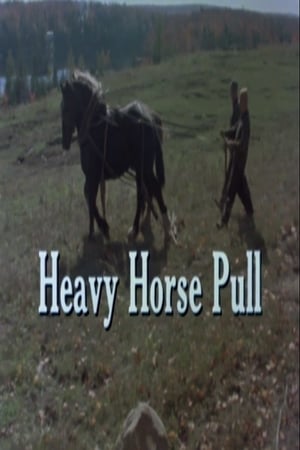
Heavy Horse Pull
This short documentary offers a humorous look at horse-pulling contests in Ontario and the people who prepare for them. We travel from the farm to the contest, where excitement runs high and the quips do not lack in local colour. Which of these magnificent creatures will be able to pull the heaviest load and win the prize?
1977
La Mayoría Silenciosa
The silent majority is the Costa Rican peasantry, which has been the object of traditional contempt and which has manifested itself in various forms: unfair salary compensation, bad prices for their agricultural products, financing difficulties, land grabs, precarious housing and educational conditions. health. Precariousness, peasant migrations and the depletion of the agricultural frontier are also analyzed in the film.
1974
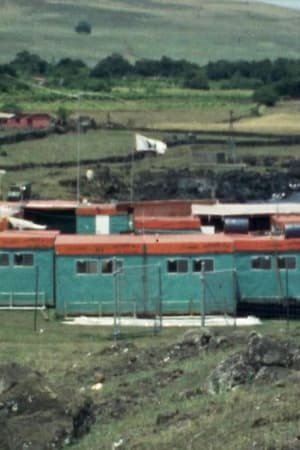
Island Observed
A film record of M.E.T.E.I. (Medical Expedition to Easter Island), one of the most unusual scientific enquiries ever launched, headed by a McGill University research team. While the film is concerned mainly with the physical condition of Easter Islanders, it also provides glimpses of island activities, a village wedding, and the famous long-faced stone sculptures.
1966
Škůdce
1949
Společnou brázdou
1948
Horské pastviny
1947
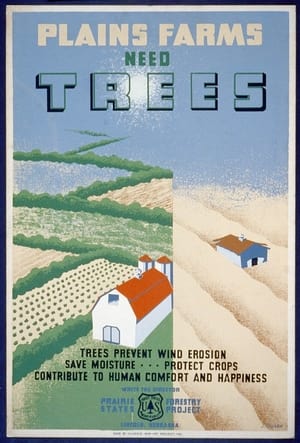
Windbreaks on the Prairies
This short film serves as a cautionary tale to farmers who recklessly cut down trees on their land. When prairie farmers engaged in this practice to facilitate plowing, they discovered that the trees had served as windbreaks protecting top soil from erosion. The Dominion Department of Agriculture's experimental station at Indian Head, Saskatchewan, cultivated acres of young trees for distribution to farmers.
1943
Alexis Tremblay: Habitant
This short documentary illustrates rural French Canadian life in the early 1940s. The film follows Alexis Tremblay and his family through the busy autumn days as they bring in the harvest and help with bread baking and soap making. Winter sees the children revelling in outdoor sports while the women are busy with their weaving, and, with the coming of spring young and old alike repair to the fields once more to plough the earth in preparation for another season of varied crops. One of the first NFB films to be produced, directed, written and shot by women.
1943
Gardens of the Orient
This portait of life on the tea plantations is decidedly rosy – clearly, there are no exploited workers here. However, the film provides an intriguing overview of tea production – from the planting of tea seeds to the final shipping of the precious leaves across the globe.
1936
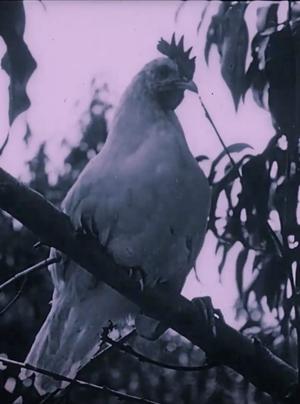
The Last Word in Chickens
This 10-minute short documentary exploring the shifting state of the American poultry industry was preserved in 2015 from an original nitrate print. More information is available on the film's page in the National Film Preservation Foundation's website, where this version can be found featuring original music by Michael D. Mortilla.
1924