Watch Marquis de Wavrin, from the Manor to the Jungle (2017) Online Free
A documentary that invites us to discover the strange path led by the explorer-ethnographer Marquis de Wavrin who, in the 1920s and 1930s, made ethnographic films in several countries of Latin America.
Cast
Grace Winter, Sergio Purini, Robert de Wavrin, Anne Coesens, Laurent Bonnet, Thierry de Coster, Benoit Mansion
More Like This

Quatre altitudes bosniaques
Quatre altitudes bosniaques is an exercise in topographic cinema shot in Bosnia-Herzegovina. The document draws on the geography of the city of Sarajevo, from which the filmmakers construct a visual ethnography fragmented into four levels of elevation.
2025
Immigrants Heartbeats
Real testimonials from five Latin American immigrants who share their experiences and challenges, recounting what it has been like to build a new life in Brazil from their different perspectives in the city of Foz do Iguaçu. Individual experiences are revealed and reflect on belonging, identity, and the constant reinvention of those who cross territories in search of new opportunities.
2025
Ensayos y errores
2024
Corporate Accountability
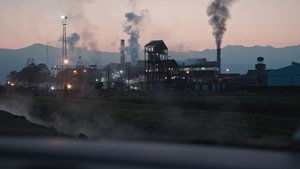
Images of Argentinian companies and factories in the first light of day, seen from the inside of a car, while the director reads out documents in voiceover that reveals the collusion of the same concerns in the military dictatorship’s terror.
2020
Hasta que las nubes nos unan, Guardiola - Diola
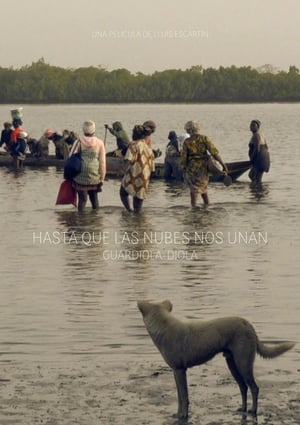
Between Africa and the catalonian Penedés stands the distance of a videocamera. A cut. What is what, where are we, where did the songs we sang while we worked go, where is the group, the colective, the community?
2019
Piripkura
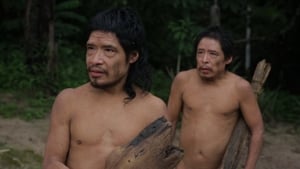
The last two surviving members of the Piripkura people, a nomadic tribe in the Mato Grosso region of Brazil, struggle to maintain their indigenous way of life amidst the region's massive deforestation. Living deep in the rainforest, Pakyî and Tamandua live off the land relying on a machete, an ax, and a torch lit in 1998.
2018
Landwirtschaft in Südamerika - Chile
2018
Landwirtschaft in Südamerika - Brasilien
2018
Outro Fogo
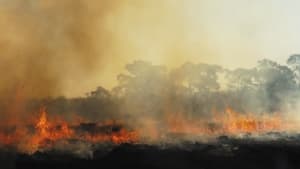
A sensory record of the relationships of affinity and enmity with fire in the conservation of the Cerrado biome. In the company of local residents hired to act as brigadiers and, more recently, as management agents, the short film explores the affections established with fire in the midst of combat pyrophobias and management pyrophilias. In addition to documenting fire fighting and manipulation techniques, the cinematographic experiment points to a more than human visual anthropology, where environmental forces such as heat, vegetation and wind make up an alterity whose condition remains ambiguous.
2017

The Pearl Button
The ocean contains the history of all humanity. The sea holds all the voices of the earth and those that come from outer space. Water receives impetus from the stars and transmits it to living creatures. Water, the longest border in Chile, also holds the secret of two mysterious buttons which were found on its ocean floor. Chile, with its 2,670 miles of coastline and the largest archipelago in the world, presents a supernatural landscape. In it are volcanoes, mountains and glaciers. In it are the voices of the Patagonian Indigenous people, the first English sailors and also those of its political prisoners. Some say that water has memory. This film shows that it also has a voice.
2015
Trabantem až na konec světa
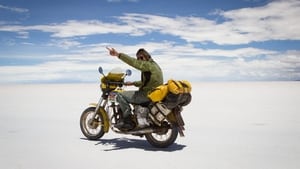
The third installment in Dan Přibáň's series of travel documentaries describes the author's journey with his friends across South America in vehicles that are often notorious but cult in their own way. The charming dynamics of the group on screen are further enhanced by the high-quality craftsmanship.
2014

Die unglaubliche Reise der Familie Zid
2013

Nazis in the CIA
Florian Hartung and Dirk Pohlmann have reconstructed a previously unknown dimension of the collaboration between Nazis and the CIA in the Cold War. Drawing upon recently released documents, the film exposes for the first time a perfidious, worldwide net that reaches deep into the power structures of the Federal Republic of Germany. Lending their authority to the fact-finders’ mission are high-ranking statesmen, journalists and historians.
2013
Surviving Progress
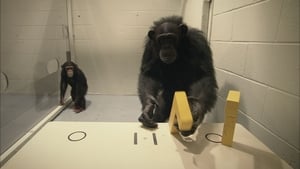
Humanity’s ascent is often measured by the speed of progress. But what if progress is actually spiraling us downwards, towards collapse? Ronald Wright, whose best-seller, “A Short History Of Progress” inspired “Surviving Progress”, shows how past civilizations were destroyed by “progress traps”—alluring technologies and belief systems that serve immediate needs, but ransom the future. As pressure on the world’s resources accelerates and financial elites bankrupt nations, can our globally-entwined civilization escape a final, catastrophic progress trap? With potent images and illuminating insights from thinkers who have probed our genes, our brains, and our social behaviour, this requiem to progress-as-usual also poses a challenge: to prove that making apes smarter isn’t an evolutionary dead-end.
2011

Amanar Tamasheq
Amanar Tamasheq parts from the exciting adventure of the director on a trip with the Tuaregs rebels in the desert of Mali, to convert the camera into the most powerful weapon. The terrible history of this people, always under threat, is built through their own words in a text that, from their own statements reworked, overlaps in the form of subtitles to images. These, far in the highest degree of language that normally tells the violent, they gain political power and radical rarely seen.
2010
The Real Lost World
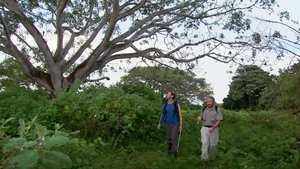
A modern team of explorers venture to the legendary "Lost World"- the remote jungle plateau of Roraima in Venezuela. Cut off from time and the jungle below, feared by natives because of "evil spirits", flying reptiles and other beasts, Roraima has sparked human imagination since the time of the 19th century explorers. Sherlock Holmes author Sir Arthur Conan Doyle based his book "The Lost World" (1912) about men and dinosaurs on the tales from early explorers to this plateau. This was the inspiration for Jurassic Park. The modern expedition team encounters the animals, people and extreme habitat on its route across the Gran Sabana and up the 9000 ft. mountain. Once there they explore a new cave system, that may well contain new forms of life.
2006
Avoir 16 ans et toutes ses Andes
1991
Q'eros: The Shape of Survival
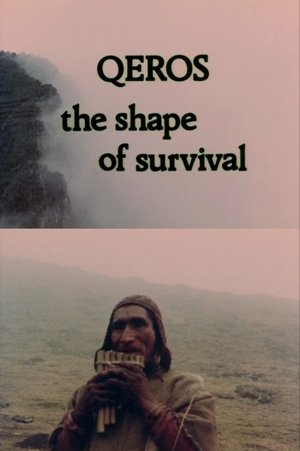
Exploration of the way of life of the Q’eros Indians of Peru, who have lived in the Andes for more than 3,000 years.
1979
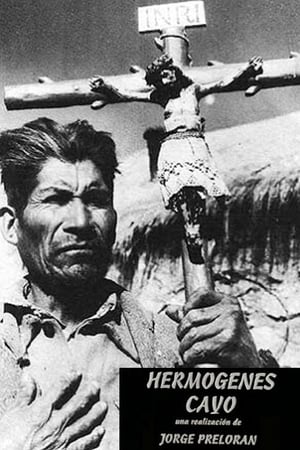
Hermógenes Cayo (Imaginero)
IMAGINERO is an ethnobiography of Hermogenes Cayo, a self-taught woodcarver and painter who lives on the high Andean plateau of Argentina. The film portrays Hermogenes, his wife Aurelia Kilpe, and their children in their Andean lifestyle, as well as Hermogenes' passion for painting, carving, building, and his devotion to the Virgin Mary. Devout, austere and dedicated to craftsmanship, he can make anything from religious figures carved from cactus wood to a working harmonium. Inspired by a trip to Buenos Aires to advocate for land rights, Hermogenes has labored to replicate the style of the capital's grand cathedral and shrine to the Virgin with resourcefulness and skill.
1969

Saludos Amigos
A whimsical blend of live action and animation, "Saludos Amigos" is a colorful kaleidoscope of art, adventure and music set to a toe-tapping samba beat. From high Andes peaks and Argentina's pampas to the sights and sounds of Rio de Janeiro, your international traveling companions are none other than those famous funny friends, Donald Duck and Goofy. They keep things lively as Donald encounters a stubborn llama and "El Gaucho" Goofy tries on the cowboy way of life....South American-style.
1942