Watch Ma Nishma Manitoba (2021) Online Free
From challah to immigration to the wandering Jew, Ma Nishma Manitoba is a mid-length documentary that explores Manitoban Jewish stories of identity and history. Filmmakers Johanna and Sara put their own experiences in local context by chatting with several Jewish Manitobans, including a rabbi, politician, artist, Israeli immigrant, and others. Archival materials, illustrations, and stop animations connect history with present-day opinions and stories, as Sara and Johanna explore what being Jewish in Manitoba means to them and others.
More Like This

In a Film by Allan King
In 1968, Billy and Antoinette Edwards participated in a landmark documentary that would intimately observe their turbulent relationship. Over 50 years later, their son Bogart sat down to view and discuss the resulting film, A Married Couple.
2024
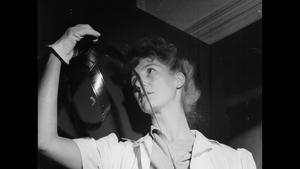
A Return to Memory
When Canada entered World War II, the National Film Board suddenly had an urgent new mission—and hundreds of women stepped forward, helping to create Canadian cinema as we now know it.
2024

A Greater Chance
Upon learning of his father's terminal illness diagnosis, a young, autistic, hearing-impaired artist travels back to Taiwan with a filmmaker to make a film in his honour.
2024
Reel Resilience
"Reel Resilience" chronicles the journey of two determined immigrant filmmakers navigating the challenges of breaking into the Canadian film industry. Through triumphs and setbacks, they unveil the transformative power of resilience, emphasizing the profound impact of networking and unwavering perseverance on their quest in pursuing their cinematic dreams on unfamiliar shores.
2024
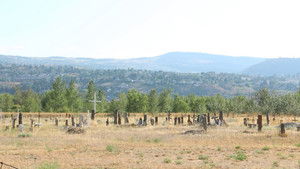
Gentleman Bandit
Documentary on the Canadian career of train robber Billy Miner, who became a folk hero in British Columbia. Locations near Kamloops and Mission are explored in present day.
2024
Piazza
2022
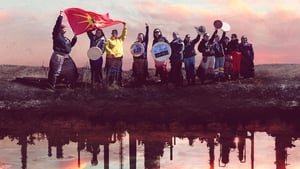
There's Something in the Water
Elliot Page brings attention to the injustices and injuries caused by environmental racism in his home province, in this urgent documentary on Indigenous and African Nova Scotian women fighting to protect their communities, their land, and their futures.
2019
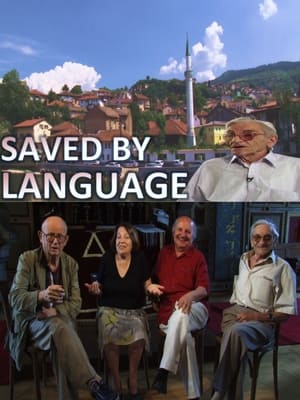
Saved by Language
Can a language save your life? Yes it can, even an ancient one from the 15th century. Saved by Language tells the story of Moris Albahari, a Sephardic Jew from Sarajevo (born 1930), who spoke Ladino/Judeo-Spanish, his mother tongue, to survive the Holocaust. Moris used Ladino to communicate with an Italian Colonel who helped him escape to a Partizan refuge after he ran away from the train taking Yugoslavian Jews to Nazi death camps. By speaking in Ladino to a Spanish-speaking US pilot in 1944 he was able to survive and lead the pilot, along with his American and British colleagues, to a safe Partizan airport.
2015
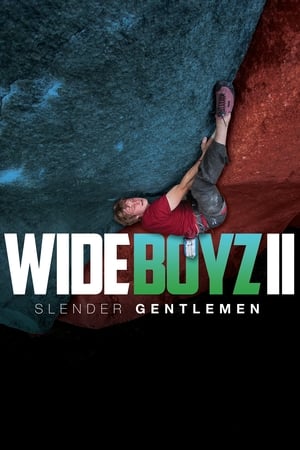
Wide Boyz II – Slender Gentlemen
After their success climbing the world’s hardest offwidth, the Wide Boyz, Pete Whittaker and Tom Randall, embark on their next crack climbing mission. This time their sights are set on the thinner end of the crack climbing spectrum. Their goal is the mighty Cobra Crack in Squamish BC, considered to be the hardest finger crack in the world. First climbed by Canadian ‘rock star’ Sonnie Trotter after battling it out with Didier Berthod, the route hit the media spotlight in the film First Ascent. With no local hard cracks to train on, the Wide Boyz refit their underground training dungeon and commit to a year of torturous finger training. With only a short trip to Canada planned, the Boyz face their biggest challenge yet against the sharp granite bite of the mighty Cobra Crack!
2014
Déception durable
2014
A bissele Glik
2009
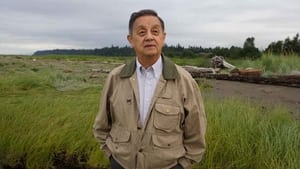
Writing the Land
In this short documentary, a Musqueam elder rediscovers his Native language and traditions in the city of Vancouver, in the vicinity of which the Musqueam people have lived for thousands of years. Writing the Land captures the ever-changing nature of a modern city - the glass and steel towers cut against the sky, grass, trees and a sudden flash of birds in flight and the enduring power of language to shape perception and create memory.
2007

The Corporation
Since the late 18th century American legal decision that the business corporation organizational model is legally a person, it has become a dominant economic, political and social force around the globe. This film takes an in-depth psychological examination of the organization model through various case studies. What the study illustrates is that in the its behaviour, this type of "person" typically acts like a dangerously destructive psychopath without conscience. Furthermore, we see the profound threat this psychopath has for our world and our future, but also how the people with courage, intelligence and determination can do to stop it.
2003

Bowling for Columbine
This is not a film about gun control. It is a film about the fearful heart and soul of the United States, and the 280 million Americans lucky enough to have the right to a constitutionally protected Uzi. From a look at the Columbine High School security camera tapes to the home of Oscar-winning NRA President Charlton Heston, from a young man who makes homemade napalm with The Anarchist's Cookbook to the murder of a six-year-old girl by another six-year-old. Bowling for Columbine is a journey through the US, through our past, hoping to discover why our pursuit of happiness is so riddled with violence.
2002
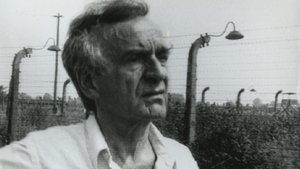
Elie Wiesel Goes Home
A documentary chronicling the adolescent years of Elie Wiesel and the history of his sufferings. Eliezer was fifteen when Fascism brutally altered his life forever. Fifty years later, he returns to Sighetu Marmatiei, the town where he was born, to walk the painful road of remembrance - but is it possible to speak of the unspeakable? Or does Auschwitz lie beyond the capacity of any human language - the place where words and stories run out?
1997
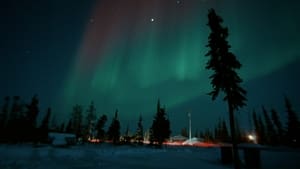
Picture of Light
A documentary of an expedition to Churchill, Manitoba to film the Northern Lights.
1994
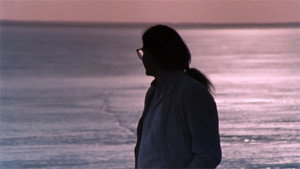
Foster Child
Gil Cardinal searches for his natural family and an understanding of the circumstances that led to his becoming a foster child. An important figure in the history of Canadian Indigenous filmmaking, Gil Cardinal was born to a Métis mother but raised by a non-Indigenous foster family, and with this auto-biographical documentary he charts his efforts to find his biological mother and to understand why he was removed from her. Considered a milestone in documentary cinema, it addressed the country’s internal colonialism in a profoundly personal manner, winning a Special Jury Prize at Banff and multiple international awards.
1987
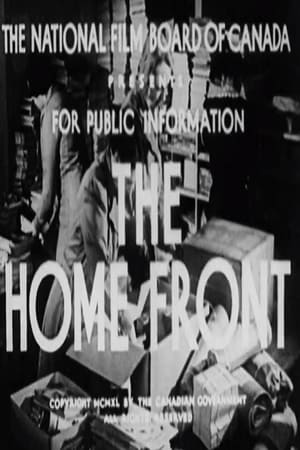
Home Front
This short documentary is part of the Canada Carries On series of morale-boosting wartime propaganda films. In Home Front, the various WWII-era social contributions of women are highlighted. From medicine to industrial labour to hospitality, education and domesticity, the service these women provided to their country is lauded.
1940

The Royal Visit
This feature documentary offers a complete record of the 1939 Royal Tour of Canada by King George VI and Queen Elizabeth. The film opens as the royal couple makes a stop in Québec city, where Premier Duplessis greets them. They then visit Montréal and meet mayor Camilien Houde. A visit to Ottawa brings them to Parliament, where Prime Minister MacKenzie King is present. The visit continues throughout Ontario, the prairies, and western Canada. The Royal couple also makes a brief stop in Washington and meets President Franklin Roosevelt. They then stop in on the Maritime provinces before boarding a Royal yacht for the journey back to England.
1939
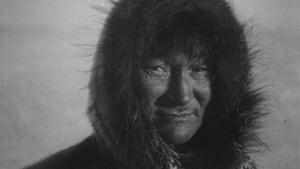
Nanook of the North
This pioneering documentary film depicts the lives of the indigenous Inuit people of Canada's northern Quebec region. Although the production contains some fictional elements, it vividly shows how its resourceful subjects survive in such a harsh climate, revealing how they construct their igloo homes and find food by hunting and fishing. The film also captures the beautiful, if unforgiving, frozen landscape of the Great White North, far removed from conventional civilization.
1922