Watch Mérida, Tiempo y Naufragio. (2018) Online Free
More Like This
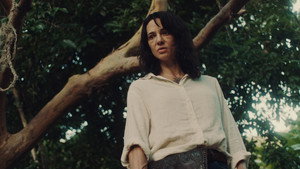
Death Has No Master
Caro travels to Venezuela to sell her late father’s cacao plantation, only to find the family mansion occupied by its former staff, who are determined to remain at all costs. As Caro takes justice into her own hands to claim the inheritance she believes is hers, she sets off a struggle that unearths the violence buried in the land and its memory.
2027
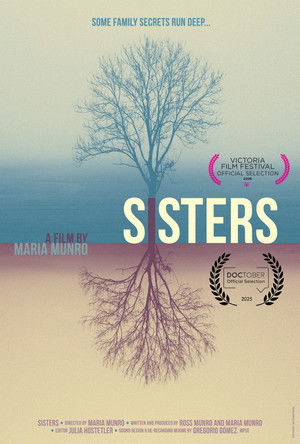
Sisters
“Sisters” is a deeply personal story about my journey back to my home country of Venezuela to investigate the possibility of a long lost sister.
2026
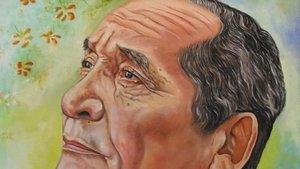
La Memoria es un Caracol
Documentary about the life of Luis Mariano Rivera.
2025
Santa Secreto
2025

El Salto de Los Ángeles
The initiation journey of a boy who must leave his childhood behind and become a man in order to keep his family together.
2024
Plenitud
2023
Así Pasó
2021

Papita 2da Base
Andrés and Julissa now parents to a seven year old Carlitos struggle to live happily as a family despite being fervent fans of rival teams and of Vicente's (Julissa's father) disapproval.
2017
The heart of Caracas
Caracas has been changing since the nineteenth century this is a story that tries to explain why the Venezuelan capital is complex, chaotic and fertile. In light of these new evidences, community experiments, social awareness and organization of people, seem to be the necessary ingredients to rescue a metropolis that is not yet completely lost.
2013
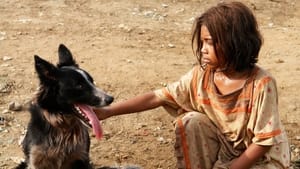
The Return
El Regreso is a venezuelan movie written and directed by Patricia Ortega, which tells the story of a Wayuu girl that survived the slaughter of his people, in Bahía Portete from the Colombian Guajira, and therefore, she is forced to grow in a unknown world to her.
2013
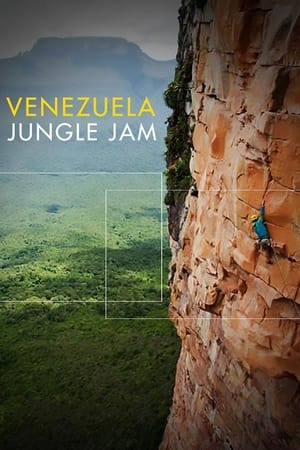
Venezuela Jungle Jam
The latest film from the Belgian climbing team, following Asgard Jamming and Vertical Sailing Greenland, Venezuela Jungle Jam features Sean Villanueva O'Driscoll, Nico Favresse, Stephane Hanssens and Jean-Louis Wertz as they attempt a new free climb on the overhanging 500m wall of Amuri Tepul in the Venezuelan Jungle.
2012
Final Absolution: History of a Photograph
During a military uprising known as “El Porteñazo”, a priest is photographed while trying to help a soldier wounded in combat. The photo travels the world and is awarded the most important prizes in photojournalism, such as the Pulitzer Prize and the World Press. Throughout this documentary, photographers, editors and witnesses reveal various aspects surrounding that image: who is the priest, who was its author, the events that surrounded the photographic event, what was its political role and what said image represents in the history of Venezuelan journalism. Additionally, it allows the presentation of other photographs, some unpublished, that Rondón managed to capture in those difficult moments.
2010
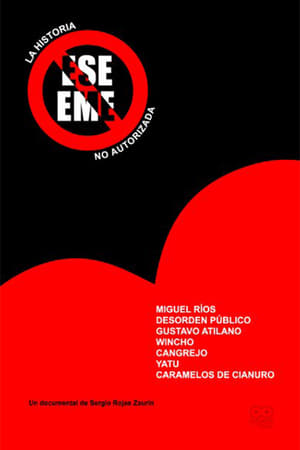
ESE EME: The Unauthorized History
An independent rockumentary that comprises first-hand testimonials about the history of Sentimiento Muerto, the most influential band in Venezuela, as well as the projects that came after its dissolution: Dermis Tatú and PAN.
2010
Swing con Son
Music documentary about Billo Frómeta by director Rafael Marziano Tinoco from Venezuela.
2009

Maroa
Eleven-year-old petty criminal Maroa lives with her violent grandmother Brigida in Caracas. After her boyfriend Carlos is involved in a shooting, Maroa is arrested and sent to a school where Joaquin conducts the youth orchestra, and he asks the naturally talented Maroa to join. Days now revolve around the classes that Joaquin, the shy and unconventional teacher, gives her. He is immediately interested in this talented young girl, who lacks all notion of discipline. Joaquin, the only person to offer hope in the midst of her rejection, finds that through Maroa, his world has also changed forever.
2005
Fosa Comun
Cesar and Maria wander around the city like strangers, but are still able to recognize each other through the pain in a short glance, shaped by the violence that has changed their lives.
1998
The whispers of the wind
A documentary fiction in the form of a diptych, about solitude, nostalgia and waiting. On the high plateaux of the Andes in Venezuela, the seventy-year-old mule-driver Saturnino has only one friend, his donkey Turmero. Filomena, seventy eight years old, is waiting against for the return of her husband.
1995
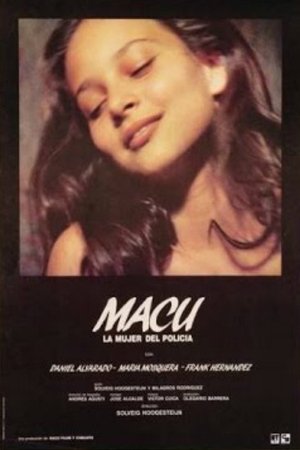
Macu, la mujer del policía
Directed by Solveig Hoogesteijn, Macu, the Policeman's Woman (1987) is a Venezuelan crime drama based on a true story. The film follows Macu, a young woman living in a Venezuelan shantytown, who becomes romantically involved with a local policeman named Ismael. As their relationship develops, Ismael's jealousy intensifies, leading to tragic consequences. The narrative delves into themes of power, control, and the dynamics of abusive relationships within marginalized communities. The film is notable for its exploration of gender roles and societal issues in Latin America.
1987
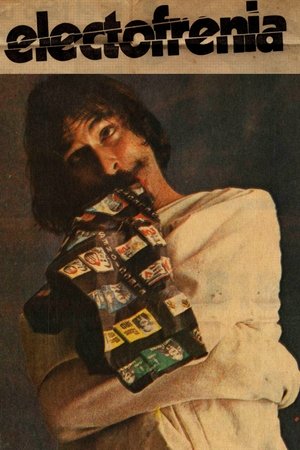
Electofrenia
Electofrenia (1978), Neri's third political film, requires a critical distance in order to consider the reasons why Venezuelans choose their presidential candidate in the 1978 election. Electofrenia, signifying the chaos of the elections, proposes that many Venezuelans select the candidate who benefits them personally rather than the one who is good for the country at large. Not without irony, the film brings up Venezuela's two decades of peaceful democratic government. If people choose what is good for them, can we call it a democracy?
1978
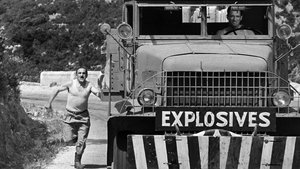
The Wages of Fear
In a run-down South American town, four men are paid to drive trucks loaded with nitroglycerin into the jungle through to the oil field. Friendships are tested and rivalries develop as they embark upon the perilous journey.
1953