Watch Love Stories My Grandmother Tells (1994) Online Free
A portrait of Dana Plays' 90 year old paternal grandmother, Peggy Regler, reminiscing about her love affairs and significant relationships. Regler tells about her failed first marriage, the agreement she had to stay until the children were grown (but to see other lovers) which resulted in the true love she found with her second husband and renowned writer Gustav Regler, who later died a tragic death in India. The love affairs are historically rooted in the political and technological developments 20th century, and are narratively based in a complex sound/image structure. Interludes (silent optically printed film passages narrated with inter-titles excerpted from her diaries, and early childhood memories) formalistically refer to early cinema. The footage in these passages is re-contextualized and interwoven metaphorically throughout the text.
Cast
Gustav Regler, Peggy Regler
More Like This
The path of sin
It tells the inspiring story of Juan Dávila. At the age of 32, he left his steady job as a municipal police officer to devote himself to show business. Thus began a ten-year journey performing in bars, squares, variety halls, and some theaters. A journey in which he started a theater company (Improclan) where he brought together people who, like him, were looking for their niche as comedians.
2025
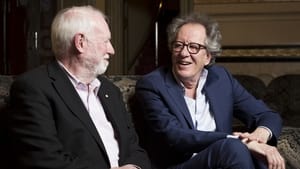
David Stratton: A Cinematic Life
A compelling personal journey with David Stratton, as he relates the fascinating development of our cinema history. David guides us from his boyhood cinema experience of Australia in England, where he saw the first images of this strange and exotic landscape via the medium of film, to his migration to Australia as a ‘ten pound pom’ in 1963 and onto his present day reflections on the iconic themes that run through our cinematic legacy. All of this reflects a passionate engagement in a uniquely Australian medium. Parallel and at the heart of the series is the story of an industry whose growing pains David has witnessed over a lifetime. Alongside David, the protagonists of this history are the giants of Australian cinema – both behind the camera and in front of it.
2017
State of Rest and Motion
This cine-portrait of New York City uses digital effects to turn the countless riders of the subway system into living, breathing paintings.
2017
June Brown at 90: A Walford Legend
Beloved BBC soap actress June Brown chats about her life and 67 year career.
2017
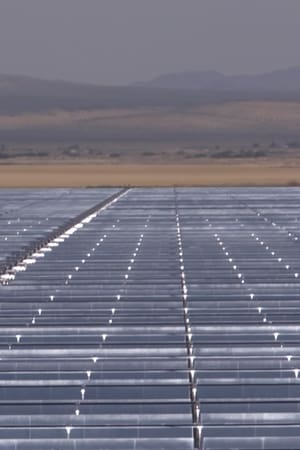
Irradiant Field
In the Mojave Desert, fields of solar panels follow the sun’s daily journey in perfect synchronicity.
2016
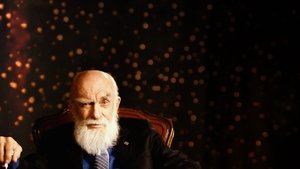
An Honest Liar
An Honest Liar tells the incredible story of the world-famous magician, escape artist, and world-renowned enemy of deception, James 'The Amazing' Randi. The film brings to life Randi's intricate investigations that publicly exposed psychics, faith healers, and con-artists with quasi-religious fervor. A master deceiver who came out of the closet at the age of 81, Randi created fictional characters, fake psychics, and even turned his partner of 25 years, Jose Alvarez, into a sham guru named Carlos.
2014
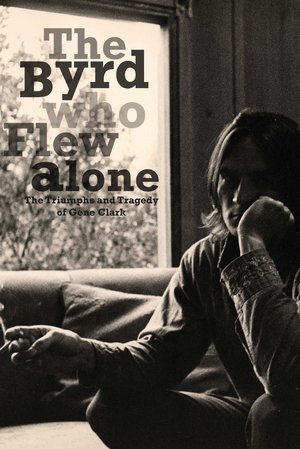
The Byrd Who Flew Alone: The Triumphs and Tragedy of Gene Clark
A documentary on the life and work of Gene Clark, co-founder of The Byrds, whose subsequent career was a rollercoaster of pioneering music and personal disaster.
2013
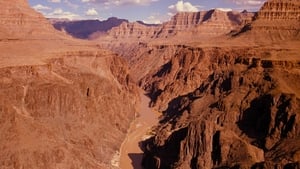
Grand Canyon Adventure: River at Risk
A documentary about a 15-day river-rafting trip on the Colorado River aimed at highlighting water conservation issues.
2008
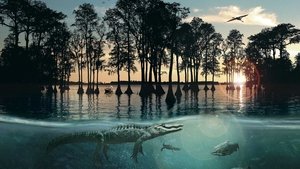
Hurricane on the Bayou
The film "Hurricane on the Bayou" is about the wetlands of Louisiana before and after Hurricane Katrina.
2006
I Have No Memory of My Direction
Ostensibly searching for an emotional connection with her aging father, the woman contemplates her own inherited culture and familial touchstones. Her North American pop culture sensibility fuses with a distorted Japanese perspective to create a surreal interpretation of a “Japan of the imagination.” This fictional landscape is peppered with invented Japanese myths, ruminations on memory loss, the temporal space of digital photography and the ghosts of inherited imagination.
2005
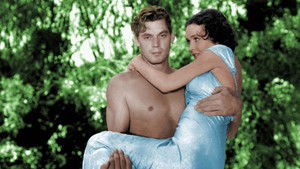
The One, the Only, the Real Tarzan
The glorious and tragic story of American athlete and actor Johnny Weissmuller (1904-84), Olympic swimmer, water polo player and the only true Tarzan, an archetypal character and myth of cinema, that of the original Hollywood blockbusters (1932-48).
2004
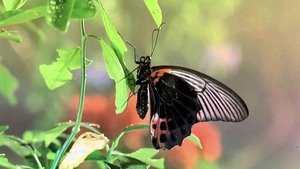
Bugs!
Explore the extraordinary hidden world of insects, where a leaf weighs more than a car, rain drops feel like exploding hand grenades and a blade of grass soars like a skyscraper. Shot on location in the Borneo rainforest, Bugs! brings the beautiful and dangerous universe of its tiny stars up close and personal with cutting-edge technology that magnifies them up to 250,000 times their normal size.
2003
Straight Up: Helicopters in Action
Straight Up: Helicopters in Action will take audiences on a series of aerial adventures. Fly along with skilled helicopter crews as they carry out sea and mountain rescues, apprehend drug smugglers, repair high voltage lines, save endangered animals, deliver humanitarian aid, and undertake a reconnaissance mission. Learn how helicopters are flown.
2002
Wolves
A look at the great wolf debate with comments and views from people on both sides. It also contains footage of Natives dressing up & doing tribal dances. The link between wolves, bison, and Native Americans; as well as white man's reasoning behind their determination to eliminate bison and wolves from the landscape.
1999
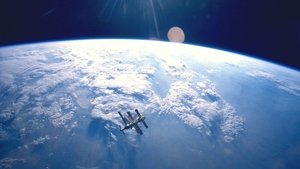
Mission to Mir
This film shows how far we have come since the cold-war days of the 50s and 60s. Back then the Russians were our "enemies". And to them the Americans were their "enemies" who couldn't be trusted. Somewhere in all this a young girl in Oklahoma named Shannon set her sights on becoming one of those space explorers, even though she was told "girls can't do that." But she did.
1997
Chairman Mao - The Last Emperor
60-minute biography of Mao Zedong.
1993
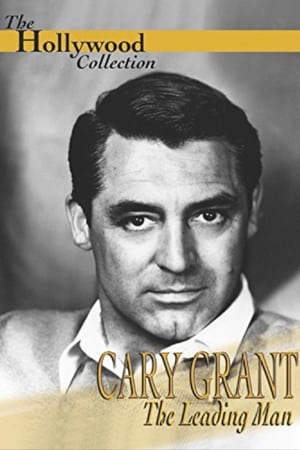
Cary Grant: A Celebration of a Leading Man
A retrospective of the life and career of actor Cary Grant, including clips from his films and interviews with his friends and co-workers.
1988
Jeune femme à sa fenêtre lisant une lettre
Jean-Claude Rousseau's Jeune femme à sa fenêtre lisant une lettre is not only his first medium-length film, but a chance to discover this filmmaker whom Jean-Marie Straub has called, along with Frans Van de Staak and Peter Nestler, the greatest working in Europe. With this newly restored print there is also a possibility to discover the relationship between Rousseau's art of filming and Jan Vermeer's famous painting. As Prosper Hillairet wrote in 1988, four years after Rousseau had finished Jeune femme ... (for the first time as we know today): «Without adopting the usual systematic spirit and form of cinéma structurel, Rousseau presents us with simple images and leaves it at that. Keeps the image in hand. A minimalist and ascetic expression of cinema: a shot that lasts.»
1983
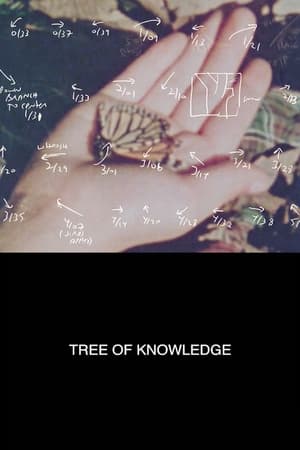
Tree of Knowledge
It started with filming the tree. Something was released in that manner of filming seemingly farthest removed from the procedure of the early films. I first thought a simple ordering of this rich material might be enough, something related to BARN RUSHES [...] But the film only came into its form-life with the idea of linking this deep-rooted and far-outreaching tree material with that film on paranoia that had fascinated me for many years. –L. G.
1981
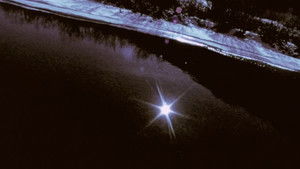
Running Shadow I
Rapidly changing images of natural objects, scenery, animals, plants, and people flicker, flash, tumble, and cascade across the screen.
1971