Watch L'ordre à tout prix (2021) Online Free
When France rumbles, the strategy and control of public order become a crucial political issue. Between protecting institutions and guaranteeing the right to demonstrate: the right balance is subtle. At the beginning of the Yellow Vests movement, at the end of 2018, the principles of "French-style" policing were shattered. The ransacking of the Arc Triomphe, the hundreds of injuries among the demonstrators and the forces of order mark the minds. How did it come to this? In order to understand, the film questions the so-called "legitimate" force and confronts them with the images of these confrontations.
More Like This
Politzek, the voices that challenge the Kremlin
In Russia, criticizing the war in Ukraine or Vladimir Putin’s regime has become a crime. Thousands of ordinary citizens are being arrested, tried, and imprisoned. They are called “Politzek”: political prisoners. Filmed clandestinely over the course of more than a year, Politzek gives a platform to those who, despite the fear, continue to speak out against Putin’s repressive Russia. Through the intersecting stories of a teenager sentenced to five years in prison for criticizing the government on social media, a young artist jailed for placing anti-war stickers, a human rights activist, and two theater directors facing Kafkaesque trials, the film unveils the machinery of state repression in Russia. With rare footage, broken yet unyielding voices, this is a story of silenced resistance.
2026
Bertrand Cantat : Noir Destin
In 2003, actress Marie Trintignant died after being beaten by her partner Bertrand Cantat. The singer was sentenced to eight years in prison. Once released, Cantat attempted to return to the spotlight. It was an almost impossible comeback, especially since his first wife, Kristina Rady, committed suicide under mysterious circumstances. Who is Bertrand Cantat really? And how does he live today?
2025

Skate: A arte da resistência
2024

Hollywood Unplugged
2024, Los Angeles, CA, the city of angels. Plunging us into the moment, this is a visceral cinematic snapshot of the era. What remains is an inventive commentary on the pleasures and dangers of wielding a camera.
2024

Matriarcas da Serra
2023
Letters from Europe
"Letters from Europe" brings to light the words of men and women who gave their lives resisting the Nazi and fascist conquest from 1939 to '45 across the European continent. The moving goodbyes penned by a few of those sentenced to death are sometimes true spiritual testaments that explore the meaning of civic responsibility, human existence, fraternity, and life and death. Their words, which the film mingles with footage of the present day, can perhaps restore meaning to a humanist ideal and to the ever-changing idea of a united Europe.
2021

Nous ne sommes rien, soyons tout !
2020
Videocracy
In a country where bella figura is a national pastime, Prime Minister Silvio Berlusconi is the maestro of media manipulation. Having risen to political primacy with the aid of his Mediaset empire, he now controls 90% of the bel paese’s television channels including the state-run RAI network. Quantity, it seems, does not equal quality. Fed on a diet of semi-naked dancing girls, inane competitions and rickety reality shows built around the most ridiculous of premises, is it any wonder that Italians are becoming a nation of fame-hungry wannabes?
2009
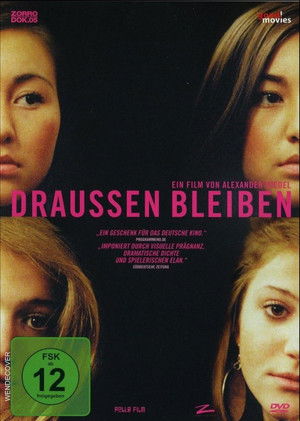
Draussen bleiben
2007
Talk to Me: Hostage Negotiators of the NYPD
This documentary goes inside the world of the negotiators from the New York Police Department Hostage Negotiations Team.
2000
Den store aktion
1994
Tell Your Tale, Little Bird
Seven militant women (fedaiyat) of the revolutionary generation tell the story of the Palestinian resistance through accounts of their own lives. Cut from 35 hours of interviews with leaders of the armed struggle, the film presents an image of confident, unapologetic and proud feminine identity. Together, the memories of these women narrate the dream of a generation, yet unrealized.
1993
Police Dive
Sgt. Mike Berry - officer, man of God, and world famous underwater detective, stands on Lake Chesdin's muddy shore, ready to dive for a murder weapon through a kaleidoscope of memories.
Safe Place
Although experiencing a lifelong battle with pain and trauma, Jerod Draper lived an average, normal life in Southern Indiana. During high school, Jerod started to get off track after losing his best friend at the age of 14, and his first love at 15. To cope with the sudden loss at such a young age, Jerod started experimenting with drugs. After high school and through his younger-adult years, Jerod's substance abuse amplified. Throughout his 20s and 30s, Jerod continued to fight for sobriety while marrying and having a daughter. Following the divorce and not being able to see his daughter due to substance abuse, Jerod made a vow to stay clean. On October 4th, 2018 - Jerod was well over a year sober, yet fighting a familiar challenge, the severe depression and anxiety induced by weaning from drugs. During that evening, Jerod endures a fatal night of torture after being arrested for a routine traffic stop.
Behind the Burning Cross: Racism USA
A key overview of twentieth-century American fascism and antifascism produced in 1991 by the John Brown Anti-Klan Committee.
1991
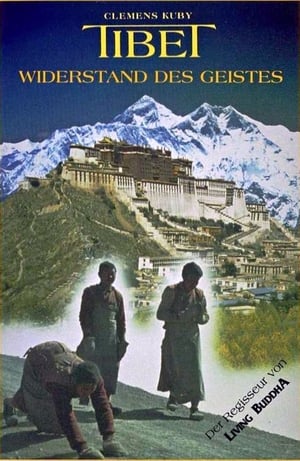
Tibet: The Survival of the Spirit
1989
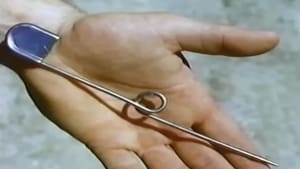
Surviving Edged Weapons
In an intense action-filled 85 minutes, you will learn to defend yourself against the mounting threat of “knife culture” offenders.
1988
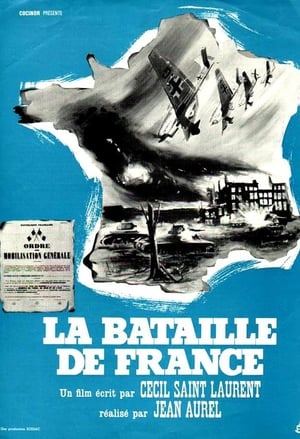
The Battle of France
A montage of newscasts tracing the events of the "damned war" and the German invasion of 1940.
1964
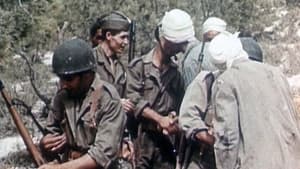
Algeria in Flames
These are the first images shot in the ALN maquis, camera in hand, at the end of 1956 and in 1957. These war images taken in the Aurès-Nementchas are intended to be the basis of a dialogue between French and Algerians for peace in Algeria, by demonstrating the existence of an armed organization close to the people. Three versions of Algeria in Flames are produced: French, German and Arabic. From the end of the editing, the film circulates without any cuts throughout the world, except in France where the first screening takes place in the occupied Sorbonne in 1968. Certain images of the film have circulated and are found in films, in particular Algerian films. Because of the excitement caused by this film, he was forced to go into hiding for 25 months. After the declaration of independence, he founded the first Algerian Audiovisual Center.
1958
Eritrean People's Liberation Front
BBC's Simon Dring's film focuses on the EPLF, Eritrean People's Liberation Front, which is battling Ethiopian forces. The film includes interviews with Ali Sayed, EPLF head of foreign missions, and Mohammed Ramadan Nour, General Secretary.