Watch Les Contes d'Hoffmann (1981) Online Free
Seeking to exorcise the failure of his current love affair, the poet Hoffmann tells the tales of his three past loves - the doll-like Olympia, the high-class courtesan Giulietta, and the ambitious but delicate Antonia - and recalls how each was thwarted by the evil influence of his rival. In this production by the distinguished film director, John Schlesinger, with spectacular designs by Maria Bjornson and William Dudley, Offenbach's nightmare world is brought to life. The all-star cast is headed by Placido Domingo as Hoffmann: his three loves are Ileana Cotrubas, Anges Baltsa and Luciana Serra and the manifestations of his rival are sung by Geraint Evans, Robert Lloyd, Siegmund Nimsgern and Nicola Ghiuselev. The score, which includes such favourites as the "Barcarolle" and the "Doll's Song", is conducted by Georges Pretre.
Cast
Plácido Domingo, Agnes Baltsa, Robert Lloyd, Ileana Cotrubas, Luciana Serra, Geraint Evans, Nicolai Ghiuselev, Gwynne Howell, Claire Powell, Siegmund Nimsgern, Philip Gelling, Francis Egerton
More Like This
Médée
A lonely mother and her son go to the opera where a performance of Cherubini’s opera Medea is given. It is the mother’s birthday and she wanted to surprise her son by inviting him to the opera. But, the son’s plan were different and he is quite upset about it. His mother tries to break the silent barrier behind which he hides. A semblance of discussion begins, not without humour. Tension is present but, as the performance goes on, both find themselves astounded, captured, alone in the opera house.
2017
Così fan tutte
Who loves whom in Così fan tutte, Mozart’s and Da Ponte’s cruelly comic reflection on desire, fidelity and betrayal? Or have the confusions to which the main characters subject one another ensured that in spite of the heartfelt love duets and superficially fleetfooted comedy nothing will work any longer and that a sense of emotional erosion has replaced true feelings? Così fan tutte is a timeless work full of questions that affect us all. The Academy Award-winning director Michael Haneke once said that he was merely being precise and did not want to distort reality. In only his second opera production after Don Giovanni in 2006, he presents what ARTE described as a “disillusioned vision of love in an ice-cold, realistic interpretation”.
2013
Handel: Rinaldo
Ethereal music, a fairytale plot, beguiling sets and spectacular special effects all these combined to make Rinaldo in every sense the Baroque multimedia event par excellence. In his modern staging, producer David Alden has resorted to all kinds of magic tricks. The mourning Almirena, for example, is suspended like a paralysed mermaid in a neon-blue water tank for her aria Lascia ch'io pianga. Armida constantly struggles to make her obstinate pet Hydra see reason, and no expense is spared on the stylishly artistic dance interludes. The characters move in an ironic blend of Twenties look, trendy club scene and sacro' kitsch. Unsurprisingly, opera-goers were quick to latch onto such a glittering and star studded production. Indeed, there can be no doubt that the American David Daniels is the undisputed star of this Munich production, even alongside the other famous names on the cast list.
2012
Island of Lost Souls
14-year-old Lulu moves to a small provincial town with her mother and younger brother. One night, her brother is struck by a beam of white light - actually the spirit of Herman Hartmann from the 19th-century. To her despair, Lulu realizes that Herman has possessed her brother, and the two of them are whirled into a fevered adventure.
2007
Car Men
Car Men is a collaboration between the renowned choreographer Jíri Kylían and filmmaker Boris Paval Conen. Based on the opera 'CARMEN' by Georges Bizet they shot a hilarious and poetic short film in the destroyed landscape of a Czech brown coal mine. The actors in this film are older dancers from Kylían's troupe (around 50 years old) and the main prop is a 'TATRA 87', a famous car from 1937.
2006
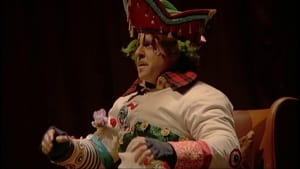
Rigoletto
In Rigoletto, the deformed figure of the hunchbacked jester at the Mantuan court acts as a foil to his cynical and powerful master, an unscrupulous philanderer contrasted with his cruel and unforgiving fool. Rigoletto encourages and welcomes the Duke's conquests, pitilessly mocking his victims until he discovers that the Duke has abducted the one person he genuinely loves, his own daughter. As a result, the character of the court jester is transformed into a tragic figure who, in spite of his evident immorality and malice, allows us to sense the devotion he feels for his daughter and his horror at being destroyed by the same despotic world as that which he himself has helped to create.
2004
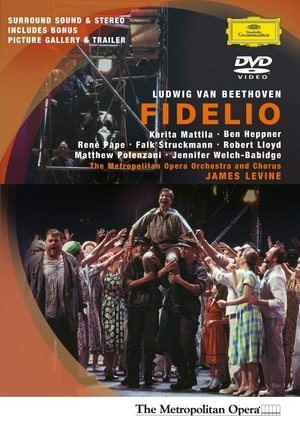
Ludwig van Beethoven: Fidelio
Two years prior to the opening scene, the nobleman Florestan has exposed or attempted to expose certain crimes of the nobleman Pizarro. In revenge, Pizarro has secretly imprisoned Florestan in the prison over which Pizarro is governor. The jailer of the prison, Rocco, has a daughter, Marzelline, and a servant (or assistant), Jaquino. Florestan’s wife, Leonore, came to Rocco’s door dressed as a boy seeking employment, and Rocco hired her. On orders, Rocco has been giving Florestan diminishing rations until he is nearly starved to death. Place: A Spanish state prison, a few miles from Seville; Time: Late 18th century.
2003
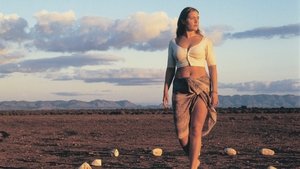
Holy Smoke
While on a journey of discovery in exotic India, beautiful young Ruth Barron falls under the influence of a charismatic religious guru. Her desperate parents then hire PJ Waters, a macho cult de-programmer who confronts Ruth in a remote desert hideaway. But PJ quickly learns that he's met his match in the sexy, intelligent and iron-willed Ruth.
1999
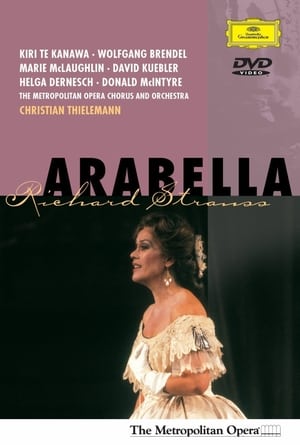
Arabella
Arabella, Op. 79, is a lyric comedy or opera in three acts by Richard Strauss to a German libretto by Hugo von Hofmannsthal, their sixth and last operatic collaboration.
1994
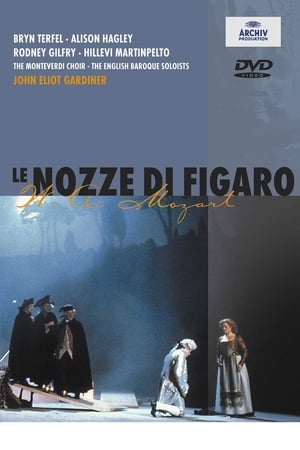
The Marriage of Figaro
This is a good video of "Figaro", but there are a couple of better ones available. The Bohm and the Pappano are better still due to the female members of the casts. The reason for buying this one is the "Figaro", Bryn Terfel. No one can top him today in that role. John Eliot Gardiner also stands out. Many of us have voiced their opinion that If the Metropolitan Opera would release it's 1998 version, that would be the one to get.
1993
The Fisher King
Two troubled men face their terrible destinies and events of their past as they join together on a mission to find the Holy Grail and thus to save themselves.
1991
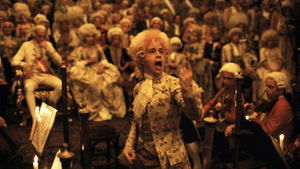
Amadeus
Disciplined Italian composer Antonio Salieri becomes consumed by jealousy and resentment towards the hedonistic and remarkably talented young Salzburger composer Wolfgang Amadeus Mozart.
1984
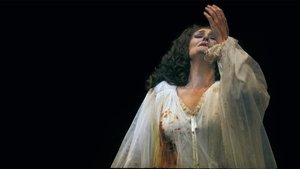
Lucia di Lammermoor
This telecast offers a rare opportunity to see the legendary Joan Sutherland in the role that first catapulted her to international stardom. She drove audiences wild by the way her opulent voice caressed the music’s long phrases and sprinted effortlessly through the fiendish runs, trills, embellishments and stratospheric high notes. One of the glories of the operatic world, her portrayal of Donizetti’s hapless heroine is a multifaceted and moving characterization. The incomparable tenor Alfredo Kraus is Edgardo, the man Lucia loves but cannot have. (Performance taped November 13, 1982. Broadcasted September 28, 1983.)
1983
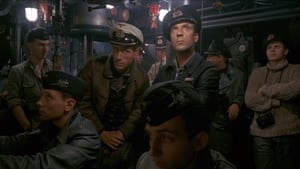
Das Boot
A German submarine hunts allied ships during the Second World War, but it soon becomes the hunted. The crew tries to survive below the surface, while stretching both the boat and themselves to their limits.
1981
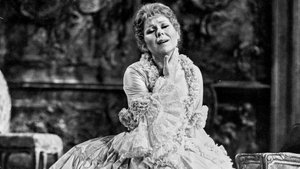
Puccini: Manon Lescaut
All the throbbing eroticism—and ultimate heartbreak—of Puccini’s youthful score is unleashed by James Levine and his top-flight cast. Plácido Domingo is Des Grieux, the handsome, headstrong young aristocrat who falls head over heels for the enticing, impetuous Manon Lescaut (Renata Scotto). Manon returns his love, but her obsession with luxury ruins them both. Gian Carlo Menotti’s opulent production, with sets and costumes by Desmond Heeley, superbly captures the colorful world of 18th century France.
1980
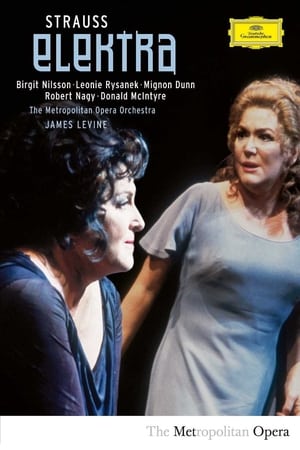
Strauss: Elektra
It's hard to imagine confirmed Straussians not wanting this starry Metropolitan Opera performance of Elektra. Strauss and his librettist, Hugo von Hofmannstahl, transformed Sophocles' take on Homer's tale into a harrowing opera noir. Elektra lives for one reason, to kill her mother, Klytämnestra, and her stepfather, Aegisth, the murderers of her father, Agamemnon. In contrast to Elektra's vengeful obsession, her sister Chrysothemis desires to get on with life. When their long-missing brother, Orestes, returns to do the deed, Elektra celebrates with a dance of death and, her sole purpose in life fulfilled, dies. Strauss joined the hermetic plot to music of the utmost opulence, violent and yearning by turns, evoking the cardinal principles of Greek tragedy - pity and terror.
1980
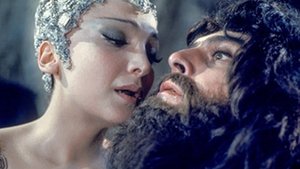
Salome
This filmed version of Strauss' shocker features Teresa Stratas as opera's most depraved teenager, and she's as perfect a Salome as one would ever hope to see or hear. Stratas inhabits the role, exploring the character's sensuousness as she vainly woos Jochanaan, her venomous hatred when she's rejected, the crazed look in her eyes when she demands his head--on a silver platter, no less. Such complete identification with a role, especially of a character so malignant helps make this 1974 Salome stand out among the many fine DVDs of the opera.
1974
Musicians
Misha observes the area with binoculars. In the infinite white, he notices Gia, as lonely as himself.
1969
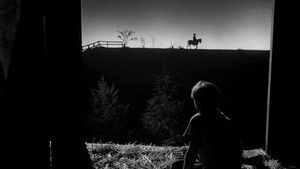
The Night of the Hunter
In Depression-era West Virginia, a serial-killing preacher hunts two young children who know the whereabouts of a stash of money.
1955
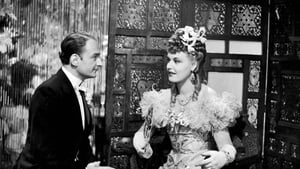
Operette
A musician is offered a job in Vienna as stage director, but his disagreements with the aristocratic opera manager end in abrupt firing in spite of a mutual attraction. He's quickly engaged by another theatre and becomes famous for his lavish stage productions and fine acting, which begins their golden age with Suppé and Strauss.
1940