Watch Leptis Magna Rome in Africa (2010) Online Free
The archaeological ruins in Lybia mainly Roman are truly exceptional because of their size and preservation Beyond its archaeological dimensions Leptis Magna symbolizes the myth of Rome more than any other site Similar to the American myth Septime Segravevegravere the African showed that every citizen of Rome could become Emperor and develop the civilization even in the desert
More Like This
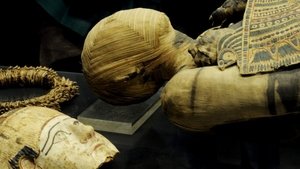
Momies d'Égypte, en quête d'immortalité
2025

Grotte Chauvet - Dans les pas des artistes de la Préhistoire
2024
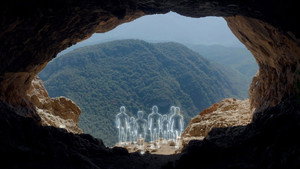
Tautavel : vivre en Europe avant Néandertal
2024
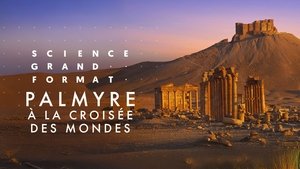
Palmyre, à la croisée des mondes
2024
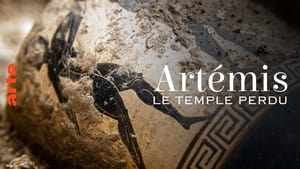
Artemis - The Lost Temple
The location of the sanctuary of Artemis at Amarynthos has long remained one of the last great archaeological enigmas of Ancient Greece. This vast Artemision is mentioned in several ancient texts, which even go so far as to specify the distance that separates the sanctuary from the ancient city of Eretria. But despite the efforts of numerous scientific expeditions since the end of the 19th century, no trace of the sanctuary or its temple has ever been found. In the 1960s, a young archaeologist - Denis Knoepfler - set out in search of the lost temple of Artemis. His investigations soon led him into the hinterland of the island of Euboea, well beyond the limits of previous expeditions. It would take five decades of searching, unshakeable faith and moving tons of earth to finally unravel the mystery. In 2017, a tenacious Swiss-Greek team of archaeologists formally identified the sanctuary of Artemis, where Denis Knoepfler had predicted it lay buried.
2023
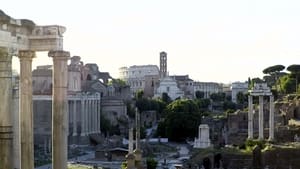
What Killed the Roman Empire?
Why did the Roman Empire, which dominated Europe and the Mediterranean for five centuries, inexorably weaken until it disappeared? Archaeologists, specialists in ancient pathologies and climate historians are now accumulating clues converging on the same factors: a powerful cooling and pandemics. A disease, whose symptoms described by the Greek physician Galen are reminiscent of those of smallpox, struck Rome in 167, soon devastating its army. At the same time, a sudden climatic disorder that was underway as far as Eurasia caused agricultural yields to plummet and led to the westward migration of the Huns. Plagued by economic and military difficulties, attacked from all sides by barbarian tribes, the Roman edifice gradually cracked.
2022

Augustus und Livia - Liebe, Macht und Schwert
Augustus is reputed to have been a violent, adventurous, power-hungry and unscrupulous warlord. Yet as founder of the Roman Empire, he ushered in a period of peace and prosperity. Drawing on the analysis of several historians, this documentary traces an extraordinary destiny: posthumously adopted by his great-uncle Julius Caesar, Octavian, the future Augustus, accepted an inheritance fraught with consequences. Having made his own empire prosper, he wrote his political will at the age of 76, without naming an heir. How was the succession of this childless strategist organized?
2021

Druids: The Mystery of Celtic Priests
Druids have existed far longer than hitherto assumed, since the 4th century BC. Their traces are found all over middle Europe: from the northern Balkans to Ireland. Their cultural achievements were equal in almost every way to those of the Romans and Greeks: They could read and write and spoke Greek and Latin - for centuries, they were the powerful elite of their culture. Only one single Druid is known by name to history: Diviciacos - an aristocrat of the Aedui and personal friend of Julius Caesar. Diviciacos was a politician, a judge and a diplomat, but he lived at a time when the Celtic lands of Gaul were conquered by the Romans. Greek and Roman contemporaries distrusted the actions of this forbear of the famous comic book druid Getafix: They imagined him in bloody rituals in somber woods.
2021
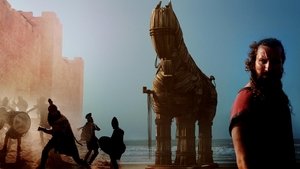
The Mystery of the Trojan Horse
The story of the Trojan Horse is probably one of the most famous stories ever told: after ten years of bloody war, the Greek coalition decides to lift the siege and depart, but not before leaving at the gates a huge wooden horse, which the Trojans confidently lead into the city. A few hours later, the once invincible Troy goes up in flames. What exactly happened? Is this myth true or false?
2021
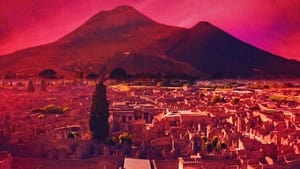
Pompeii: Sin City
A story about one of the most famous and mysterious archaeological sites in the world.
2020
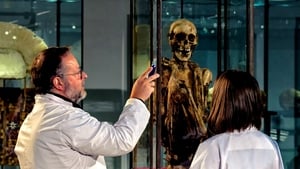
The Mystery of the Rascar Capac Mummy
Rascar Capac, the sinister creature featured on Hergé's album The Seven Crystal Balls (1948), has left its mark on many generations of readers. To draw it, the Belgian cartoonist was probably inspired by a mummy exhibited in the first pre-Columbian exhibition organized by the Brussels Cinquantenaire Museum in 1923. Two intrepid archaeologists embark on a fascinating journey to reconstruct the story of the mysterious mummy.
2019
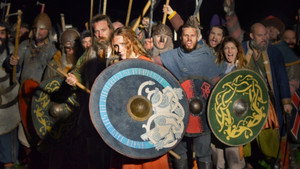
Viking Warrior Women
Drama-led documentary following the life of Signe, an orphaned Chief's daughter, who, driven by revenge, becomes an explorer and trader in the lands of the Rus Vikings.
2019

The Sea Stares at Us from Afar
Huelva, Spain, an isolated region lost in time. The grass, the sand and the sky are the same that those foreigners saw in the spring of 1895, when they crossed the sea from a distant country to mark the unspoiled terrain and extract its wealth, when the tower was new, when people could climb to the top of the highest dune and imagine that the city of Tartessos was still there, in the distance, almost invisible in the morning brume.
2018
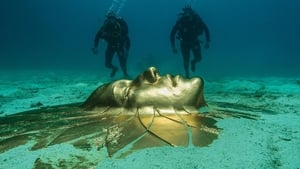
Treasures from the Wreck of the Unbelievable
This cinematic journey into the waters off East Africa chronicles the story behind artist Damien Hirst's massive exhibition of oceanic treasures.
2017
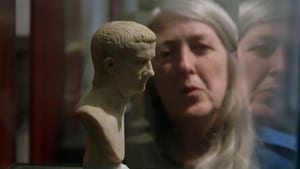
Caligula with Mary Beard
What is true and what is false in the hideous stories spread about the controversial figure of the Roman emperor Gaius Julius Caesar Augustus Germanicus (12-41), nicknamed Caligula? Professor Mary Beard explains what is accurate and what is mythical in the historical accounts that portray him as an unbalanced despot. Was he a sadistic tyrant, as Roman historians have told, or perhaps the truth about him was manipulated because of political interests?
2013
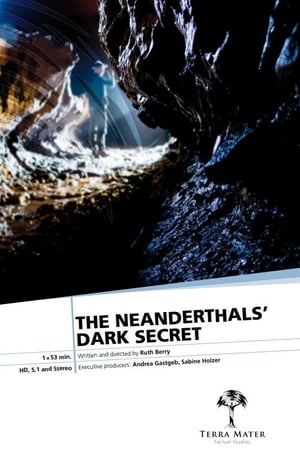
The Neanderthals’ Dark Secret
49,000 year old Neanderthal bones have been discovered by chance in a remote, mountainous region of Northern Spain. The bones may help solve the biggest Neanderthal puzzle of all – why we are here today and Neanderthals are not. ‘The Neanderthals’ dark Secret’ revolves around ongoing investigations deep inside the forbidding subterranean cave system called El Sidrón. Here, Palaeontologist Antonio Rosas and Archaeologist Marco de la Rasilla are in their 11th year of excavation. Bones from at least 12 people and 400 stone tool fragments have been recovered. We’ll bring these people back from the past. Our haunting, hologram-like Neanderthal characters, will communicate to the scientists of today, as they unlock the secrets of El Sidrón. Many mysteries surround the site, foremost, how the bones and tools came to be here in the first place. The remains aren’t weathered nor do they show signs of scavenging from large animals.
2012
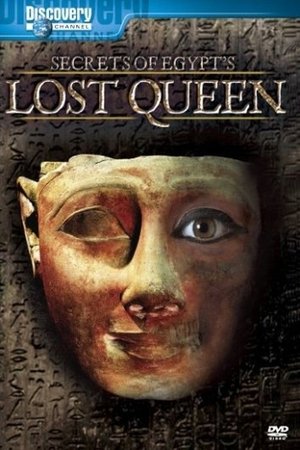
Secrets of Egypt's Lost Queen
Move over, King Tut: There's a new pharaoh on the scene. A team of top archaeologists and forensics experts revisits the story of Hatshepsut, the woman who snatched the throne dressed as a man and declared herself ruler. Despite her long and prosperous reign, her record was all but eradicated from Egyptian history in a mystery that has long puzzled scholars. But with the latest research effort captured in this program, history is about to change.
2007
The Entire History of the Maya
A documentary made by History Time on YouTube. Written, researched and produced by Pete Kelly.
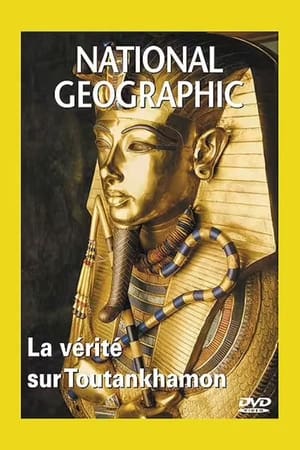
King Tut's Final Secrets
As part of a high-tech forensic probe into the demise of Egyptian Pharaoh Tutankhamun, scientists use X-rays and CT scans as they attempt to reach a conclusion about just how this famed king died. In addition, they explore the mysterious curse on explorers linked to Tut's tomb excavation.
2005
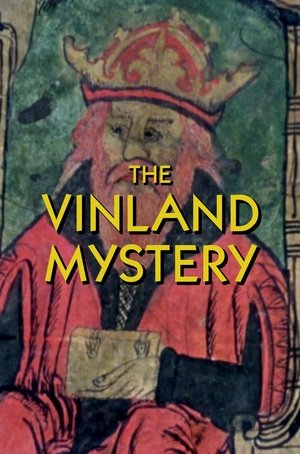
The Vinland Mystery
This short documentary depicts the search, discovery and authentication of the only known Norse settlement in North America - Vinland the Good. Mentioned in Icelandic manuscripts and speculated about for over two centuries, Vinland is known as "the place where the wild grapes grow" and was thought to be on the eastern coast between Virginia and Newfoundland. In 1960 a curious group of house mounds was uncovered at l'Anse aux Meadows in northern Newfoundland by Drs. Helge Ingstad and Anne Stine Ingstad of Norway. Added to the United Nations World Heritage List, l'Anse aux Meadows is considered one of the most important archaeological sites in the world.
1984