Watch Legends of the Sky: The Liberty Plane (2022) Online Free
Loading Cinehub...
When the United States entered World War I, its Army Air Service lacked a combat-ready aircraft – a liability that prompted a search to find an aircraft suitable for production at home and combat operations abroad. This documentary from Bowling Green filmmakers tells the story behind the single-engine DH-4 plane dubbed The Liberty Plane.
Cast
Andy James, Matthew Nogay
More Like This
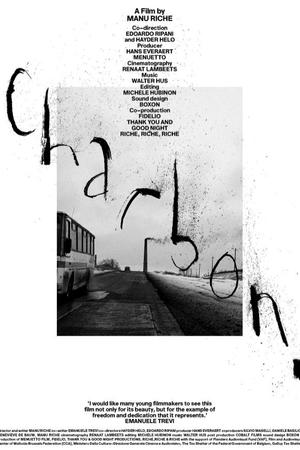
Coal
CHARBON depicts how Europe was built on fossil fuels over the past 100 years. And how it was torn apart by wars that were the result of these same fossil fuels. During 3 trips to Ukraine, Italy and Iraq, filmmaker Manu Riche explains how he and his French-German family are inseparably connected to the fate of the Iraqi filmmaker and refugee Hayder Helo.
2025
De Gaulle, le commencement
2025

8 Minutes to the Ground
The film tells the story of Larisa Savitskaya, who survived after falling from a height of more than 5,000 meters as a result of a plane crash in 1981.
2021
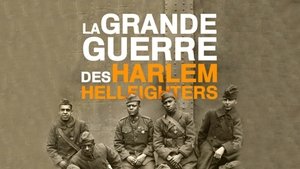
The Harlem Hellfighters' Great War
Nicknamed the "Harlem Hellfighters", these African-Americans wanted to become ordinary citizens like everyone else. They saw fighting heroically in the trenches as their chance to achieve this. In 1918, the 15th New York National Guard Regiment became the most highly decorated unit of the First World War.
2017
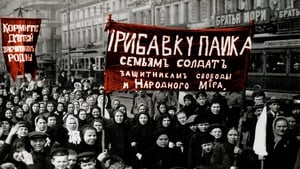
Lenin and the Other Story of the Russian Revolution
Vladimir Ilyich Ulyanov, better known as Lenin, is remembered as the instigator of the October Revolution of 1917 and, therefore, as one of the men who changed the shape of the world at that time and forever, but perhaps the actual events happened in a way different from that narrated in the history books…
2017
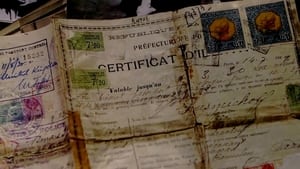
The Nansen Passport
On July 5th, 1922, Norwegian explorer, scientist and diplomat Fridtjof Nansen creates a passport with which, between 1922 and 1945, he managed to protect the fundamental human rights as citizens of the world of thousands of people, famous and anonymous, who became stateless due to the tragic events that devastated Europe in the first quarter of the 20th century.
2016

Apocalypse: The Battle of Verdun
A detailed account of one of the bloodiest battles of World War I. Between February and December 1916, the French and German armies relentlessly fought in the devastated camps around the village of Verdun.
2016
La Statue de la Liberté, naissance d'un symbole
April 1865. A handful of Republicans, ardent admirers of American democracy, gather in Glatigny to celebrate the abolition of slavery in the United States and pay tribute to President Lincoln, who was assassinated six days earlier. During dinner, Édouard de Laboulaye, the politician behind this discreet gathering, spoke passionately about the idea of a colossal statue, a symbol of freedom, as a gift from France to America. His impassioned speech captivated a young sculptor among the guests: Auguste Bartholdi. The project for the future Statue of Liberty was born. It was a seemingly impossible undertaking, to which the Colmar-born sculptor would devote twenty years of his life, moving heaven and earth on both sides of the Atlantic to ensure that his Liberty Enlightening the World would tower over New York Harbor on October 28, 1886.
2014
The Road to War (The End of an Empire)
"The Road to War" uses elaborate and fascinating computer-generated recreations and archives never seen before to examine how the assassination of Archduke Franz Ferdinand in 1914 was used by the Austro-Hungarian Empire to start a war against Serbia. The film investigates how this regional conflict involving the Central Powers and the Triple Entente escalated to become "World War I", a war with more than 17 million dead and More than 20 million injured.
2014
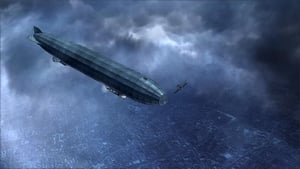
Attack of the Zeppelins
Engineer Dr Hugh Hunt revisits the little-known story of the First World War's Blitz, when the Zeppelin waged an 18-month terror campaign on the people of London.
2013
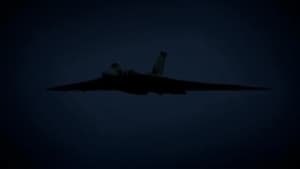
Falklands' Most Daring Raid
Documentary film about the then longest range bombing mission in history, which changed the outcome of the Falklands War.
2012
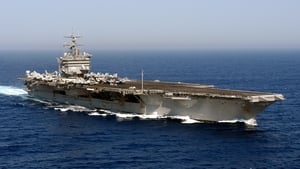
Carrier at War: The USS Enterprise
Going from 0 to 150 mph in three seconds, withstanding three Gs of force, and taking off from what's often called "the most dangerous place on the planet" are just parts of everyday life for an aircraft carrier pilot-and it's no different for the crew aboard the USS Enterprise. After being stationed in the Middle East for a year, these pilots have seen heavy action in Afghanistan and Iraq. Now, finally, they're returning home. With amazing personal stories and real-time footage from missions, this is an exciting insider's peek at life onboard a wartime aircraft carrier.
2007
Gallipoli: The Untold Stories
This program provides, through 1st hand accounts & contemporary films & photographs, a rare insight into what really happened. Together with meticulously researched stories, it provides a unique analysis of the Gallipoli campaign, including never-seen before interviews with the last 10 Gallipoli Anzacs, rare film footage showing the beach & trenches at Gallipoli.
2005
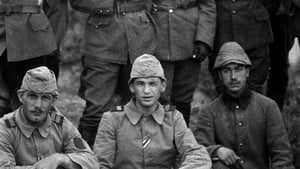
Gallipoli
The Gallipoli campaign of World War I was so controversial & devastating, it changed the face of battle forever. Using diaries, letters, photographs and memoirs, acclaimed director, Tolga Ornek, traces the personal journeys of Australian, New Zealand, British and Turkish soldiers, from innocence and patriotism to hardship and heartbreak.
2005
Dive to Bermuda Triangle
There is a mystery there and the answer lies somewhere between Bermuda, Puerto Rico and Miami. Hundreds of boats and planes have disappeared in the ocean with little or no trace at all. Most of these cases can be explained quite easily by human error or bad weather. But there are some that defy all explanation. Theories abound on these causes: Aliens, massive gas eruptions and freak waves. The documentary reveals that the boats and planes face a real danger in a triangle, but the true threat is often as strange as the wildest theory.
2004
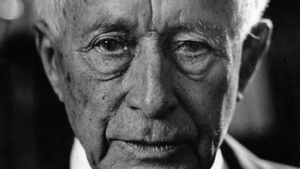
102 Years in the Heart of Europe: A Portrait of Ernst Jünger
102 Years in the Heart of Europe: A Portrait of Ernst Jünger (Swedish: 102 år i hjärtat av Europa) is a Swedish documentary film from 1998 directed by Jesper Wachtmeister. It consists of an interview by the journalist Björn Cederberg with the German writer, philosopher and war veteran Ernst Jünger (1895-1998). Jünger talks about his life, his authorship, his interests and ideas. The actor Mikael Persbrandt reads passages from some of Jünger's works, such as Storm of Steel, The Worker, On the Marble Cliffs and The Glass Bees.
1998
Gallipoli - The Dardenelles Campaign
An overview of one of the greatest disasters of the first World War WWI - the Dardanelles Campaign at Gallipoli, Turkey.
1996
Clouds
Clouds 1969 by the British filmmaker Peter Gidal is a film comprised of ten minutes of looped footage of the sky, shot with a handheld camera using a zoom to achieve close-up images. Aside from the amorphous shapes of the clouds, the only forms to appear in the film are an aeroplane flying overhead and the side of a building, and these only as fleeting glimpses. The formless image of the sky and the repetition of the footage on a loop prevent any clear narrative development within the film. The minimal soundtrack consists of a sustained oscillating sine wave, consistently audible throughout the film without progression or climax. The work is shown as a projection and was not produced in an edition. The subject of the film can be said to be the material qualities of film itself: the grain, the light, the shadow and inconsistencies in the print.
1969

Benito Mussolini: Anatomy of a Dictator
1962
Belgian Campaigns in Africa
Report retracing the military campaigns of the Belgian colonial troops in Africa through geographical maps, title cards, and documentary footage.
1918