Watch Le besoin de croyance et le besoin de vérité (2008) Online Free
More Like This
Atado
Somewhere, a man tinkers, cooks, and smokes in silence, caught between the tranquility of an afternoon nap and the strangeness of time stretching out.
2025
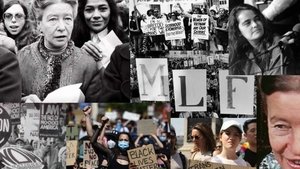
Le deuxième sexe : Sur les traces de Simone de Beauvoir
Published in 1949, The Second Sex became the bible of global feminism. An essential work that passionately advocates for gender equality, women's independence, and the liberation of morals. Today, how does this seminal work continue to resonate in our contemporary world? Conceived as an initiatory journey to the origins of Simone de Beauvoir's thinking, the film The Second Sex: In the Footsteps of Simone de Beauvoir takes us to the United States, to the places that inspired the philosopher and nourished her theories. An American road trip bringing together the worst and the best, predatory capitalism and mad love. A unique reinterpretation in the company of the great thinkers of our century.
2025

Looking for Simone
In 1949, philosopher and novelist Simone de Beauvoir wrote the groundbreaking The Second Sex, launching a disruptive discourse on women’s oppression and second-class citizenship. This film dissects the origins and relevance of this bible of feminism, charting de Beauvoir’s fact-finding journey across the US to research her book. The timely and fascinating film honors de Beauvoir’s brilliance and limitations, connecting her revolutionary ideas to the pressing issues women face today.
2024

Hannah Arendt, la liberté d'être libre
In a time of resurgence of social protests, political radicalization and distrust of power, Arendt's thought has never been more relevant: A critical thinker according to some or a conservative according to others, this great figure of the intellectual world remains, in many ways, an enigma. Who was Hannah Arendt?
2023

The FRUSTRATION of SENSE
The times are fueled by anxiety, and our tweets will not say the opposite. A feeling of the end of the world hangs over our economic model. The frustration, for those who feel it, seems inevitable. The question of meaning has never been so acute. It’s time to talk about it, and who knows, to find answers.
2019

Autonome Artefakte
2019
Miracle
A philosophical inquiry about the miracle, through the interview with three specialists that seek to understand the specificity of these phenomena.
2019
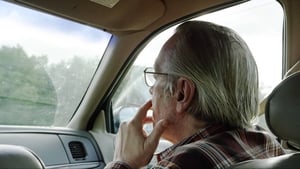
The Garden of Afflictions
Brazilian philosopher Olavo de Carvalho's thinking, presented through his presence, his daily work routine and his family life in Virginia (USA).
2017
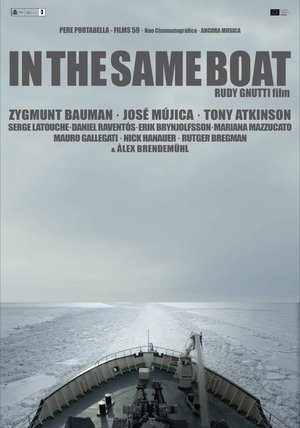
In the same boat
A documentary about the technological progress responsibility in employment destruction, analyzed by philosopher Zygmunt Bauman and others.
2016
The Altruism Revolution
For generations, we have believed that man is driven by ruthless self-interest. But over the past decade, this idea has been increasingly challenged. New research from fields as diverse as political science, psychology, sociology and experimental economics is forcing us to rethink human actions and motivation. ‘The Altruism Revolution’ examines the scientific reasons behind the call for a more caring society.
2015
Equilíbrio e Graça
A short film about the meeting of a Trappist monk and a Zen Buddhist master.
2002
The Betrayal by Technology: A Portrait of Jacques Ellul
A portrait of Jacques Ellul, a French theologian/sociologist & anarchist who first became well-known to American readers with the English publishing of his book The Technological Society in 1964. For Ellul, technique represented an entire way of life characterized by life fragmented so that efficiency ultimately rules over all ethical decisions. Ellul warned that technique was having drastic effects on all aspects of modern life. Many Green Anarchists have cited Ellul's work on technique as influential on their thought.
1992
Our Century
A man paves his own way to his own soul through an intellectual quest, tragedies of nations and personal drama. The road moving through the cosmic distances is a flight into one's internal world. This flight and this drama are revealed in this philosophical film-poem.
1983
The Pleasure of Finding Things Out
Richard Feynman was a scientific genius with - in his words - a "limited intelligence". This dichotomy is just one of the characteristics that made him a fascinating subject. The Pleasure of Finding Things Out exposes us to many more of these intriguing attributes by featuring an extensive conversation with the acclaimed Nobel Prize winner. During the course of the interview, which was conducted in 1981, Feynman uses the undeniable power of the personal to convey otherwise challenging scientific theories. His colorful and lucid stories make abstract concepts tangible, and his warm presence is sure to inspire interest and awe from even the most reluctant student of science. His insights are profound, but his delivery is anything but dry and ostentatious.
1981
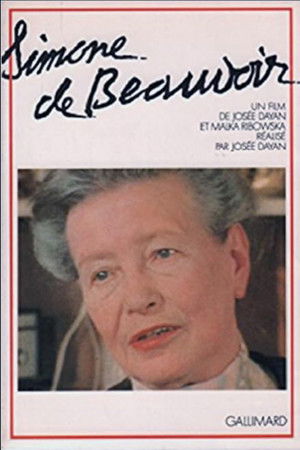
Simone de Beauvoir
Documentary on writer/philospher Simone de Beauvoir via interviews of herself and friends supplimented with archive footage resulting in an intimate portrait avaoiding the usual clichés.
1979

Søren Kierkegaard
1977
Gottlos Beten
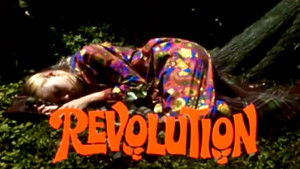
Revolution
The San Francisco scene in 1967-68. Documentary about hippies shot during the height of the movement . Viewpoints from many kinds of people. Music by Steve Miller Band, Mother Earth, Quicksilver Messenger Service and others.
1968
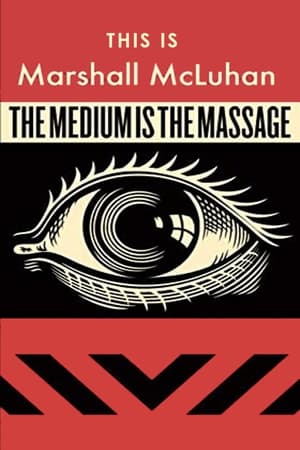
This Is Marshall McLuhan: The Medium Is The Massage
Investigates the central ideas of Marshall McLuhan using pictorial techniques and including his own comments. Examines the reaction of others to his views and points out that his interest is the impact of electronic technology on the contemporary world.
1967

Epistemology: Floating Images and the Search for a Greater Enallage
Philosophical excerpts breaking the rules of language overlapped with footage of nature, inscrutable voice recordings, strange noises, and classical music.