Watch Land Of The Pyramids: Discover The Secrets Of Ancient Egypt (2007) Online Free
More Like This

Snaketown- Early Indian Farmers Conquer the Arizona Desert
This film is a documentary on the archaeological excavation of the Snaketown Dig just out of Phoenix Arizona. Snaketown in Arizona is dated by some scholars to around 300 BCE., The site of Snaketown is positioned on the Gila River Basin near Phoenix AZ at the Gila River Indian Community. Both the Hohokam and the Ootam peoples have occupied the land and from what I gather there is some contention on who did what when. Isn't their always. This is a really great film on the excavation of Snaketown and is a valuable educational resource I am fortunate to have. The Pima Indian father of Ira Hayes makes an appearance.
2025

Secrets of the Neanderthals
This documentary delves into the mysteries surrounding the Neanderthals and what their fossil record tells us about their lives and disappearance.
2024

Amazones, femmes guerrières de l'Antiquité
2024
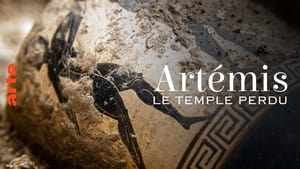
Artemis - The Lost Temple
The location of the sanctuary of Artemis at Amarynthos has long remained one of the last great archaeological enigmas of Ancient Greece. This vast Artemision is mentioned in several ancient texts, which even go so far as to specify the distance that separates the sanctuary from the ancient city of Eretria. But despite the efforts of numerous scientific expeditions since the end of the 19th century, no trace of the sanctuary or its temple has ever been found. In the 1960s, a young archaeologist - Denis Knoepfler - set out in search of the lost temple of Artemis. His investigations soon led him into the hinterland of the island of Euboea, well beyond the limits of previous expeditions. It would take five decades of searching, unshakeable faith and moving tons of earth to finally unravel the mystery. In 2017, a tenacious Swiss-Greek team of archaeologists formally identified the sanctuary of Artemis, where Denis Knoepfler had predicted it lay buried.
2023

The Giza Pyramids: Reaching for the Stars
Explores the Pyramids of Giza as Egyptologists try to unravel the mysteries and decipher the clues behind these stone giants built over 4,500 years ago.
2023
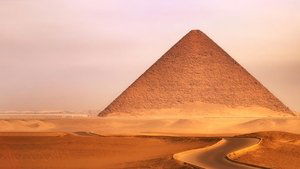
L'Énigme de la pyramide maudite : Dahchour
2023
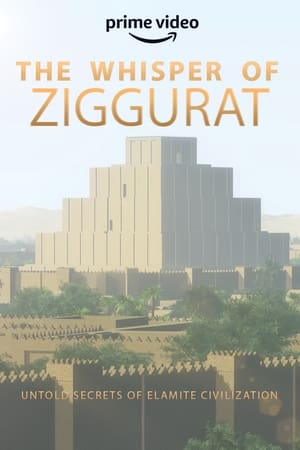
The Whisper of Ziggurat: Untold Secrets of Elamite Civilization
5000 years ago the ancient Elamites established a glorious civilization that lasted about three millennia. They created marvelous works in architecture and craftsmanship. These works of art depict the lifestyle, thoughts, and beliefs of the Elamites.
2020

Thus speaks Tarām-Kūbi - Assyrian Correspondence
About 4 000 years ago, Assyrian merchants established a commercial settlement in the ancient city of Kaneš, within Central Anatolia. They came from Aššur, north of Mesopotamia. We have come to understand their history through their writings on clay tablets that have stood the test of time: more than 22 500 cuneiform tablets have been unearthed from the archaeological site of Kültepe. How did these Mesopotamian clay tablets arrived in Anatolia and what do they tell us? The voice of Tarām-Kūbi, an Assyrian woman who corresponded with her brother and her husband in Kaneš, takes us back in time.
2020
The Last Apostle: Journies in the Holy Land
Dr. Mark Fairchild, world-renowned archaeologist, traces the hidden years of Saint Paul's life in the mountainous Turkish countryside of Rough Cilicia.
2020

Mystery of the Celtic Tomb
Explore the origins of the Celts, uncovering their culture through preserved salt mines, ancient artifacts, and the mystery of a 2,400-year-old tomb.
2019

Egypt's Great Pyramid: The New Evidence
Egypt's Great Pyramid may be humanity's greatest achievement: a skyscraper of stone built without computers or complex machinery. This super-sized tomb has fascinated historians and archaeologists for centuries, but exactly how the ancient Egyptians finished the monument and fitted its two and a half million blocks in a quarter of a century has long remained an enigma. Today the secrets of the pyramid are finally being revealed thanks to a series of new findings. At the foot of the monument, archaeologists are uncovering the last surviving relic of the pharaoh Khufu, whose tomb it is: a huge ceremonial boat buried in flat-pack form for more than 4500 years. It's a clue that points to the important role that ships and water could have played in the pyramids' construction. This documentary follows investigations that reveal how strong the link between pyramids and boats is. It's a story of more than how Egypt built a pyramid: it's about how the pyramid helped build the modern world.
2017

Mysteries of Ancient China
Archeologists discover a pit filled with terracotta warriors buried to protect the grave of the First Emperor of China.
2016
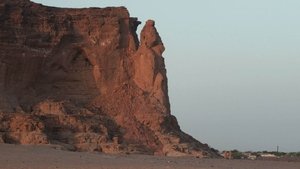
Rise of the Black Pharaohs
Around 800 BC, Kush, a little-known subject state of Egypt, rose up and conquered the Egyptians, enthroned its own Pharaohs, and ruled over the empire of King Tut for nearly 100 years. This unlikely chapter of history has been buried by the Egyptians and belittled by early archaeologists, who refused to believe that dark skinned Africans could have risen so high. But now, in the heart of Sudan, archeologists Geoff Emberling and Tim Kendall are bringing the truth about the Black Pharaohs to life.
2014

12.000 Anos de História - Arqueologia e Pré História do RS
2013
The Revelation of the Pyramids
For centuries, the Great Pyramids have fascinated Mankind. Patrice Pooyard's The Revelation Of The Pyramids reveals what lies behind the greatest of archaeological mysteries: a message of paramount importance for humanity. From China to Peru, from Egypt to Mexico, through the world's most enigmatic and most beautiful sites, the director has spent 6 years meeting eminent scientific specialists and verifying his discoveries. The result will shake the teaching of history to its very core, and revolutionize Egyptology entirely. A great odyssey along a breathtaking route climaxes in a revelation as unexpected as it is staggering.
2010
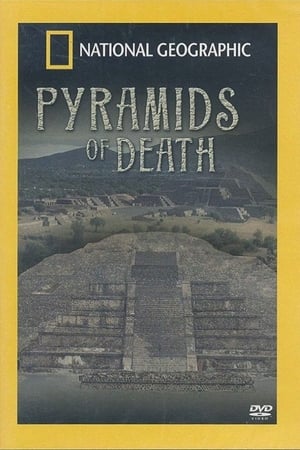
National Geographic: Pyramids of Death
They are some of the biggest pyramids on the planet, millions of tons of stone and earth towering above the landscape in a display of massive wealth and power. But it wasn't the pharaohs that built these pyramids. This is the majestic ancient city of Teotihuacán, Mexico, home to one of the most powerful civilizations of its time. But why, around 750 AD, did the advanced civilization that created Teotihuacán suddenly vanish? The identities of its founders, the language they spoke and even the original name of the city are all unknown. DNA analysis of bodies from Teotihuacán shows they weren't Mayan, Incan or Aztec, but an entirely different civilization. It was assumed to have been a peaceful, utopian society, but the latest discoveries are revealing a much darker scenario. In the depths of Teotihuacán's pyramids, experts have uncovered vault after vault filled with curious human remains.
2005
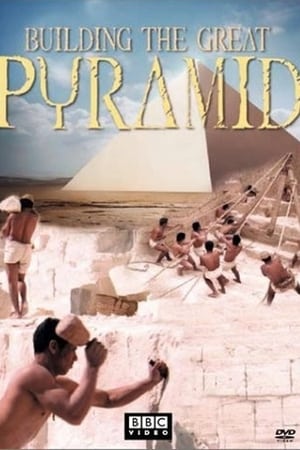
Pyramid
Of the Seven Wonders of the Ancient World, the Pyramid is the only one to survive. Many believe that even with our 21st-century technology, we could not build anything like it today. Based on the most up-to-date research and the latest archaeological discoveries, here is how the Pyramid came to be.
2002
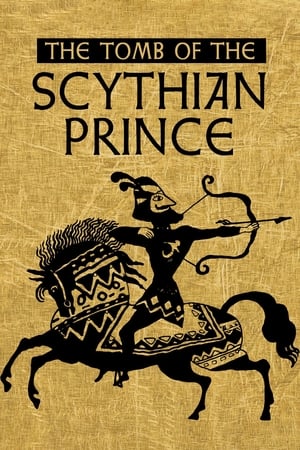
The Tomb of the Scythian Prince
The Scythians, skilled horsemen and nomadic conquerors, built a feared empire in the vast Eurasian steppe between the 9th and 3rd centuries B.C. All that remains are their graves: the Kourganes. In April 1999, a 2400 year-old Scythian tomb was discovered in Kazakhstan. It contained, among other treasures, twelve horses completely harnessed in gold, suggesting high social status.
2000
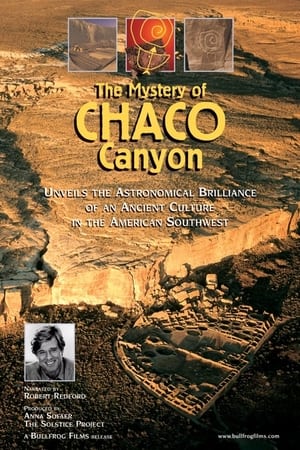
The Mystery of Chaco Canyon
Chaco Canyon, located in northwest New Mexico, is perhaps the only site in the world constructed in an elaborate pattern that mirrors the yearly cycle of the sun and the 19-year cycle of the moon. How did an ancient civilization, with no known written language, arrange its buildings into a virtual celestial calendar, spanning an area roughly the size of Ireland?
1999
The Lost Pharaoh: The Search for Akhenaten
Ancient pharaoh Akhenaten was almost lost to history. Canadian archaeologist Donald Redford, who uncovered the foundation of one of the pharaoh’s many temples, attempts to finally piece together this great Egyptian ruler’s enigmatic story.
1980