Watch L'Afrique et la recherche scientifique (1964) Online Free
This documentary offers an overview of French scientific research in Africa French scientific research in Africa: hydrology, botany, biology oil palm and coconut cultivation, industrial sea fishing and and urban planning. Film montage taking stock of scientific research research in Africa, mainly in the fields of hydrology hydrology, botany, biology and agriculture. The film is a compilation of extracts from several short films made by Jean Rouch in Mali, Niger and Côte d'Ivoire between 1962 and 1963: Abidjan, port de pêche, Le Mil, Le Cocotier and Le Palmier à l'huile. l'huile.
More Like This

Sahel: Pátria ou Morte
For decades, the countries of the African Sahel region have been targets of colonialism and exploitation by France and other Western powers. This documentary addresses the popular resistance and new paths of development forged by Burkina Faso, Niger, and Mali after experiencing civil and military uprisings in recent years. The film explores the popular resistance that sustains the revolution in the three Sahel countries and was made after extensive coverage of the ongoing social dynamics and geopolitical disputes.
2025
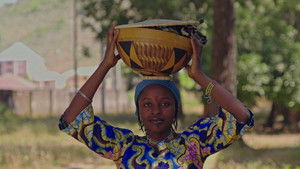
The Sahel Cuisine: Fura Da Nono
A documentary film about the art and process of making Fura Da Nono - a type of food that is originated from West Africa's Sahel region, one of the many unique traditions of the Fulani people which has been preserved for centuries.
2024

Madu
From practicing barefoot on the streets of Lagos to performing on stage in England, twelve year old Anthony Madu leaves his home in Nigeria to study at one of the most prestigious ballet schools in the world. Anthony, who had barely left his neighborhood in Lagos, finds himself thrust into a new world where his wildest dream is suddenly within reach. His journey is a story of extraordinary obstacles, courage, growth, and ultimately, his search for belonging.
2024
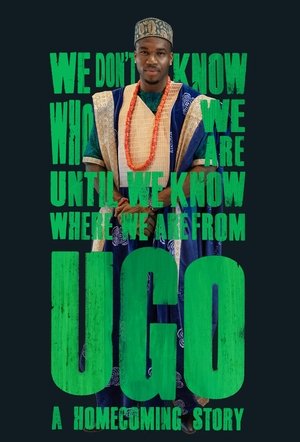
Ugo: A Homecoming Story
Greek-Nigerian NBA superstar Giannis Antetokounmpo returns to Nigeria for the first time.
2024
2G
Agadez in Niger has long been the starting point for people smugglers moving migrants through the desert to Libya. Under pressure from Europe, the Niger government has been trying to combat people smuggling, but the local economy offers few alternatives. Those who give up smuggling usually end up in gold mining. But it’s hard and dangerous work, and only a few make their fortunes.
2023
Love and Sex in West Africa
Ivory Coast, the Democratic Republic of Congo, and Senegal – when it comes to love and sex, these African countries are caught between tradition and modernity.
2022

Chasing the Sound
Travel with Major Lazer to Ghana and Nigeria to make the world smaller by making the party bigger. They are collaborating with cutting-edge Afrobeats artists including Mr.Eazi, Efya, Teni, Sarkodie and Amaarae as they explore the culture and history of Africa. Chasing the Sound: Major Lazer, watch now only on YouTube.
2020

January 15, 1970: Untold Memories of the Nigeria-Biafra War
January 15, 1970: Untold Memories of the Nigeria-Biafra War is a documentary that tells the story of the Nigeria-Biafra war and its end on January 15, 1970. The documentary was produced by the Center For Memories (CFM) in 2020. It features personal accounts from victims of the war, who shared their experiences to help with healing and reconciliation. The Nigeria-Biafra war, also known as the Nigerian Civil War, was fought between Nigeria and the Republic of Biafra from 1967 to 1970. The war was one of the first to be televised globally, and images of starving Biafran children were shown in the mass media of Western countries. The war highlighted challenges in pan-Africanism and the Organization of African Unity.
2020
Stolen Daughters: Kidnapped By Boko Haram
The story of the freed female hostages of Boko Haram, detailing their lives in captivity and since their release.
2018
Niger Story
A collection of seven little stories about Niger and its Sahara desert from the illustrated book by Hideko Fukuda & Masanori Inui.
2017
Lack of Evidence
In Nigeria, to be a twin can be a blessing or a curse. The father of O is the village chief, a witch doctor who believes in the curse of twins. One day, this witch doctor tried to kill his two sons during a ritual ceremony: O managed to escape but saw his brother being murdered. Having fled across his country, he succeeded, by chance, in leaving Nigeria and going into exile in France.
2011
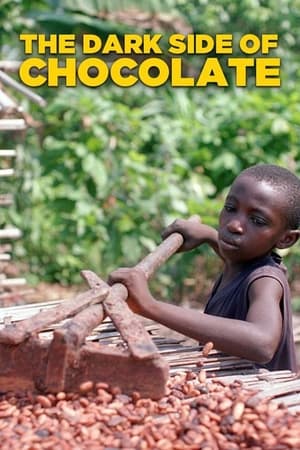
The Dark Side of Chocolate
A team of journalists investigate how human trafficking and child labor in the Ivory Coast fuels the worldwide chocolate industry. The crew interview both proponents and opponents of these alleged practices, and use hidden camera techniques to delve into the gritty world of cocoa plantations.
2010
Nollywood Babylon
Nigeria's film industry, Nollywood, is the third-largest in the world--an unstoppable economic and cultural force that has taken the continent by storm and is now bursting beyond the borders of Africa. "Nollywood Babylon" is a feature documentary detailing the industry's phenomenal success. Propelled by a booming 1970s soundtrack of African underground music, the movie presents an electric vision of a modern African metropolis and a revealing look at the powerhouse that is Nigerian cinema.
2009
A Murder in Abidjan
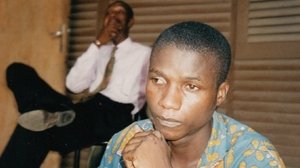
1995. On the outskirts of Abidjan, the largest city in Ivory Coast, a policeman is murdered. Shot outside his vehicle, while his fiancée sits in the car, terrified. Superintendent Kouassi is the detective in charge of the investigation. Tall and lanky, he moves with the tired energy of a man who has seen it all. Drawing on a network of underworld characters with dubious information, Kouassi’s team begins bringing in potential suspects and subjecting them to horrific brutality: beating them with sticks, hanging them upside-down, threatening their lives. Some of the men are left so broken they have to literally drag themselves into Kouassi’s office later, to be interrogated while lying on the floor, their bodies a mess of bruises, broken bones, and lacerations.
2000
The Snake in My Bed
In common with many L.A. Rebellion films, Snake touches on such themes as institutionalized racism, colonialism and the plight of women of color. Narrated in the first person by the filmmaker as an epistle to her son, The Snake in My Bed tells Diegu's story as a Nigerian woman in Lagos who is romantically pursed by a German national who has “gone native.” Despite his secretive and duplicitous actions, she eventually agrees to marry him and has his child, only to learn that he is a bigamist with a German wife and child.
1995
Fela Kuti: Teacher Don't Teach Me Nonsense
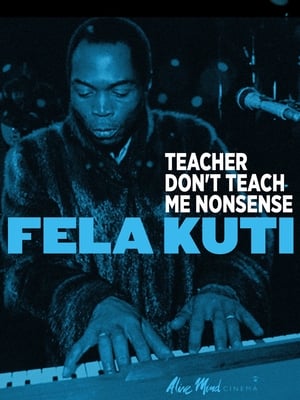
A huge influence on world music, Nigerian artist Fela Kuti played many instruments, pioneered afrobeat music and served as a prominent activist for human rights in Africa. This 1984 documentary examines the life and music of the remarkable man. Using his music to raise awareness, Kuti embraced social justice themes. He died in 1997 of complications from AIDS. Footage from his legendary show in Glastonbury, England, is included.
1984

Pam Kuso Kar (Breaking Pam's Vases)
In February 1974, Pam Sambo Zima, the oldest of the priests of possession in Niamey, Niger, died at the age of seventy-plus years. In his backyard, the followers from the possession cult symbolically break the dead priest's ritual vases and cry for the deceased while dividing up the clothes of the divinities.
1974
Drums from the Past
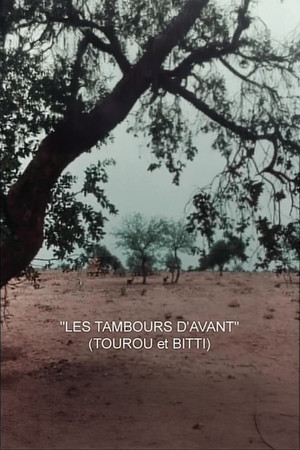
Filmed in May 1971 in Niger, this short documentary records a possession ritual performed by the Simiri people in response to a locust invasion. The ceremony centers on the beating of the archaic drums Tourou and Bitti, used to invoke spirit forces through music, dance, and trance. Shot in a single continuous take, the film documents a concentrated moment of collective ritual practice, reflecting Jean Rouch’s first-person ethnographic approach and direct participation in the event.
1971
The Endless Summer
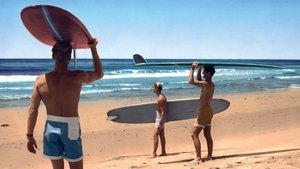
Bruce Brown's The Endless Summer is one of the first and most influential surf movies of all time. The film documents American surfers Mike Hynson and Robert August as they travel the world during California’s winter (which, back in 1965 was off-season for surfing) in search of the perfect wave and ultimately, an endless summer.
1966

Circumcision
Rites and operation of the circumcision of thirty Songhai children on the Niger. Material of this film has been used to make "Les Fils de l'Eau".
1949