Watch La Vie sexuelle des Belges partie 3 - Fermeture de l'usine Renault à Vilvoorde (1999) Online Free
The Renault factory in Belgium must close down. Nobody can believe it. We follow the investigations by the director who is at the heart of the action and who interviews main politicians, the workers who violently protest and the direction. In the fiction part the president-director of Renault, Schweitzer is killed by one of the workers.
More Like This
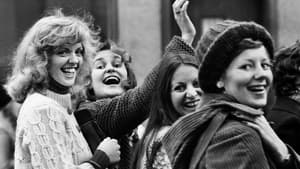
The Day Iceland Stood Still
When 90% of Iceland’s women walked off the job and out of their homes one morning in 1975, they brought their country to its knees and catapulted Iceland to the forefront of today's global fight for gender equality. Unexpectedly funny, laced with evocative animation and powerfully told by the women who lived it – this is the true story of 12 hours that launched a revolution.
2025

8/1 – A Democracia Resiste
Unpublished images and exclusive testimonies from the main figures in power who tell how they faced the coup threat of January 8, 2023, a recent trauma in the country's history and revealing something that still remains hidden.
2024

Ecos de huelga
2021
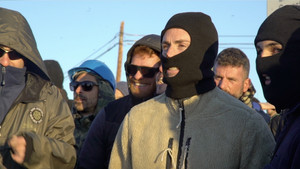
In Spite of Ourselves
An explosion in one of the largest chemical plants in Europe, the Petrochemical complex in Tarragona, triggers the labour struggle of a group of workers who demand what is fair for everyone.
2021

The Year of the Discovery
In 1992 – 500 years after the beginning of Spain's global empire with the discovery of America – Spain proudly presented itself to the international community as a modern, developed, dynamic country through the Olympic Games in Barcelona and the Expo in Seville. But for filmmaker Luis López Carrasco (1981, Murcia), 1992 was also the year in which the regional parliament building in Cartagena was razed during furious protests against the threatened closure of various local industries. El año del descubrimiento revives this almost forgotten history in a typical Spanish bar in Cartagena, where different generations come together to drink, eat, smoke and talk. Stories from witnesses, demonstrators and strikers from back then and discussions among younger café visitors on themes such as class consciousness, the economic crisis and the role of unions percolate to the surface amidst talk of other life issues.
2020
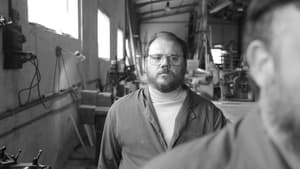
Vigo 1972
‘VIGO 1972’ narrates the events which took place in Vigo in September 1972, when the firing of five Citröen auto workers resulted in the largest general strike in the history of Galicia — with over thirty thousand workers — all of this during the Franco dictatorship in Spain.
2017

A Faster Horse
David Gelb (Jiro Dreams of Sushi) tackles another venerable, beloved, and long-standing institution: the Mustang, crown jewel of the Ford fleet. Only this institution is in turmoil. As the fiftieth anniversary of the Mustang approaches and the car industry struggles through the deepest trough of the financial crisis, Ford launches a redesign. Now the jobs of workers at Ford’s Flat Rock Assembly Plant, the expectations of the thousands of Mustang devotees, and the livelihood of the city of Detroit are all placed squarely on the shoulders of Dave Pericak. As chief program engineer, he will guide the 2015 Mustang from assembly floor to showroom—if only he can get that vibration out of the steering wheel.
2015
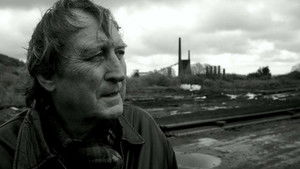
The Miners' Strike
Teaming up with director Karl Francis, Dafydd Hywel speaks to some of the coal miners and their wives who played a huge part in the Miners' Strike of 1984-5, and their descendants, who have inherited a Wales without coal mines.
2015

Jinsuk & Me
I have been pretty satisfied with my life before I got on the bus. When I do in June 2011, my whole life turns upside down. I am just a regular passenger at first. Like other people I was sorry, and felt obliged to help and care for other passengers. Then I begin to film these common heroes with my camera. Those who speak about hope, who provide it and get on the bus, Ms. Kim Jin-suk, and other crane laborers who risk their safety while demonstrating for their rights on high. She, while stationed insecurely on high, begins interacting with the world through Twitter and makes friends. Then I realize I really love her. Will we have her back safely?
2012
Dias de Greve
The struggle of a small group of blacksmiths trapped between keeping a long going strike with claims for better fees and the necessity of getting back to work when there's no money left for basic necessities.
2009

Les 16 de Basse-Pointe
2009
Contract
Documentary about the nurses' strike in Finland on autumn 2007.
2008
The Flickering Flame
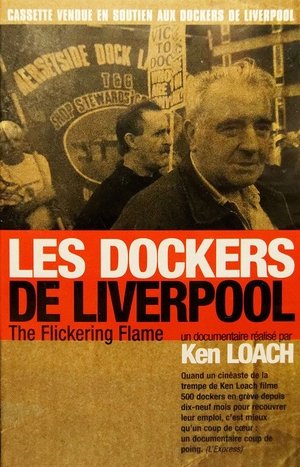
Documentary following dockers of Liverpool sacked in a labour dispute and their supporters’ group, Women of the Waterfront, as they receive support from around the world and seek solidarity at the TUC conference.
1996
VOYAGES AU PAYS DE LA PEUGE
1991
Ms Rhymney Valley
Portrait of a community in the heart of South Wales almost one year into the miners' strike of the 1980s.
1985
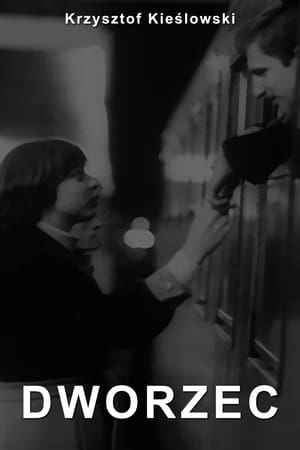
Railway Station
Warsaw's Central Railway Station. 'Someone has fallen asleep, someone's waiting for somebody else. Maybe they'll come, maybe they won't. The film is about people looking for something.
1980
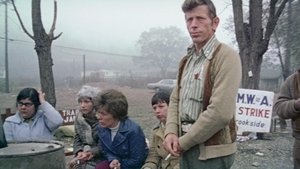
Harlan County U.S.A.
This film documents the coal miners' strike against the Brookside Mine of the Eastover Mining Company in Harlan County, Kentucky in June, 1973. Eastover's refusal to sign a contract (when the miners joined with the United Mine Workers of America) led to the strike, which lasted more than a year and included violent battles between gun-toting company thugs/scabs and the picketing miners and their supportive women-folk. Director Barbara Kopple puts the strike into perspective by giving us some background on the historical plight of the miners and some history of the UMWA. Preserved by the Academy Film Archive in partnership with New York Women in Film & Television in 2004.
1977

British Sounds
Jean-Luc Godard brings his firebrand political cinema to the UK, exploring the revolutionary signals in late '60s British society. Constructed as a montage of various disconnected political acts (in line with Godard's then appropriation of Soviet director Dziga Vertov's agitprop techniques), it combines a diverse range of footage, from students discussing The Beatles to the production line at the MG factory in Oxfordshire, burnished with onscreen political sloganeering.
1970
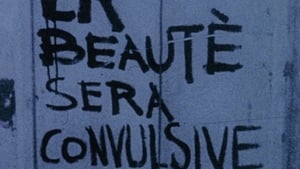
A Film Like Any Other
An analysis of the social upheaval of May 1968, made in the immediate wake of the workers’ and students’ protests. The picture consists of two parts, each with with identical image tracks, and differing narration.
1968
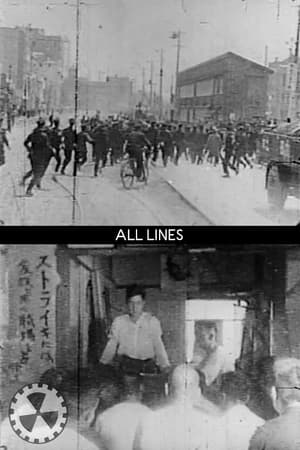
All Lines
This was a news film with elements of reenactment. From December 1927 to 1932, 2,000 bus and train drivers were fired, provoking a strike. This film was edited out of footage shot from that strike over a long period.
1932