Watch La Sonnambula (2008) Online Free
La Sonnambula is an idillic, classical and intense melodramma with an extremely fine, lyrical musicality and tense with pure "canto", suspended between Arcadia and Romanticism. It is a combination of tender and melancholic sentiments and of tragic and moving passion, in a natural uncontaminated and innocent atmosphere and humanity which clearly represent the artistic experience of the composer. The charming staging by Hugo de Ana, at the Teatro Lirico di Cagliari goes back to January 2007. Through fascinating tableaux vivants, references to 17th century Romantic painting and refined visual projections, it is a tribute to Luchino Visconti. Visconti produced the memorabile performance of Sonnambula in March at the Scala di Milano with the magnificant Maria Callas.
Cast
Eglise Gutierrez, Simone Alaimo, Gabriella Colecchia, Antonino Siragusa, Sandra Pastrana, Gabriele Nani, Max René Cosotti
More Like This
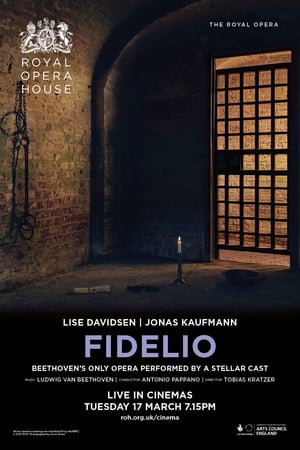
Royal Opera House: Fidelio
Beethoven’s only opera is a masterpiece, an uplifting story of risk and triumph. In this new production, conducted by Antonio Pappano, Jonas Kaufmann plays the political prisoner Florestan, and Lise Davidsen his wife Leonore (disguised as ‘Fidelio’) who daringly sets out to rescue him. Set in strong counterpoint are the ingredients of domestic intrigue, determined love and the cruelty of an oppressive regime. The music is transcendent throughout and includes the famous Act I Quartet, the Prisoners’ Chorus and Florestan’s impassioned Act II cry in the darkness and vision of hope. Tobias Kratzer’s new staging brings together the dark reality of the French Revolutionary ‘Terror’ and our own time to illuminate Fidelio’s inspiring message of shared humanity.
2020
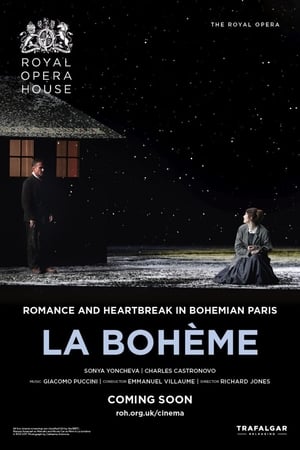
Royal Opera House: La Bohème
Richard Jones’ “La bohème” is an important weapon in the Royal Opera’s commercial arsenal. This is its second revival since Jones’ production hit the stage in autumn 2017, replacing John Copley’s beloved 40-year old staging, resplendent with period detail and resolutely naturalist. Jones brings a considerable break with the past in his approach, pointing the way towards thought-provoking possibilities for the work, though it is a clearly a show that defers to the need for regular revival and breadth of appeal.
2020
Jenůfa
When a beautiful young woman in rural Moravia becomes unexpectedly pregnant, she learns that love is sometimes only skin-deep. Janáček took Gabriela Preissová's grim tale of infanticide and redemption, and condensed it into a masterful, spine-chilling drama. The tragic plight of the protagonists is presented with unsentimental realism that cannot help but trigger a response of deep compassion. Premiered at the National Theatre in the composer's hometown of Brno 115 years ago, the opera took him nine years to complete and is the first in which his distinctive voice can clearly be heard.
2019
Sternenhoch
Trapped in an abusive marriage, a wealthy German prince desperately seeks a way out. But what appears to be the road to salvation soon turns into a highway to hell. The universal language of music meets the international language of Esperanto in this debut opera by Ivan Acher. The carpenter, forest worker, designer and composer has cleverly blended electro-acoustic and contemporary music to breathe life into Ladislav Klíma’s expressionist novel, The Sufferings of Prince Sternenhoch.
2019
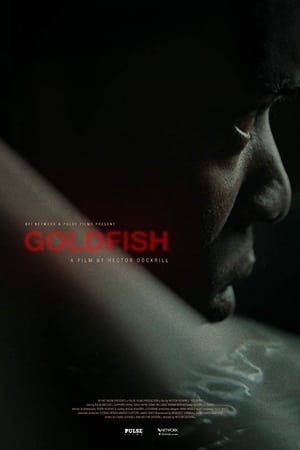
Goldfish
A hopeful and moving story of love and loss. Set against the gritty backdrop of south London, one brave little girl goes on a journey of discovery in search of courage, resolve, and her big brother’s heart. GOLDFISH explores themes of mental health in young men, violence, and cultural stereotypes.
2019
The Metropolitan Opera: Tosca
Sir David McVicar’s bold new staging of Tosca, Puccini’s operatic thriller of Napoleonic Rome, thrilled Met audiences when it rang in the New Year in 2018. Only weeks later, the production was seen by opera lovers worldwide as part of the Met’s Live in HD series of cinema presentations. In this performance, Bulgarian soprano Sonya Yoncheva is the passionate title diva, opposite charismatic tenor Vittorio Grigolo as her lover, the idealistic painter Mario Cavaradossi. Baritone Željko Lučić is the menacing Baron Scarpia, the evil chief of police who employs brutal tactics to ensnare both criminals and sexual conquests. On the podium, Emmanuel Villaume conducts the electrifying score, which features some of Puccini’s most memorable melodies.
2018

The Metropolitan Opera: The Exterminating Angel
After the acclaimed Met premiere of Thomas Adès's "The Tempest" in 2012, the composer returned with another masterpiece, this time inspired by filmmaker Luis Buñuel's seminal surrealist classic "El Ángel Exterminador", during the 2017–18 season. As the opera opens, a group of elegant socialites gather for a lavish dinner party, but when it is time to leave for the night, no one is able to escape. Soon, their behavior becomes increasingly erratic and savage. The large ensemble cast tackles both the vocal and dramatic demands of Adès's opera with one riveting performance after another. Tom Cairns, who also penned the work's libretto, directs an engrossing and inventive production, using a towering wooden archway to trap the characters onstage. And Adès himself takes the podium to conduct the frenzied score, which features a host of unconventional instruments, including the eerie electronic ondes Martenot.
2017
The Metropolitan Opera: Norma
Deep in a forest where druids and warriors seek revenge against the conquering Romans, Norma is scorned by the Roman proconsul Pollione, with whom she has two children. Her kindness turns to fury when she discovers that Pollione has taken Adalgisa, a novice priestess, as his new lover. When Pollione loses his high rank in the army and is offered as a sacrifice, Norma promises him freedom under one condition.
2017
The Legend of the Invisible City of Kitezh
Opera lies at the heart of Rimsky-Korsakov's colourful idiom, but performances are few and far between; this realisation of his penultimate and grandest stage work is a very rare and special experience. Kitezh is known as "the Russian Parsifal", which encapsulates its mystical flavour and steady unfolding of a legend of redemption
2012
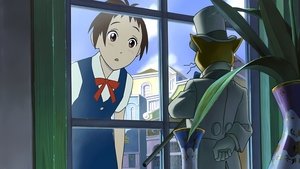
The Cat Returns
Young Haru rescues a cat from being run over, but soon learns it's no ordinary feline; it happens to be the Prince of the Cats.
2002
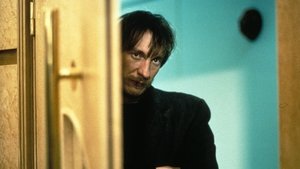
Naked
An unemployed Brit vents his rage on unsuspecting strangers as he embarks on a nocturnal London odyssey.
1993
Der Goggolori
1987

Hannah and Her Sisters
Between two Thanksgivings, Hannah's husband falls in love with her sister Lee, while her hypochondriac ex-husband rekindles his relationship with her sister Holly.
1986

Donkey Skin
A fairy godmother helps a princess disguise herself so she won't have to marry her father.
1970

Louis Riel
Opera by Harry Somers portraying Metis leader Louis Riel and his Northwest Rebellion. 1969 CBC-TV production based on the original 1967 opera.
1969
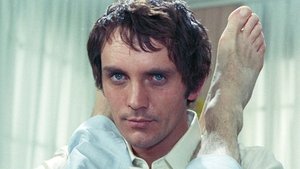
Theorem
A wealthy Italian household is turned upside down when a handsome stranger arrives, seduces every family member and then disappears. Each has an epiphany of sorts, but none can figure out who the seductive visitor was or why he came.
1968
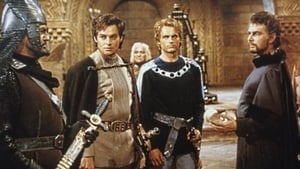
Whom the Gods Wish to Destroy
Siegfried of Xanten snatches the Nibelung treasure from the king of the underworld and slays the dragon Fafnir, whose blood makes him invulnerable. Siegfried falls in love with Kriemhild, the sister of the Burgundian king. But only if Siegfried helps Gunther marry Brunhild will he be allowed to marry Kriemhild. He fulfills this condition, but the two women bring ruin upon Xanten and Burgundy...
1966
The Nights
A love letter story to Electronic Dance Music. Plot TBA.
Die lustigen Weiber von Windsor
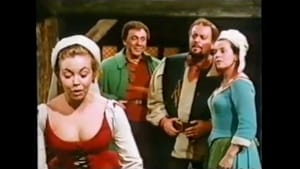
When Sir John Falstaff decides that he wants to have a little fun he writes two letters to a pair of Window wives: Mistress Ford and Mistress Page. When they put their heads together and compare missives, they plan a practical joke or two to teach the knight a lesson. But Mistress Ford's husband is a very jealous man and is pumping Falstaff for information of the affair. Meanwhile the Pages' daughter Anne is besieged by suitors.
1965
Pagliacci
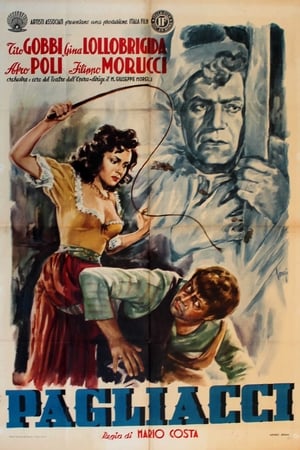
Based on Ruggero Leoncavallo's opera Pagliacci. The film recounts the tragedy of Canio, the lead clown (or pagliaccio in Italian) in a commedia dell'arte troupe, his wife Nedda, and her lover, Silvio. When Nedda spurns the advances of Tonio, another player in the troupe, he tells Canio about Nedda's betrayal. In a jealous rage Canio murders both Nedda and Silvio. The only actor in the cast who also sang his role was the celebrated Italian baritone, Tito Gobbi, but the film is largely very faithful to its source material, presenting the opera nearly complete.
1948