Watch La salsa Cubana (2011) Online Free
No overview available.
Cast
La Rueda de Guanabacoa, Adalberto Álvarez, Eduardo Rosillo, José Pepe Argote, Graciela Chao Carbonero
More Like This

Miley Cyrus: Something Beautiful
A one of a kind pop opera fueled by fantasy, featuring thirteen original new songs from the visual album Something Beautiful by Miley Cyrus.
2025
RYANGOSLINGIMYOURBIGGESTFAN
Im a big fan of Ryan Gosling. He is a great actor and man.
2024

Terra incognita
2024

The Making of a Japanese
Intimately following 1st and 6th graders at a public elementary school in Tokyo, we observe kids learning the traits necessary to become part of Japanese society.
2024
Polvere in Sala
2023
Inhabitants
For millennia, Native Americans successfully stewarded and shaped their landscapes, but centuries of colonization have disrupted their ability to maintain their traditional land management practices. From deserts, coastlines, forests, mountains, and prairies, Native communities across the US are restoring their ancient relationships with the land. As the climate crisis escalates these time-tested practices of North America's original inhabitants are becoming increasingly essential in a rapidly changing world.
2021
The Last Mambo
San Francisco Bay Area salsa and Latin jazz performers and audiences struggle to maintain culture, creativity and community in the face of powerful socioeconomic and demographic changes. This fascinating history of the Bay Area Latin music scene explores the post-WWII growth of California’s multi-ethnic music community, the 1950s Mambo craze, the 70s heyday of Salsa, and subsequent expansions of the art form. In today’s fast-changing environment, despite decreasing audiences and venues, Bay Area performers are transforming the future of the Afro-Latin music and dance through education and outreach.
2020
Castro: The World's Most Watched Man
Fidel Castro employed a vast spy network that helped him remain in power.
2015

B-Girl
A young female breakdancer, Angel, moves to Los Angeles after an attack by an ex-boyfriend nearly ends her dance career forever. B-Girl follows Angel through recovery and acceptance of a new life as she busts a move into the male-centric world of underground hip hop.
2009

90 Miles
Having grown up within the Cuban Revolution, in 1980, Juan Carlos Zaldívar was a 13-year-old "pioneer" jeering in the streets at the thousands of "Marielitos" leaving the island by boat for the United States. Within weeks, he was a Marielito himself, headed with the rest of his family for a new life in Miami. Now a U.S.-based filmmaker, Zaldívar recounts the strange twist of fate that took him across one of the world's most treacherous stretches of water in 90 Miles, a new documentary having its broadcast premiere on PBS's acclaimed P.O.V. series in the summer of 2003. As related by Zaldívar in the intensely personal and evocative 90 Miles, arrival in South Florida is only the beginning of the family's struggles to comprehend the full meaning of their passage into exile. What follows is an intimate and uneasy accounting of the historical forces that have split the Cuban national family in two, and which shape the passage of values from one generation to the next.
2001
Todo Cambia
A documentary that takes an in depth look at a government sanctioned art school in Cuba and its students. Interviews of various artists attending the school allow viewers a glimpse into their personal and professional lives.
2000
The Life and Times of Allen Ginsberg
Visionary, radical, spiritual seeker, renowned poet, founding member of a major literary movement, champion of human rights, Buddhist, political activist and teacher. Extensive archival footage, interviews, and home movies cover Allen Ginsberg's life, activism, and influence on American culture through the Beat era, the 1960s, and beyond.
1994
Cult People
In interviews, various actors and directors discuss their careers and their involvement in the making of what has come to be known as "cult" films. Included are such well-known genre figures as Russ Meyer, Curtis Harrington, Cameron Mitchell and James Karen.
1989
El brigadista
The Castro revolution was just consolidating its power when, in 1961, over 100,000 students were sent from their schools into the countryside to teach the peasants there how to read. Coinciding with the Bay of Pigs invasion, in this docudrama, 15-year-old Mario (Salvador Wood) has come to a tiny village in the Zapata swamps and gradually wins the villagers over to his task. At the same time, he receives an education in the realities of rural life from the hard-working peasants.
1978
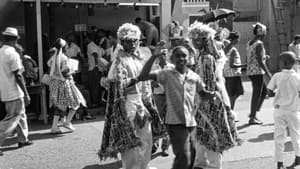
I'm Going to Santiago
This black-and-white film is a loving portrait of Santiago de Cuba and its people. It provides a view of Cuba as a picturesque country, the product of an earthy mix of black and criollo cultures. The film uses historical images which portray the end of the eighteenth century when Haitian slave owners fled with their slaves to Cuba after the Haitian Revolution.
1964
The Light Fantastic
Jason, a 30-something gay firefighter who dreams of becoming a professional ballroom dancer. Set in the vibrant heart of the British seaside town of Blackpool, Jason battles the rigid traditions of the ballroom world under the close watch of his ultra-traditional instructor Reynolds. While embarking on a journey of self-discovery, he is learning to listen to his heart before he can truly dance to its rhythm.
The CIA's Secret Army
This program examines Cuban exile terrorists living in Miami. These terrorists were secretly trained and employed by the U.S. government in the early 1960s to fight Fidel Castro. Now, without U.S. support, terrorist activities continue in Miami and Latin America. The program reviews secret U.S. policies toward Cuba in the 1960s and includes interviews with Castro and former top CIA officials. Members of this group, formerly secretly trained and employed by U.S. Government until 1967, have been active in Watergate crimes and anti-Castro terrorism including bomb explosion on Cuban Airline killing seventy-three. Includes interviews with Castro, E. Howard Hunt, Bernard Barker, and Rolando Martinez.' - The Paley Center For Media
1977
The Society of the Spectacle
Guy Debord's analysis of a consumer society.
1974

In Memory of Rock
The rock-wild youth of the 1960s during the apparitions of their idols.
1963
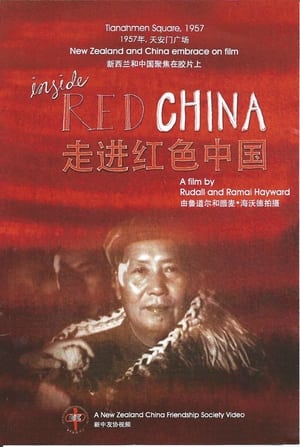
Inside Red China
October 1st, 1957. Dusk descends on Tiananmen Square, Peking. Fireworks crackle light across the night sky, above a city alive with National Day festivities and celebrations. Two intrepid New Zealand film-makers - Rudall and Ramai Te Miha Hayward - are there, documenting the life and times of communist China. The distinction of being the first English speaking foreigners to film unfettered in communist China was significant. The invitation to visit China was facilitated through the New Zealand China Friendship Society. They filmed in Canton, Shanghai, Peking (Beijing) and Wuhan. It was a small window of opportunity for Westerners to gaze on a country that was largely a mystery to the outside world since 1949. The unfortunate irony was that two of the documentaries; “Wonders of China”, and “Inside Red China”, were considered to be communist propaganda, and were not distributed outside of New Zealand.
1958