Watch Krenek: Karl V (2019) Online Free
Ernst Krenek's theatrical piece Karl V. consisting completely of twelve-tone series should have premiered at the Vienna State Opera. The political situation in the Vienna of 1933 and the fact that Krenek was despised by the Nazis because of this Jazz opera Jonny spielt auf, prevented the première. It only took place five years later in Prague, however Krenek had already emigrated to the USA. Karl V was the last emperor to hold to the idea of a Christian empire in which the sun never set, although its downfall was always inevitable, for numerous reasons. For the second production of Karl V. in the Nationaltheater, Carlus Padrissa in particular seeks out political power systems that are highly topical, and so very precisely analyses the treatment in the theatrical piece. At the core of the intellectually and linguistically highly qualified libretto, written by the composer himself, Karl V. reflects on his life and makes his confession to a young monk below Titian's La Gloria.
Cast
Bo Skovhus, Christa Mayer, Gun-Brit Barkmin, Dean Power, Anne Schwanewilms, Janus Torp
More Like This
From the House of the Dead & Glagolitic Mass
Can the darkest moments of life also lift our souls? Drawing on his own experience in a Siberian prison in the company of misfits, murderers and theives, Dostoevsky was inspired to write his novel Notes from a Dead House, telling his brother at the time: ‘Believe me, there were among them deep, strong, beautiful natures, and it often gave me great joy to find gold under a rough exterior.’ In Janáček’s hands, Dostoevsky’s inspiration and the raw material drawn from an appalling world of incarceration find an even more powerful form of expression in his last opera, From the House of the Dead. Unfettered by conventional story-telling, Janáček wrote his own libretto, freely weaving together a series of stories of everyday prison life and of the fates of individual convicts.
2023
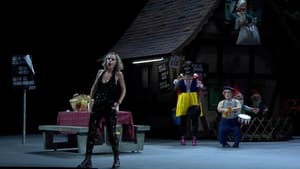
Wagner: Tannhäuser
Anew production of Tannhäuser, which was premiered on 26 July 2019 and presented the Bayreuth debut of conductor Valery Gergiev, as well as the house debut of young soprano star Lise Davidsen. Tobias Kratzer’s staging presented Tannhäuser as a wildly contemporary parable of art and freedom which was praised as “novel” and “wrenching” (New York Times) and received exceptional press acclaim. hey were joined by mezzo soprano Elena Zhidkova’s Venus (“scene stealing”, according to Opera Today), baritone Markus Eiche’s Wolfram and Stephen Milling’s Landgraf.
2020
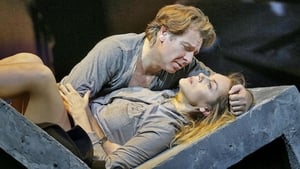
The Metropolitan Opera - Puccini: Manon Lescaut
Kristine Opolais is the young woman whose conflicting desires for love and luxury lead to her tragic end, and Roberto Alagna plays the man who falls for her in Puccini’s early hit. Richard Eyre’s elegant production, which sets the action in 1940s occupied France, was one of the highlights of the Met’s 2015–16 season. Massimo Cavalletti as Manon’s brother and Brindley Sherratt as her aging admirer co-star, and Principal Conductor Fabio Luisi is on the podium.
2016
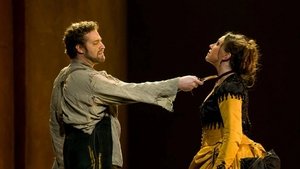
Carmen in 3D
Passion, jealousy and betrayal take center stage at Londons Royal Opera House in a spectacular production of the worlds most popular opera. Bizets Carmen is packed with some of the best-loved and memorable music in all of opera. In this characteristically vivid and vibrant stage production by Francesca Zambello, beautifully filmed in 3D by Julian Napier, Seville is brought to life with ranks of soldiers, crowds of peasants, gypsies and bullfighters as well as a magnificent horse, a donkey and even some chickens! This spectacular RealD and Royal Opera House production features a supremely talented cast, gripping drama and Bizets energetic and passionate score. It is truly a musical event to remember!
2011

John Adams: Nixon in China
John Adams’s groundbreaking work vividly brings to life US President Nixon’s 1972 visit to the People’s Republic of China. Peter Sellars’s Metropolitan Opera production, based on his 1987 world-premiere staging, features choreography by Mark Morris and stars James Maddalena as Nixon, Robert Brubaker as Chairman Mao, Janis Kelly as First Lady Pat Nixon, Russell Braun as Chinese Premier Chou En-lai, and Kathleen Kim as Chiang Ch’ing, Mao’s wife. From the pomp of the public displays to the intimacy of the protagonists most private moments, Adams, Sellars and librettist Alice Goodman reveal the real characters behind the headlines in this landmark American opera.
2011
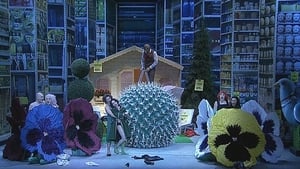
La Finta Giardiniera
Part of an epoch-making release of Mozart's complete operas on DVD, here is the 18-year old composer's first mature opera buffa. Hilarity mingles with passionate emotions when belfiore believes he has killed his lover in a fit of jealousy, but then encounters her disguised as gardener sandrina. Famed filmmaker Doris Dorie directs a superb young cast in this tale of love, hate and intrigue across class barriers, all vividly depicted by Mozart's astonishingly rich and varied music.
2006
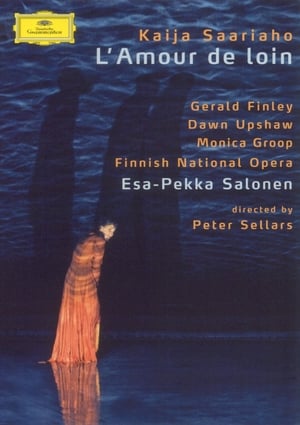
Saariaho: L'Amour de Loin
This is the 2004 version of Kaija Saariaho's opera performed by the Finnish National Opera and conducted by Esa-Pekka Salonen.
2004
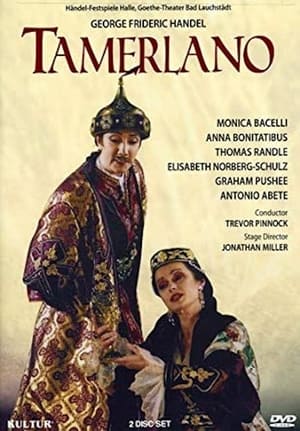
Tamerlano
Handel's 1724 opera Tamerlano followed the success of his previous year's Giulio Cesare with another colourful historical costume drama. This time the setting is the court of "Timur the Tartar", who has just defeated the Turkish Sultan Bajazet at the battle of Angora. There are, naturally enough, romantic complications when both Tamerlano and his ally, the Greek Prince Andronico, fall in love with Bajazet's daughter Asteria. She, however, has plans to revenge her father's defeat. This production was directed by Jonathan Miller and staged in the intimate surroundings of the Goethe Theatre of Bad Lauchstadt as part of the 2001 Halle Handel Festival.
2002
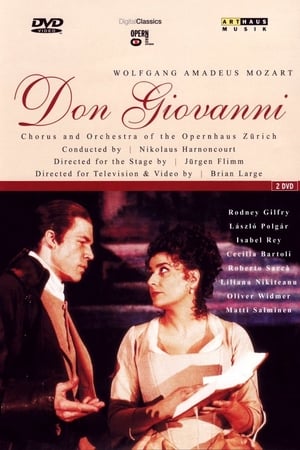
Mozart: Don Giovanni (Zurich Opera House)
Live 2001 production from the Zurich Opera House of the classic Mozart/Da Ponte opera, with Nikolaus Harnoncourt conducting and directed for television and video by Brian Large.
2001

Mozart: Così Fan Tutte (Zurich Opera House)
A production of Mozart's opera recorded live at Zurich Opera House in 2000. Cecilia Bartoli leads an all-star cast including Roberto Saccà, Liliana Nikiteanu, and Agnes Baltsa. The conductor is Nikolaus Harnoncourt. Filmed live at the Zurich Opera House in February 2000 on a set which visualises the subtitle "The School for Lovers", the plot revolves around two army officers arguing about the fidelity of their brides, then setting out to test their chastity. Despite the often playful humour, this is not only psychologically telling music-making, but reveals Mozart exploring the structure of opera, discarding convention to mix large ensemble sections with arias for as many different combinations of singers as possible. With Liliana Nikiteanu attractively contrasted with Bartoli, and thoroughly convincing performances by Roberto Sacca (Ferrando) and Oliver Widmer (Guilelmo), this Così has a freshness and flow which, coupled with the timeless romantic themes, feels very contemporary.
2000
Alceste
John Eliot Gardiner conducts Gluck’s 1776 French version of “Alceste” at the Théâtre du Châtelet in Paris. Soprano Anne Sofie von Otter takes the title role of Alceste, Queen of Thessaly, who offers to die at the hands of the gods in place of her husband, Admète (Paul Groves), so that the people will not lose their king. Alceste is then saved from the underworld by Hercule (Dietrich Henschel).
1999
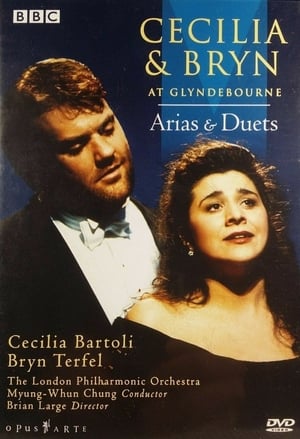
Cecilia & Bryn at Glyndebourne
The celebrated mezzo-soprano Cecilia Bartoli joins Bryn Terfel for a recital of arias and duets recorded at Glyndebourne Opera House in 1999. The programme features favourite pieces from Mozart, Rossini and Donizetti, with the London Philharmonic Orchestra conducted by Myung-Whun Chung.
1999

Bartoli in Italy
In the awe-inspiring Teatro Olimpico,Vicenza, Cecilia Bartoli, recognised as one of the best singers of our time, gives the most outstanding recital of work from a variety of composers such as Caccini, Schubert, Handel, Vivaldi, Bellini, Donizetti,Mozart, Rossini, Viardot and Bizet.
1998
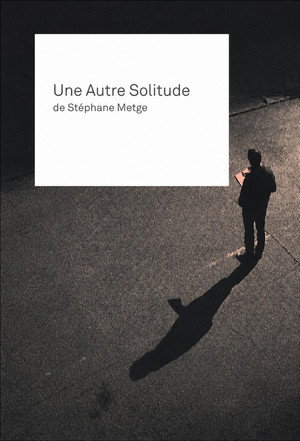
Patrice Chéreau, Pascal Greggory, une autre solitude
A look at the entire process of creating and developing Patrice Chéreau’s third staging of "In the Solitude of Cotton Fields" by Bernard Marie Koltès with Pascal Greggory and Chéreau himself. From the first reading around the table through the first contact with the performance space, rehearsals and lighting to opening night, the entire creative process unfurls in front of our eyes. The film shows us the evolving and ongoing dialogue between Greggory and Chéreau, a dialogue full of crises and magical moments of harmony and insight via which the truth, intensity, complexity, mystery and depth of Koltès’ text gradually emerge to form an implicit bond between these two men. The film also shows Chéreau directing rehearsals for Mozart’s "Don Giovanni" in Salzburg, revealing both the unity of and profound differences between his opera and theater work.
1996
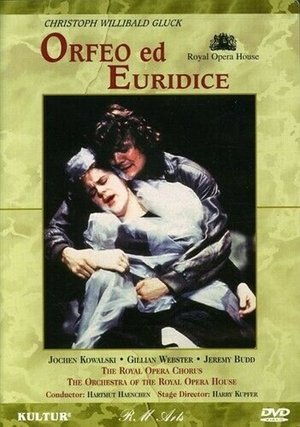
Orfeo Ed Euridice
Performed live at the Royal Opera House, Covent Garden, Gluck's opera in three acts is conducted by Hartmut Haenchen. Performers include Jochen Kowalski, Gillian Webster and Jeremy Budd, alongside the Royal Opera Chorus and Orchestra. When Orpheus mourns for his late wife Eurydice, the god Cupid offers him the chance to descend into the underworld and lead her back to the land of the living, on the condition that he does not look at her face. He sets out on his journey, but his path to the Elysian Fields is blocked by the fierce Furies.
1991
Don Giovanni
Live performance from Cologne Opera. Conlon conducts a skittishly dynamic performance of Don Giovanni. He relies on Thomas Allen’s tough Don to give the work much of its dark menace and on Holle’s terrifying Commendatore to provide the moral outrage – his job is to keep things moving, and he does. The exteriors – blank city spaces reminiscent of the paintings of Giorgio De Chirico – and moodily claustrophobic interiors mirror effectively the anguish of the orphaned Anna and the abandoned Elvira; this is a performance in which the two women victims of the Don function effectively as correctives to his libertine charm. Andrea Rost as Zerlina brings real delicacy to her role, reminding us that “La ci darem la mano” is a duet about her flirtation with Don Giovanni and not just a famous stand-alone moment. This is an admirable presentation of a fine performance.
1991
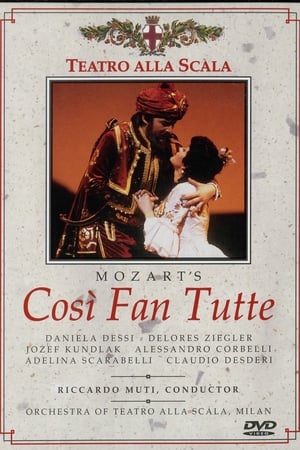
Cosi Fan Tutte
Officers Ferrando and Guglielmo are certain that their lovers Dorabella and Fiordiligi are faithful to them, but the cynical Don Alfonso challenges them to a bet that the women will be unfaithful given the chance. The officers thus pretend to go off to war, and return in disguise as Albanian strangers, to woo Dorabella and Fiordiligi incognito. The ladies are initially frosty, but soon warm to their new suitors, spurred on by their maid Despina. Performed at the La Scala Theatre in Milan.
1989
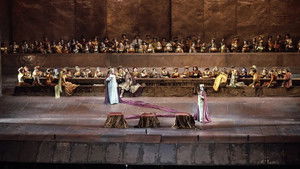
Macbeth
Piero Cappuccilli and Shirley Verrett lead Verdi’s sombre masterpiece, drawn from one of Shakespeare’s most celebrated tragedies. Filmed for television at Teatro alla Scala in 1979, Claudio Abbado conductes a night to remember.
1979
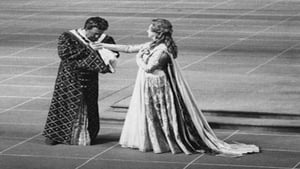
Verdi Otello
Desdemona in Verdi's Otello was a career role for soprano Renata Tebaldi, from her first operatic performance outside of Italy to her final appearance on the opera stage. Between those landmarks she performed the role nearly 100 times all over the world and made studio audio recordings that became reference recordings for the role. This 1962 production with the Deutsche Oper Berlin and Giuseppe Patane was planned as a media event from the outset and blessedly captures a consummate artist in a signature role at the peak of her gifts.
1962
First Opera Film Festival
An anthology of four abbreviated operas: "William Tell" by Rossini, "The Marriage of Figaro" by Mozart, "Don Pasquale" by Donizetti, and "Carmen" by Bizet. Filmed in Italy with major opera stars, and accompanied by English narration.
1948