Watch Kláštorisko (2011) Online Free
No overview available.
Cast
Michal Slivka, Ľuboš Záhorec, Gabriel Hunčaga, Barbora Skretowicz, Adrián Szalay, Magdaléna Sedláčková, Vladislav Laštovička
More Like This
Momies d'Égypte, en quête d'immortalité
2025

Grotte Chauvet - Dans les pas des artistes de la Préhistoire
2024
Tautavel : vivre en Europe avant Néandertal
2024
Les templiers, la démesure des Batisseurs
2024
Artemis - The Lost Temple
The location of the sanctuary of Artemis at Amarynthos has long remained one of the last great archaeological enigmas of Ancient Greece. This vast Artemision is mentioned in several ancient texts, which even go so far as to specify the distance that separates the sanctuary from the ancient city of Eretria. But despite the efforts of numerous scientific expeditions since the end of the 19th century, no trace of the sanctuary or its temple has ever been found. In the 1960s, a young archaeologist - Denis Knoepfler - set out in search of the lost temple of Artemis. His investigations soon led him into the hinterland of the island of Euboea, well beyond the limits of previous expeditions. It would take five decades of searching, unshakeable faith and moving tons of earth to finally unravel the mystery. In 2017, a tenacious Swiss-Greek team of archaeologists formally identified the sanctuary of Artemis, where Denis Knoepfler had predicted it lay buried.
2023
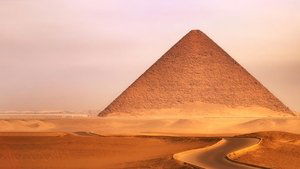
L'Énigme de la pyramide maudite : Dahchour
2023
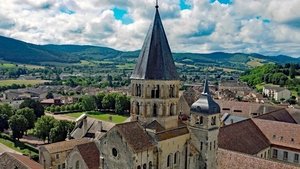
Macht und Armut: Die Mönche von Cluny
2022

Narbonne: The Second Rome
More than 2.000 years ago, Narbonne in today's Département Aude was the capital of a huge Roman province in Southern Gaul - Gallia Narbonensis. It was the second most important Roman port in the western Mediterranean and the town was one of the most important commercial hubs between the colonies and the Roman Empire, thus the town could boast a size rivaling that of the city that had established it: Rome itself. Paradoxically, the town that distinguished itself for its impressive architecture, today shows no more signs of it: neither temples, arenas, nor theaters. Far less significant Roman towns like Nîmes or Arles are full of ancient sites. Narbonne today is a tranquil town in Occitania
2021
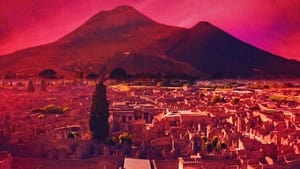
Pompeii: Sin City
A story about one of the most famous and mysterious archaeological sites in the world.
2020
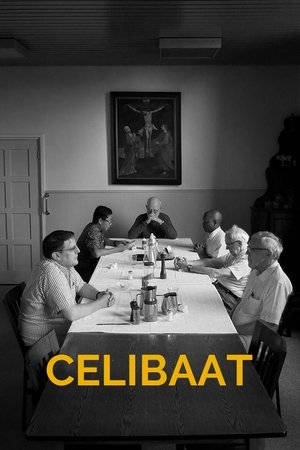
Celibaat
A documentary about the oldest continuously inhabited monastery in the Netherlands.
2019
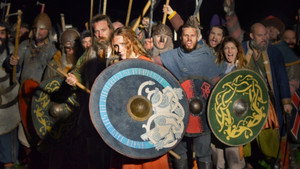
Viking Warrior Women
Drama-led documentary following the life of Signe, an orphaned Chief's daughter, who, driven by revenge, becomes an explorer and trader in the lands of the Rus Vikings.
2019
Palmyra: Rising from the Ashes
Documentary following a team of technicians in Italy as they reconstruct a number of historic Middle Eastern artifacts that were vandalized at the hands of Islamic State.
2017
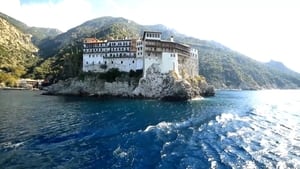
Athos
The Athos peninsula in Greece is one of Europe's last secrets. Over 2000 monks live on Athos - cut off from the outside world. Access is denied to women, tourists are not welcome. Only workers and pilgrims can obtain a visa. The "Autonomous Monastic State of the Holy Mountain" attracts people who feel like they are missing something from their modern lives. With the help of three Athos monks, "Athos - A Taste of Heaven" tells the story of the island and its inhabitants in a unique filmed diary style. The film's guiding theme is the path we as people have to find and follow - each and everyone for themselves. "First we must heal our own souls, only then we can help others", is one of Father Galaktions core messages. He lives as a hermit on the holy mountain. Not all monks, however, live as secluded and demure as Father Galaktion. The film team is also received by Father Epiphanios - a gifted and poetic cook who certainly does not disdain the pleasures of life.
2016
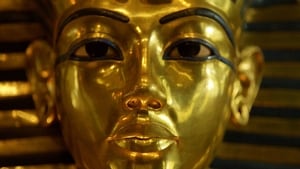
Tutankhamun: The Truth Uncovered
What killed King Tutankhamun? Ever since his spectacular tomb was discovered, the boy king has been the most famous pharaoh of all ancient Egypt. But his mysterious death, at just 19 years old, has never been explained. In this BBC One special, presenter Dallas Campbell reveals new scientific research and carries out unique experiments to get to the truth. For the first time, a virtual autopsy of Tut's mummified body reveals astonishing secrets about the pharaoh. Using CT scan data, the programme creates the first ever full size, scientifically accurate image of the real Tutankhamun. Brand new DNA analysis uncovers a shocking secret about Tut's family background, and the genetic trail of clues leads to a radical and revolutionary new theory to explain Tut's sudden and unexpected death. This is an epic detective story that uncovers the extraordinary truth of the boy behind the golden mask.
2014
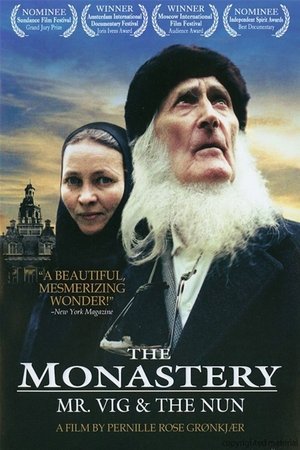
The Monastery: Mr. Vig and the Nun
50 years ago Jørgen Lauersen Vig bought Hesbjerg Castle, situated in the Danish country side, with the purpose of turning it into a monastery. Now, many years later, he is about to realize his old dream. A group of Russian Orthodox nuns are on their way, and thus Mr. Vigs life-long dream is about to come true. But, nuns have plans and wills of their own, and Mr. Vig must realize that the road to fulfilling his dream is very different than what he imagined.
2007
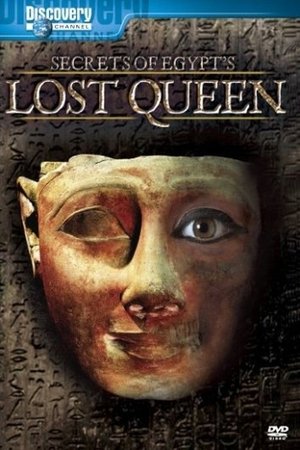
Secrets of Egypt's Lost Queen
Move over, King Tut: There's a new pharaoh on the scene. A team of top archaeologists and forensics experts revisits the story of Hatshepsut, the woman who snatched the throne dressed as a man and declared herself ruler. Despite her long and prosperous reign, her record was all but eradicated from Egyptian history in a mystery that has long puzzled scholars. But with the latest research effort captured in this program, history is about to change.
2007
Mystery of the Maya
Filmed in IMAX, a young Mayan boy who lives close to the ruins becomes acquainted with an archaeologist (Guerra) and asks her to tell him about his ancestors. The crew travelled to over 15 locations in Mexico and Guatemala, including Tulum and Chichén Itzá.
1995
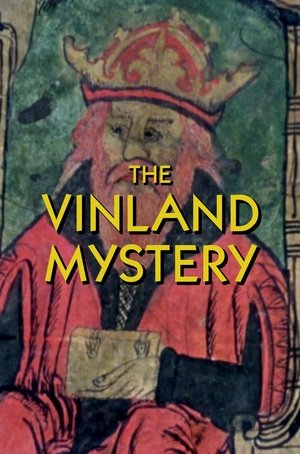
The Vinland Mystery
This short documentary depicts the search, discovery and authentication of the only known Norse settlement in North America - Vinland the Good. Mentioned in Icelandic manuscripts and speculated about for over two centuries, Vinland is known as "the place where the wild grapes grow" and was thought to be on the eastern coast between Virginia and Newfoundland. In 1960 a curious group of house mounds was uncovered at l'Anse aux Meadows in northern Newfoundland by Drs. Helge Ingstad and Anne Stine Ingstad of Norway. Added to the United Nations World Heritage List, l'Anse aux Meadows is considered one of the most important archaeological sites in the world.
1984
Gå i kloster
1974
In the Footsteps of Ancient Slavs
Film about archaeological research on settlements of the Czech lands by Slavic peoples. It focuses on individual stages of the research carried out in the localities of Dolní Věstonice, Staré Město u Uherského Hradiště, Staré Zámky u Líšně, Levý Hradec, and Libušín u Kladna. It presents the individual results in a manner that is almost educational in nature.
1949