Watch Kim Il Sung's Children (2020) Online Free
From 1950 to 1953, one hundred thousand children were orphaned by the Korean War. With no resources to mend the wounds, the two sides, North and South, took different paths to find homes and families for the war orphans. While the children of South Korea were sent to Europe and the United States through ‘International Adoption’, the children of North Korea were distributed across Eastern Europe through a method called ‘Commissioned Education’. As a result, more than five thousand children from the North had to spend nearly a decade living in foreign lands across Eastern Europe. This story is a record of their lives, which used to be kept hidden from the rest of the world. There is a key to understanding how North Korea's closed political structure began and how the ‘Juche ideology’ was formed in this documentary movie. Understanding North Korea in the 1950s is an important way to understand North Korea at present.
Cast
Kim Deog-young
More Like This

One "Orphan" Every Hour
Nearly 250,000 South Korean children were adopted to the West as “orphans” in the 60 years following the Korean War. Some to loving homes. Others to tragic ends. Raised in places where they looked like nobody else, many were told to forget their past and be grateful. But the innate desire to understand where you came from has led many Korean adoptees to search for their roots. In the process, they discover lies in their past and families they never knew existed. In this documentary series, correspondent Wei Du travels around the world to meet Korean adoptees and accompany a few on their journey to reclaim who they are. Together, they reveal how an “orphan rescue” mission separated families and erased the roots of hundreds of thousands.
2025
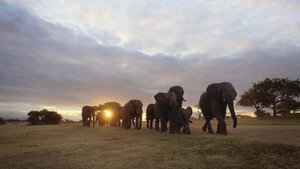
Diary of an Elephant Orphan
Diary of an Elephant Orphan takes us through the struggles and turmoils of orphaned baby elephants and the people who have made it their life's mission to save them. Khanyisa is the newest addition to the elephant sanctuary.
2025
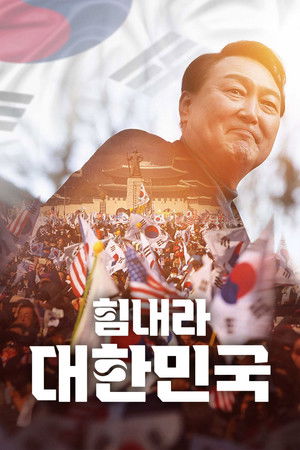
Cheer Up, Korea
2025
Bright Future
In the summer of 1989, the 13th edition of the World Festival of Youth and Students was held in Pyongyang. Thousands of socialist youth from 177 countries celebrated their belief in a better society and international solidarity.
2024
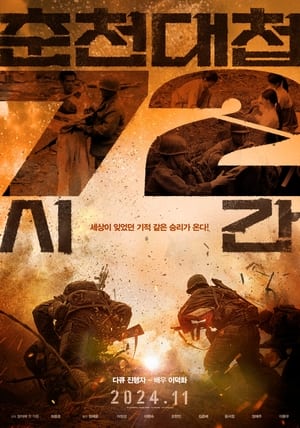
Chuncheon Battle 72 Hours
2024

Gino: A Child of War
An account of a young Italian boy who was taken in by a Canadian military unit during World War II.
2023
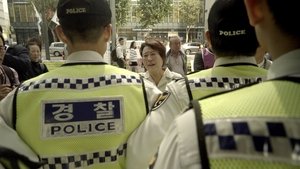
Shadow Flowers
Ryun-hee Kim, a North Korean housewife, was forced to come to South Korea and became its citizen against her will. As her seven years of struggle to go back to her family in North Korea continues, the political absurdity hinders her journey back to her loved ones. The life of her family in the North goes on in emptiness, and she fears that she might become someone, like a shadow, who exists only in the fading memory of her family.
2021
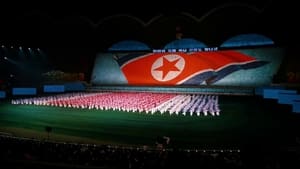
A Postcard from Pyongyang
"A Postcard from Pyongyang" is a journey into a deeply enigmatic and completely isolated country that keeps the world in suspense: North Korea. Friends Gregor Möller, Philip Kist and Anne Lewald visit in 2013 and 2017 and do what is strictly forbidden and for which they might have ended up in a forced labor camp: even though accompanied by state watchers, they secretly film their travels, accompanied by state watchdogs. We get an extraordinary insight into one of the most closed societies in the world and experience the 'beautiful new world' as the state propaganda machinery displays it.
2019
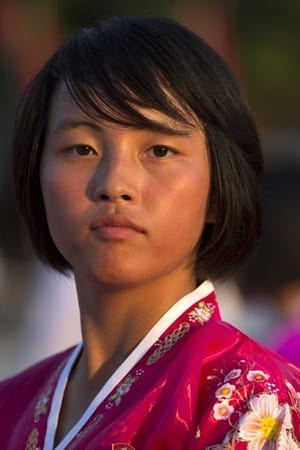
The Faces of North Korea
This is a 25-minutes piece about the DPRK (North Korea), a country Vltchek visited and fell in love with. Vltchek goes against the hegemonic western propaganda that is perpetuated towards DPRK and their people, showing the beauty that resides in the country.
2018

Liyana
A talented group of orphaned children in Swaziland create a fictional heroine and send her on a dangerous quest.
2017
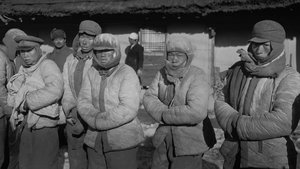
The Battle Of Chosin
An amazingly harrowing story of the 17 day engagement of bloody combat and heroic survival in subartic temperatures. UN forces largely outnumbered and surrounded, due to a surprise attack led by 120,000 Chinese troops.
2016
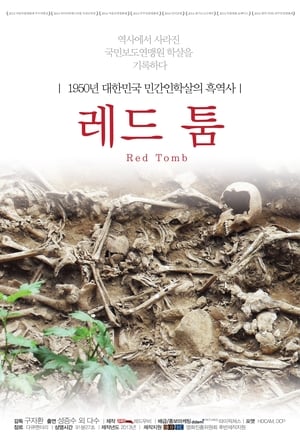
레드 툼
2015

One for All, All for One
Osaka Korean High School has provided education for the past six decades to the children of pro-North Korean residents in Japan. This school is located only about 20 minutes away from Hanazono Stadium, the mecca of Japan’s high school rugby, but it was not until 1994, 18 years after the foundation of a rugby team at the high school, that the Japanese education ministry approved the team’s entry into the official league. Since then, the team has run in the national league as a representative of the Osaka area and been considered a front-runner ever since. The team has strong players and passionate supporters, but it faces difficulties just before winning the league.
2014
My Father's Emails
The director's father, who did not know how to use a computer, left her an autobiography via email. It includes his whole life through many notable events such as the Korean War, the Vietnam War, 88's Seoul Olympic, New Town Development, etc.
2014
USS Midway
A visit to the famed aircraft carrier USS Midway and interviews with men who served aboard it bring the exciting story of the vessel to life in this dramatic documentary. In service for 47 years, the Midway saw heavy action during the Vietnam War, and its hair-raising missions to rescue downed pilots were legendary. After Vietnam, the Midway, now berthed in San Diego, participated in numerous operations, including the Gulf War.
2010
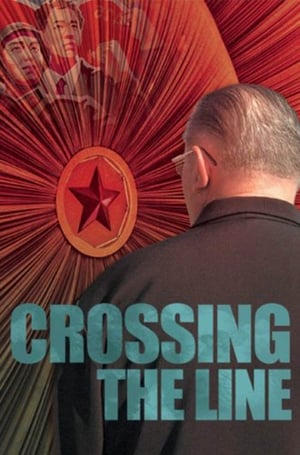
Crossing the Line
In 1962, a U.S. soldier sent to guard the peace in South Korea deserted his unit, walked across the most heavily fortified area on earth and defected to the Cold War enemy, the communist state of North Korea. He became a star of the North Korean propaganda machine, but then disappeared from the face of the earth. Now, after 45 years, the story of James Dresnok, the last American defector in North Korea, is being told for the first time. Crossing the Line follows Dresnok as he recalls his childhood, desertion, and life in the DPRK.
2006
Inside North Korea
Join National Geographic's Lisa Ling as she captures a rare look inside North Korea - something few Americans have ever been able to do. Posing as an undercover medical coordinator and closely guarded throughout her trip, Lisa moves inside the most isolated nation in the world, encountering a society completely dominated by government and dictatorship. Glimpse life inside North Korea as you've never seen before with personal accounts and powerful footage. Witness first-hand efforts by humanitarians and the challenges they face from the rogue regime.
2006
A State of Mind
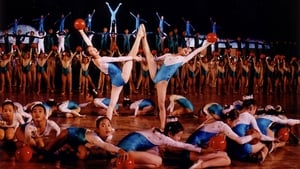
Two young North Korean gymnasts prepare for an unprecedented competition in this documentary that offers a rare look into the communist society and the daily lives of North Korean families. For more than eight months, film crews follow 13-year-old Pak Hyon Sun and 11-year-old Kim Song Yun and their families as the girls train for the Mass Games, a spectacular nationalist celebration.
2005
Homes Apart: Korea
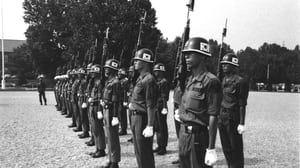
They speak the same language, share a similar culture and once belonged to a single nation. When the Korean War ended in 1953, ten million families were torn apart. By the early 90s, as the rest of the world celebrated the end of the Cold War, Koreans remain separated between North and South, fearing the threat of mutual destruction. Beginning with one man's journey to reunite with his sister in North Korea, filmmakers Takagi and Choy reveal the personal, social and political dimensions of one of the last divided nations on earth. The film was also the first US project to get permission to film in both South & North Korea.
1991
Fighting Korea
1953