Watch Keiko Kishi, Eternally Rebellious (2023) Online Free
Born in 1932, Keiko Kishi has been one of the first Japanese actresses known worldwide. Her decision to move to France and to marry director Yves Ciampi in 1957 – after he filmed her in Typhoon Over Nagasaki starring Jean Marais and Danielle Darrieux – caused a huge scandal in Japan. Despite this transgression, Keiko Kishi continued acting in her home country with Kon Ichikawa, Yasujiro Ozu, Masaki Kobayashi… building unique bridges between Japanese and European cultures. Free and rebellious, she emancipated herself from the many obstacles she encountered in the film industry, and created her own production company in her early twenties. Let’s look back at the story of a pioneer, an inspiration for many generations.
Cast
Keiko Kishi
More Like This

Life of an Early Bird
Hendrik Waringa, singer and founder of the country band Early Bird, is followed together with his musical grandson Maurits van Nijen in the run-up to the reunion concert to be performed in celebration of the band's 60th anniversary.
2025
Mythical Creatures - A Documentary About the Basemans
Renowned Artist Gary Baseman embarks on a journey from the Fairfax district of Los Angeles to the villages of Poland and Ukraine, in search of a hidden family secret from World War II.
2024

Ennio Doris - C'è anche domani
The life of Italian businessman Ennio Doris, the founder of Banca Mediolanum.
2024

Fin de vie : pour que tu aies le choix
Marina Carrère d'Encausse lifts the veil on the intimate questions that preoccupy her as well as society at large: those related to the end of life. The doctor-journalist introduces Antoine, her partner, who is suffering from Charcot's disease, an incurable illness, and who wishes to choose how he ends his life. Is the current law in France sufficient? Should it simply be better enforced, allowing better access to palliative care? Should assisted suicide and euthanasia be legalized? Marina meets with patients concerned about the end of life, caregivers, and politicians in France, as well as in Belgium, Switzerland, and Canada, countries where euthanasia and assisted suicide are legal.
2023

Shania Twain: Not Just a Girl
From Nashville newcomer to international icon, singer Shania Twain transcends genres across borders amid triumphs and setbacks in this documentary.
2022

Actor
"Actor" is China's first documentary film to explore the virtues and skills of actors. The film takes the "Twenty-Two Big Movie Stars of New China" as the starting point. It will explore the film experience and artistic achievements of the older generation of artists, explore their insights and thinking about the profession of actors for more than half a century, and pay tribute to the century-old Chinese film with the classic film images they created.
2021

Fellinopolis
Ferruccio Castronuovo was the only authorized eye, between 1976 and 1986, to film the brilliant Italian filmmaker Federico Fellini (1920-1993) in his personal and creative intimacy, to capture the gears of his great circus, his fantastic lies and his crazy inventions.
2021
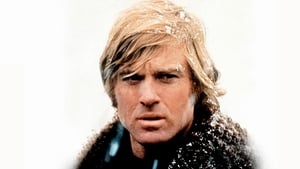
Robert Redford: The Golden Look
More than anyone in the cynical film industry, legendary artist Robert Redford embodies the United States' brightest side: perseverance, independence, idealism, and integrity. A champion of active environmentalism and the right to openly criticize any institutional abuse, he has put his artistic work at the service of his political commitments, whether as an actor, director, producer, or founder of the Sundance Festival, a formidable forum for his struggles since 1985.
2019

Spookers
Documentary from Kiwi filmmaker Florian Habicht on the most successful haunted attraction in the Southern Hemisphere, Auckland’s Spookers.
2017

Bootsmann
After 13 years in prison, former drug dealer Marius Eriksen needs to reintegrate into society, and gives unique insights into his past as the biggest drug dealer from Hamburg.
2016

Super Duper Alice Cooper
Emerging from the Detroit music scene of the 1970s in a flurry of long hair and sequins, Alice Cooper restored hard rock with a sense of showmanship, while simultaneously striking fear into the hearts of Middle America with the chicken-slaughtering, dead-baby-eating theatrics that would cement his identity as a glam metal icon. Meticulously crafted from rare archival footage, Super Duper Alice Cooper tells the story of the man behind the makeup, Vincent Furnier, the son of a preacher, who got caught in the grip of his own monster.
2014
Menstrual Man
Some folks squirm at mention of a woman’s period…not Arunachalam Muruganantham. Considered a madman and pervert by his community, he ignores his detractors and makes his dream—low-cost sanitary pads made by and for rural Indian women—a reality. Using manually operated machines, Muruganantham’s microbusiness model is focused on something more important than profits: providing sustainable employment, hygiene and emancipation to women who would otherwise go without. He’s a man with a million-dollar idea—except money has nothing to do with it. His goal is to make a livelihood, not to accumulate wealth; to operate at a human scale, not a multinational one. Menstrual Man is the inspiring story of a hero who rises above poverty and a lack of education to become a superstar social entrepreneur in the business of breaking cultural taboos and re-inventing the economic pyramid. Muruganantham is leading a movement, not a company. And it’s spreading.
2013

A Brief History of Slasher Films
Writer Adam Rockoff provides a basic overview of the slasher movie genre.
2011

Ensemble
In Paris in full German occupation in 1942, a Jewish child Isaac escapes a raid organized by the SS. He then took refuge in the Great Mosque of Paris. The imam decides to protect him by passing him off as a Muslim, as well as the other Jewish children that he manages to free with the help of the resistance networks. The French militia and the Gestapo have suspicions... This fiction film is based on the true story of the rector of the Paris mosque, Si Kaddour Benghabrit, who saved several Jews from deportation during the Second World War.
2010

Pandora Peaks
A dialogue-free documentary on former magazine model Pandora Peaks, with narration by Peaks and Meyer.
2004

Zubeidaa
Zubeidaa, an aspiring Muslim actress, marries a Hindu prince to become his second wife. Her tumultuous relationship with her husband, and her inner demons lead her to a decision which has fatal consequences for them all.
2001
Champagne Charlie
This is the story of the Charles Heidsieck who opened the market for Champagne sales in America just prior to the American Civil War. He is a reluctant French spy and is captured and spends time in a Union prison. There are two parallel love stories (he is French) and some battles with his uncle for control of the family vineyard (because his father married his mother who the uncle also loved).
1989
Cult People
In interviews, various actors and directors discuss their careers and their involvement in the making of what has come to be known as "cult" films. Included are such well-known genre figures as Russ Meyer, Curtis Harrington, Cameron Mitchell and James Karen.
1989

Bud and Lou
An inaccuracy-riddled behind-the-scenes drama about the stormy partnership of the famed comedy team that came out of burlesque to conquer radio, movies and television.
1978
Omnibus: François Truffaut
1973