Watch Joanna Lumley in the Land of the Northern Lights (2008) Online Free
Comedy icon Joanna Lumley pursues a life-long dream to track down the elusive and beautiful Northern Lights. She travels North across the Arctic Circle, up through Norway and finally to Svalbard, the most northerly permanently inhabited place on Earth, where she has to cope with temperatures approaching minus 30° C. Joanna’s journey takes her from train to boat and huskysled to snowmobile as she is pulled ever northwards and finally, in a breathtaking climax to the film, Joanna gets to see with her own eyes the spectacular beauty of the Northern Lights. As seen on ABC1.
Cast
Joanna Lumley
More Like This
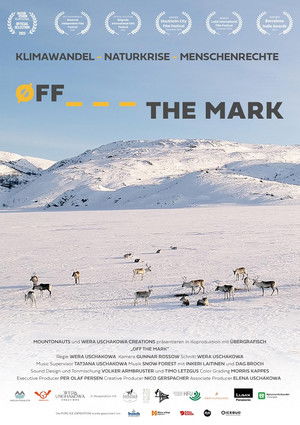
Off the Mark
Off The Mark is a documentary about a world-first dog sled expedition in Finnmark, Norway, in the middle of the polar night in search of microplastics and indigenous solutions to the climate crisis.
2025
Arctic Odyssey
An epic cinematic journey filled with breathtaking landscapes and unforgettable moments. Andreas and Alexandros embark on a bikepacking adventure in Norway, overcoming physical and mental challenges, conquering obstacles, and discovering the best version of themselves. Their journey allows viewers to live each moment as if they were there.
2025

Isöken
Three Frenchmen go out on their first polar expedition to the largest polar desert in the world. Sarek, in the north of Sweden.
2022
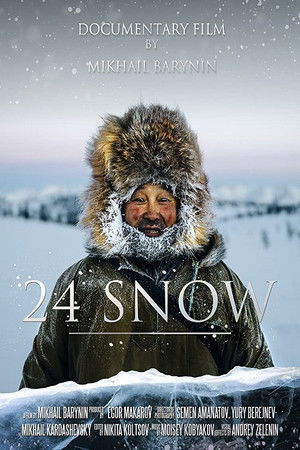
24 Snow
Like a lone cowboy, Sergei passionately devotes his life to traditional horse breeding in the impenetrable Arctic Sakha; permafrost and the absence of roads, electricity and channels of communication mean that there is nobody else to rely on but oneself. Sergei is sensitive and introspective; he truly cares about his family, community and treats nature with the utmost respect. He loves the independence and freedom this life brings, despite the immense sacrifices that it necessitates, such as total isolation and being a stranger to his own children. Spectacular camerawork characterizes the Sakha horses in all their magnificence, and juxtaposes the post-soviet towns and the boundless taiga landscapes, where the cold bites through the screen.
2021
Greenland: in the Glare of Ice
Greenland is the largest island in the world and the landmass closest to the North Pole. 80% of the country is covered by a layer of ice up to 3000 meters thick. Through the eyes of locals we get to know the authentic Greenland.
2020
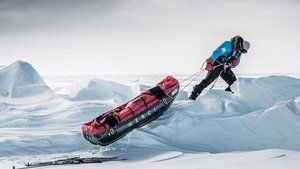
Arktic, 62 jours en solitaire
2019
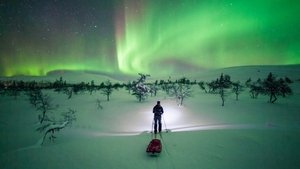
Revontulien armoilla
In this documentary, scientists reveal their findings on the influence of solar storms on animal behavior and human transport infrastructure. The documentary explains why solar storms pose a threat to humanity: In extreme cases, they can damage satellites, slow down air traffic and paralyze high-voltage and telecommunications networks.
2019
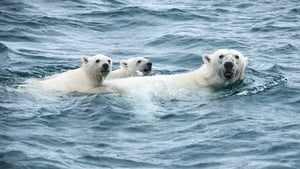
Under Thin Ice
Two Canadian experts in underwater filming, Mario Cyr and Jill Heinerth, join forces for the first time to record how Arctic wildlife is adapting to the dramatic effects of climate change.
2019
Breaking the Cycle
The warden of Halden, Norway's most humane prison, tours the U.S. prison system to urge a new approach emphasizing rehabilitation.
2017
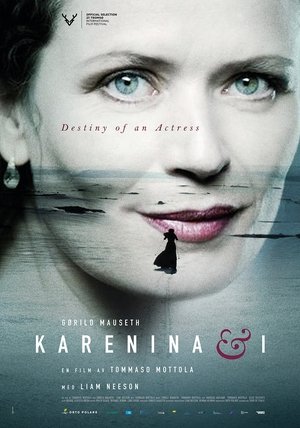
Karenina & I
The actor Gøril Mauseth goes on a 11.000 kilometer travel with the Trans-Siberian to play Anna Karenina in a new language in Leo Tolstoj's Russia, discovering the language, and the reasons Tolstoj wrote what he wrote, changing her forever.
2017
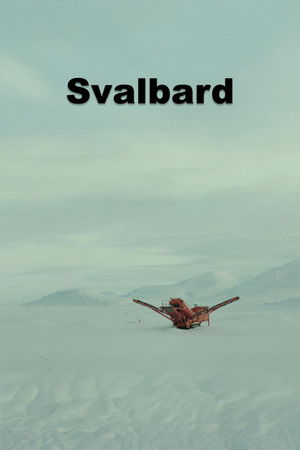
Svalbard
Svalbard is a norwegian archipelago in the Arctic Ocean where the world's northernmost city is situated. It is a place where the underground, terrestrial and spatial universes blend into each other starting from a coal mine up to Venus.
2016
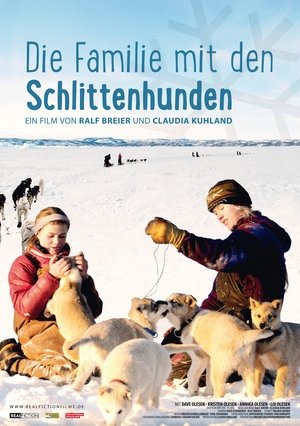
Not Without My Dogs
Out of love for Huskies, nature and cold winters Dave and Kristen Olesen moved from Minnesota to the North West Territories in Canada 25 years ago to create their own little universe on the magnificent East arm of Great Slave Lake. With their two daughters Annika 15 and Liv 12 and their 37 dogs, the Olesens enjoy a unique lifestyle in the wide open wilderness far away from civilization. One winter they all leave their self-built homestead with ten dogs on a two and a half thousand mile family expedition allowing Annika to run the Junior Iditarod in Alaska. As unexpected obstacles all along the trip culminate in three heavily injured dogs the whole endeavor is at risk. Optimism, love and loyalty prevail on this exciting epic family voyage.
2013
Ice Up
Unique shapes, no two the same, formed by the action of water and frost. The water that once ran from the summits in torrents and waterfalls is immobilized for a few weeks. The thing is to be there, in time, just at the moment when they become solid, just before they return to water. A question of balance. Around seven top-level climbers who represent all the richness of the activity, these images will highlight different techniques and different approaches. Although the athletic performance is impressive, it is there only to emphasize the dazzling shapes, the warmth of friendships, the stories of teamwork.
2005
Adrift
"Adrift" is shot on the arctic island of Spitzbergen and in Norway. It combines time-lapse photography with stop-motion animation of the landscape. Through camera-angles and framing the film gradually dislocates the viewer from a stable base where one loses the sense of scale and grounding.
2004
Where the Trains Used to Go
Time-lapsed film from the perspective of a train moving slowly down the railroad tracks.
2003
Winged Migration
This documentary follows various migratory bird species on their long journeys from their summer homes to the equator and back, covering thousands of miles and navigating by the stars. These arduous treks are crucial for survival, seeking hospitable climates and food sources. Birds face numerous challenges, including crossing oceans and evading predators, illness, and injury. Although migrations are undertaken as a community, birds disperse into family units once they reach their destinations, and every continent is affected by these migrations, hosting migratory bird species at least part of the year.
2001
National Geographic: Untold Stories of World War II
Showcases 3 major events during World War 2 involving both the Europeans & Pacific conflicts. The Raids to destroy Nazi Germany's heavy water production based in Norway, plus the final desperate act to deny them what had already been stockpiled. The Japanese midget submarines role and participation in the attack on Pearl Harbor, December 7, 1941. What they achieved plus what was their ultimate fate. The attacks on United States warships in the Pacific late in World War 2 by the Japanese Kamikaze and Okha Squadrons. The Kamikaze attacks were in whatever planes the Japanese forces were able to gather. The Okha attacks were made in specially built flying bombs that were towed by larger and usually slower aircraft that were not suitable for fighter work.
1998
Islands of the Frozen Sea
This short documentary offers a look at the life forms on the Queen Elizabeth Islands within the Arctic Circle. Even in this frigid zone of icebergs and glaciers a surprising variety of wildlife and vegetation is seen. Writings from the logbooks of early explorers provide vivid descriptions of scenes as arresting to them in their century as to today's explorer. Note: Originally produced for the television series Perspective, this film was distributed separately on 16mm for schools and libraries, qualifying it as a standalone documentary.
1958
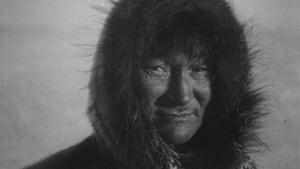
Nanook of the North
This pioneering documentary film depicts the lives of the indigenous Inuit people of Canada's northern Quebec region. Although the production contains some fictional elements, it vividly shows how its resourceful subjects survive in such a harsh climate, revealing how they construct their igloo homes and find food by hunting and fishing. The film also captures the beautiful, if unforgiving, frozen landscape of the Great White North, far removed from conventional civilization.
1922
First Light
Residents of the world’s northernmost town, which is steeped in darkness four months per year, grapple with why they inhabit such a hostile place—and how their unique relationship to the sun changes the meaning of light and darkness within their own lives.