Watch Jeff Wall: Retrospective (2007) Online Free
Jeff Wall is one of the most important and influential photographers working today. His work played a key role in establishing photography as a contemporary art form.
More Like This
The Making of Michel Petite
The film begins as a documentary about an author known for autofiction. By incorporating multiple making-of layers, it blends the process of making the documentary with the author’s narrative technique.
2025
Klimt & The Kiss
The Kiss by Gustav Klimt is one of the most recognised and reproduced paintings in the world. It is perhaps the most popular poster on student dorm walls from Beijing to Boston. Painted in Vienna around 1908, the evocative image of an unknown embracing couple has captivated viewers with its mystery, sensuality and dazzling materials ever since it was created. But just what lies behind the appeal of the painting – and just who was the artist that created it? Delving into the details of real gold, decorative designs, symbolism and simmering erotica, a close study of the painting takes us to the remarkable turn of the century Vienna when a new world was battling with the old.
2023
Everything at Once (Paco & Manolo's Gaze)
Paco and Manolo are two Catalan photographers from the outskirts of Barcelona who have been working together for thirty years as if they were a single person, capturing their images in Kink magazine, a very personal photography fanzine with a homoerotic aesthetic of Mediterranean essence.
2021
Casual Workers
An abstract perspective into two young South African workers in the heart of Johannesburg's industrial sector during Covid-19
2020
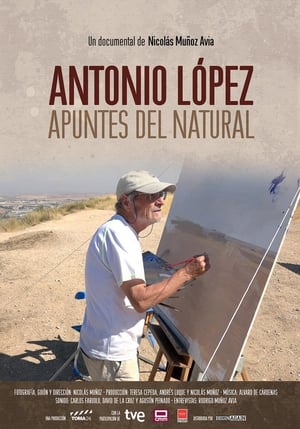
Antonio López: apuntes del natural
A documentary on the painter Antonio López and his day-to-day work.
2019
Walter Mittelholzer - Eine Schweizer Pioniergeschichte
2015

The Mona Lisa Myth
2014
A Farra do Circo
This documentary highlights the evolution of Brazil's Circo Voador venue from homespun artists' performance space to national cultural institution.
2013
The Red Bank. James Joyce: His Greek Notebooks
This documentary aims to register this unknown side of James Joyce: His Greek Notebooks. Trieste. Bloomsday, 2013. Dance in slow motion, accompanied by text. By deconstructing the body, we turn it into a memory: of the body, of life, of texts. The biographical references to Joyce and Mando Aravantinou, combined with the diagonal slicing of the image, cancel the realism of the landscape, including that of the Narrator’s space/study. As a culmination, Joyce’s letter “A request for a loan in Greek” functions as a timely denunciation. Various routes through cities, such as Trieste, London, New York, and Athens; languages such as Greek and English. In addition to the primal myth of Ulysses, there is another issue: Greek is “the language of the subject of Ulysses”
2013
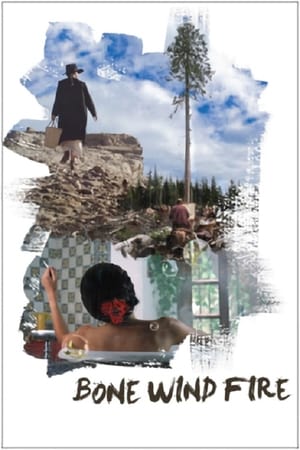
Bone Wind Fire
A journey into the hearts, minds and eyes of Georgia O’Keeffe, Emily Carr and Frida Kahlo - three of the 20th century’s most remarkable artists.
2011
Kutlug Ataman
This film documents Kutlug Ataman's artistic production in a retrospective approach and elucidates his works with his own words and with commentaries by curators, art institution directors, art historians and critics who are familiar with his production through close collaboration, to witness the construction of an impressive artistic production spanning 15 years. The film also includes the excerpts from the artworks and the installation footages of their realization.
2011
München, Raphaela
A film about a young woman's future plans in Munich, Germany. MUNCHEN, RAPHAELA (also known as RAPHAELA RING MUNCHEN) is part of Mike Plante's Lunchfilm series of commissioned shorts (made for the cost of a lunch between Plante and filmmaker Kevin Jerome Everson).
2006
Rafael França: obra como testamento
2001
Daidō Moriyama: Stray Dog of Tokyo
A documentary that follows the life of photographer Daido Moriyama in the present, which has never been revealed before. Even though his charismatic presence has reigned over the world of photography since the late 60’s, his true persona had been hidden behind a veil of mystery, since he had refused any major appearances in front of any media in the past. Follow the charismatic photographer Daido Moriyama as he takes his first digital photos and observe his style of quick snapshots without looking in the finder. His stark and contrasting black and white images symbolize his fervent lifestyle.
2001
Speaking of Abstraction: A Universal Language
At the beginning of the twenty-first century, abstraction - that most quintessentially modernist innovation - maintains a peculiarly contradictory position. Used, on one hand, by post-modernist artists as just one more quotable style amongst many, it is on the other hand still considered an elitist or hermetic language by audiences intimidated by its lack of recognizable subject matter. Yet ultimately, abstraction continues to be a viable creative path for contemporary artists of all generations, many of whom embrace it as the most inclusive and fundamentally resonant of artistic languages. Filmed at the artists' studios, the Dia Center for the Arts, and the Guggenheim Museum during their exhibition, "Abstraction in the Twentieth Century."
1999
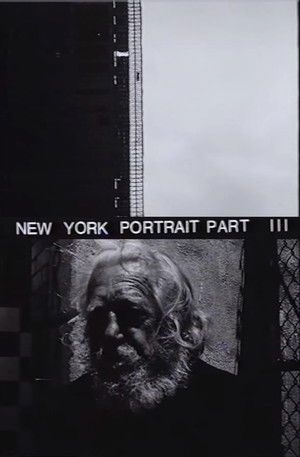
New York Portrait, Chapter III
"[Hutton’s] latest urban film, New York Portrait, Chapter III, takes on a unique tone in relation to Hutton’s ongoing exploration of rural landscape. The very fact that Hutton is dealing with older footage, with archives of memory more than immediacy, gives it a different texture than his earlier New York films. Hutton always found the presence of nature in the city, not only in his many shots of sky and vegetation, but also in the geometry and texture of the city itself, which seemed to project an independence from the human." (Tom Gunning)
1990
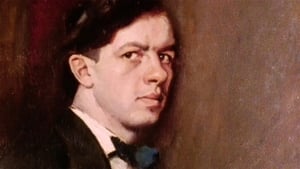
Thomas Hart Benton
Thomas Hart Benton's paintings were energetic and uncompromising. Today his works are in museums, but Benton hung them in saloons for ordinary people to appreciate.
1989
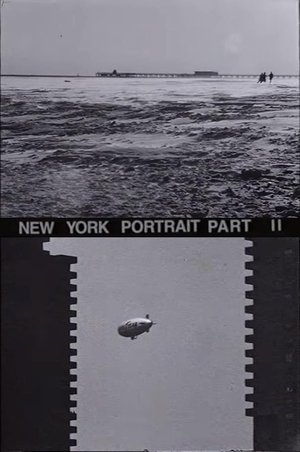
New York Portrait, Chapter II
Chapter Two represents a continuation of daily observations from the environment of Manhattan compiled over a period from 1980-1981. This is the second part of an extended life's portrait of New York.
1981
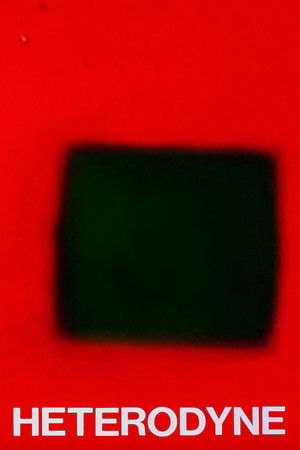
Heterodyne
“Geometric animation made entirely by sculptural methods: cutting, punching, welding colored leader. HETERODYNE is related to some of my other work as RNA to a protein or polypeptide. It was made in abject (if blissful) ignorance of Paul Sharits’ early work.” –Hollis Frampton
1967
Visite à Oscar Dominguez
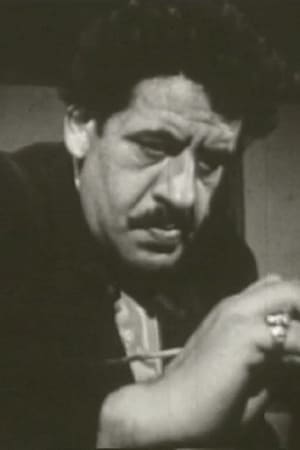
This is the legendary meeting between a young filmmaker and one of the masters of surrealism: the spanish painter Óscar Domínguez, born in La Laguna, Tenerife, in 1906, died in Paris in 1957. In the "Visite," the artist -admirer of Picasso, rebellious disciple of Breton- is presented in solitude, far from the tumult of the exhibitions and parisian circles. An austere approach, almost “povera”, with no audio, nor flashy camera movements, but rarely attractive. Why Resnais could not finish his movie? Hope one of our experts help us to solve the mystery.
1947