Watch J.G. Ballard Documentary | The Unlimited Dream Company (2026) Online Free
This J.G. Ballard documentary assembles decades of interviews and archival material to paint a striking portrait of one of the most imaginative and provocative writers of the 20th century.
More Like This
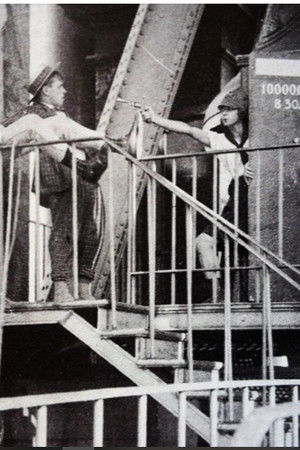
Voices from the Chorus
This film essay is inspired by Leonid Trauberg's eponymous autobiographical text. It also sheds light on his public condemnation in 1949 as a leader of the "cosmopolitans," accused of "only causing harm to Soviet cinema," as well as his enthusiasm for silent slapstick comedies, the novels of P.G. Wodehouse and G.K. Chesterton, and his fascination with the lost FEKS film, The Adventures of Octobrine.
2026
Die Liebe stört der kalte Tod
2026

Rosa dos Ventos
2025

Swinging Light
An experience of a camera swinging in different gestures facing the optical distortion of the Sun. The last appearance of the smudge.
2025

Looking for Simone
In 1949, philosopher and novelist Simone de Beauvoir wrote the groundbreaking The Second Sex, launching a disruptive discourse on women’s oppression and second-class citizenship. This film dissects the origins and relevance of this bible of feminism, charting de Beauvoir’s fact-finding journey across the US to research her book. The timely and fascinating film honors de Beauvoir’s brilliance and limitations, connecting her revolutionary ideas to the pressing issues women face today.
2024

Exergo
Departing from peripheral details of some paintings of the Bilbao Fine Arts Museum, a female narrator unravels several stories related to the economic, social and psychological conditions of past and current artists.
2024

Hydroelectric Joy
In the 60s, Vadim, a Soviet engineer, is in love with Vera, a researcher in biology. But their romance is suddenly disrupted by a mission entrusted to Vadim: sent to Egypt, he must participate in one of the great utopian ventures initiated by the USSR. Based on unpublished archives, this film is inspired by a true story.
2024
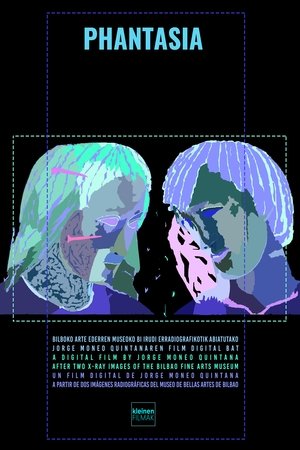
Phantasia
X-ray images were invented in 1895, the same year in which the Lumière brothers presented their respective invention in what today is considered to be the first cinema screening. Thus, both cinema and radiography fall within the scopic regime inaugurated by modernity. The use of X-rays on two sculptures from the Bilbao Fine Arts Museum generates images that reveal certain elements of them that would otherwise be invisible to our eyes. These images, despite being generally created for technical or scientific purposes, seem to produce a certain form of 'photogénie': they lend the radiographed objects a new appearance that lies somewhere between the material and the ethereal, endowing them with a vaporous and spectral quality. It is not by chance that physics and phantasmagoria share the term 'spectrum' in their vocabulary.
2024
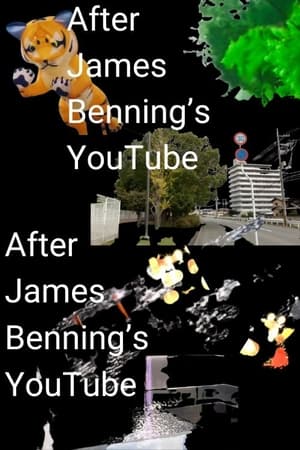
After James Benning's YouTube
Divided into 26 parts, an attempt to remake James Benning's film, YouTube (2011) with similar internet footage after 13 years.
2024
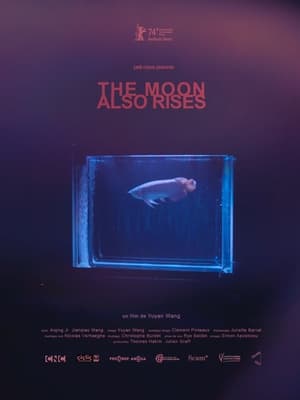
The Moon Also Rises
Just before the launch of artificial moons, a retired couple finds their harbor in the fading darkness. Trying to catch up with the pace of modernity, their daily life traces this forthcoming brightness back to its earthly origins.
2024
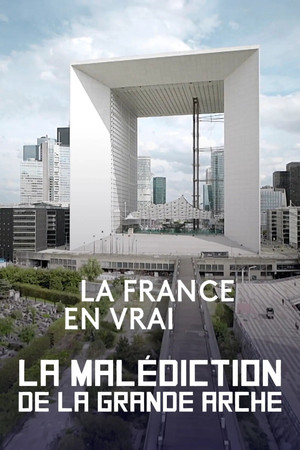
La Malédiction de la Grande Arche
2023

Île de la Réunion - L'incroyable route qui défie l'Océan
2022

Sauver Notre-Dame
In the aftermath of the fire that struck Notre-Dame de Paris in 2019, the cathedral is in danger of collapsing. A race against time begins for a hundred men and women who will face danger, the unknown, and toxic lead dust for a year to save this world heritage site. Architects, stonemasons, carpenters, crane operators, scaffolders, rope access technicians, archaeologists: this unique project brings together rare skills. With rare enthusiasm and cohesion, they will achieve numerous technical and human feats. This film recounts the spectacular and moving adventure of these builders fighting to save Notre Dame.
2020

Lyon-Turin : Le Dernier Tunnel XXL
2020

Once Upon a Time… A Clockwork Orange
A dystopian crime film adapted, produced, and directed by Stanley Kubrick, based on Anthony Burgess's novel A Clockwork Orange. Where a sadistic gang leader is imprisoned and volunteers for a conduct-aversion experiment, but it doesn't go as planned.
2011
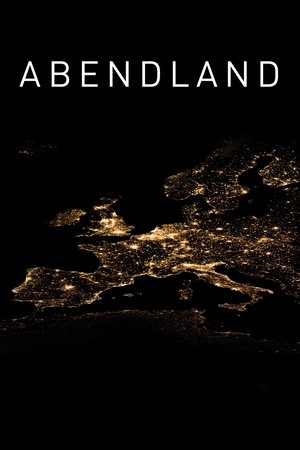
Abendland
Some things can be seen more clearly at night.. . A film poem about a continent at night, a culture on which the sun’s going down, though it’s hyper alert at the same time, an “Abendland” that, often somewhat self-obsessively, sees itself as the crown of human civilization, while its service economy is undergoing rapid growth in a thoroughly pragmatic way. Nikolaus Geyrhalter takes a look at a paradise with a quite diverse understanding of protection. Night work juxtaposed with oblivious evening digression, birth and death, questions that await answers in the semi-darkness, a Babel of languages, the routine of the daily news, and political negotiation: All this has been captured in images with a wealth of details that make us look at things in a new way. The longer you consider a word, the more distant is its return gaze: ABENDLAND.
2011
Total contrôle
2007
Amos, une rivière, une forêt, des hommes
The history of Amos, a town in Abitibi-Témiscamingue (Quebec).
2006

Bohemia Docta or the Labyrinth of the World and the Lust-House of the Heart (A Divine Comedy)
A labyrinthine portrait of Czech culture on the brink of a new millennium. Egon Bondy prophesies a capitalist inferno, Jim Čert admits to collaborating with the secret police, Jaroslav Foglar can’t find a bottle-opener, and Ivan Diviš makes observations about his own funeral. This is the Czech Republic in the late 90s, as detailed in Karel Vachek’s documentary.
2000
Entweder oder - Die Existenz des Sören Kierkegaard
He is called the 'Socrates of the North'. He is also called the forefather of existentialism: Sören Kierkegaard, born in Copenhagen in 1813. At the request of his father, he studied theology. He sees himself as a poet and philosopher, but always on a mission to fight for an unadulterated Christianity. His fanatical fight against an overly saturated and bourgeois church sapped his strength to such an extent that he died at the age of 42. Kierkegaard did not only set great impulses in his time. He has not lost his topicality until today. His complicated personality, his radical demands become clear for the first time in his writings.
1991