Watch Islam (1949) Online Free
"Islam" by Georges Régnier (1949) is a documentary about Islamic art in Algeria, Tunisia, Morocco, and Spain. The documentary received a special mention at the Venice Film Festival in 1949. Georges Régnier, a French documentary filmmaker active in the post-war period, was interested in North African cultures and colonial issues. In this film, he traces the history of Islam and its architectural art across these regions, and describes the expansion of Islam from Arabia to the Maghreb and Andalusia, highlighting mosques, minarets, and palaces such as those in Kairouan, Algiers, and Marrakech, all accompanied by the sounds of the Arabic call to prayer.
More Like This
Parrot at the Milk Bar
A humorous observation in Barcelona’s immigrant neighbourhood El Raval. Four barber shops, four places of remembrance, strange time and space capsules inhabited by people who left their home to find a better one, while the Spaniards are about to leave their own country themselves.
2014
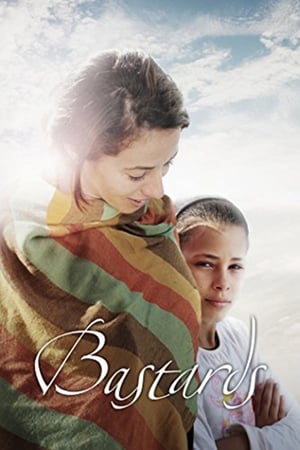
Bastards: Outcast in Morocco
At 14 Rabha El Haimer was an illiterate child bride, beaten, raped and then rejected. Ten years later, she is a single mother, fighting to legalise her sham marriage and secure a future for her illegitimate daughter. With unprecedented access to the Moroccan justice system, “Bastards” follows Rabha’s fight from the Casablanca slums to the high courts.
2014
Two Lakes Of Tears
The story of a young girl in a little town in the north of Morocco learning through life's tasks the meaning of friendship and love.
2009
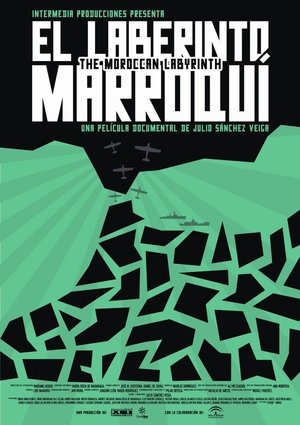
The Moroccan Labyrinth
2007
Babel
Tragedy strikes a married couple vacationing in the Moroccan desert, which jumpstarts an interlocking story involving four different families.
2006

Five Fingers
Martijn, an idealistic Dutch pianist, travels to Morocco to help start a food program for malnourished children. Within moments of his arrival, however, Martijn is abducted by a group of terrorists, injected with a debilitating drug, and imprisoned. Under threat of death, the young man engages in a mental chess match with Ahmat, trying to learn his captor's true objective and avoid a horrible fate
2006
SommerHundeSöhne
Summer is the time to travel, enjoy life, and do or leave what you want. A motor home with two occupants makes its way south. But the two travelers do not travel voluntarily, and certainly not together.
2005
Atash
In southern Morocco in 1954, an old man and a young man cooperate to restore water to a wasteland.
2001

The Harem of Madame Osmane
In Algiers in 1993, while the civil war is starting, Mrs Osmane's tenants have to endure her bad temper. Her husband left her and the fear to lose her respectability haunt her. The former member of the Resistance during the Independence War persists in controlling the slightest moves of the households rather than struggle against her own frustrations. Learning her daughter is in love, the possibility of finding herself alone will push her to the limit: The symbolical Mrs Osmane "harem" is about to collapse.
2000
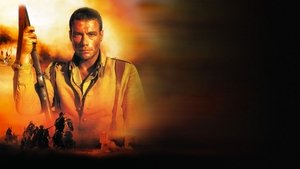
Legionnaire
Alain Lefevre is a boxer paid by a Marseille mobster to take a dive. When he wins the fight he attempts to flee to America with the mobster's girlfriend Katrina. This plan fails and he seeks escape by joining the foreign legion. As part of the legion he tangles with abusive lieutenant Steinkampf and bonds with legionnaires Luther, Mackintosh and Rosetti.
1998
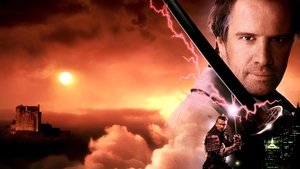
Highlander III: The Sorcerer
Deceived that he had won the Prize, Connor MacLeod wanders through the world; however, he is awakened from his peaceful life when an entombed immortal magician, Kane, escapes and comes seeking the Highlander.
1994
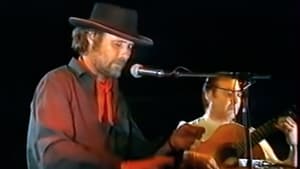
El Cabrero: el canto de la sierra
Documentary portrait of José Domínguez Muñoz, better known as "El Cabrero" (French for "the goatherd"), Spanish libertarian flamenco singer born in Aznalcóllar, province of Seville, in 1944 and filmed over two weeks in 1988 in Seville, Aznalcóllar, La Carbonería de Sevilla and Marinaleda, and in concert at a recital in Bayonne. Politically committed, El Cabrero defines himself as a libertarian. Since the 1970s, he has been close to the anarchist movement. For many years, he was a member of the anarcho-syndicalist Confédération Nationale du Travail.
1988
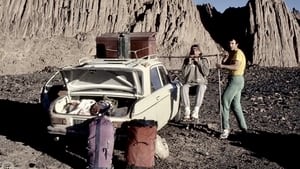
Oversand
Oversand is one of the first films about free climbing, the third film in a series of three with "Overdon" and "Over-Ice". Directed by Jean-Paul Janssen, the film was shot in 35mm in Algeria, in the Sahara Desert, in the Tamanrasset region, on the walls of the majestic peaks of the Atakor massif, central sub-region of Hoggar, mountainous heart of Hoggar, a volcanic plateau of almost circular shape, whose average altitude is 2000 meters, and which culminates at Mount Tahat (2918m), the highest point in Algeria. The Atakor is distinguished by its spectacular volcanic peaks, its needles, and its rugged landscapes, resulting from the erosion of ancient volcanic chimneys, which make it the most emblematic summits of the Hoggar, such as the Assekrem, the Ilamane, or the Tizouyag, where climbers Patrick Edlinger, Patrick Bérhault, Bernard Gorgeon, Hugues Jaillet, Jacques Perrier, Stéphane Troussier and Odette Schoënleb evolve under the watchful eye of the Tuareg caravans.
1981
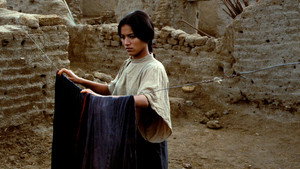
Ramparts of Clay
In a village on the edge of the Sahara, Rima, a 19-year-old orphan, dreams of learning, of discovering, of living free while the men of the salt mine go on strike. The authorities react by sending the army, Rima decides to help the strikers by trapping the soldiers. Co-produced with the Office des Actualités Algériens and shot in the region of Téhouda, 50 kilometers from Biskra, this Franco-Algerian film is fully part of the cinematographic heritage of both shores of the Mediterranean. Bertuccelli adopts the technique of cinema verite, with non-professional actors from the village itself, giving the film a striking documentary texture and a rare force of authenticity. Carried by the moving interpretation of Leila Shenna in the role of Rima, the actor Krikèche and lulled by the music of Taos Amrouche, the film questions female emancipation, social resistance and the relationship with the territory.
1970
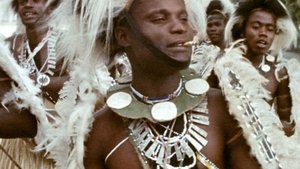
The Pan-african Festival in Algiers
Festival panafricain d'Alger is a documentary by William Klein of the music and dance festival held 40 years ago in the streets and in venues all across Algiers. Klein follows the preparations, the rehearsals, the concerts… He blends images of interviews made to writers and advocates of the freedom movements with stock images, thus allowing him to touch on such matters as colonialism, neocolonialism, colonial exploitation, the struggles and battles of the revolutionary movements for Independence.
1969

Algeria, Year Zero
Documentary on the beginnings of Algerian independence filmed during the summer of 1962 in Algiers. The film was banned in France and Algeria but won the Grand Prize at the Leipzig International Film Festival in 1965. Out of friendship, the production company Images de France sent an operator, Bruno Muel, who later declared: "For those who were called to Algeria (for me, 1956-58), participating in a film on independence was a victory over horror, lies and absurdity. It was also the beginning of my commitment to the cinema."
1965
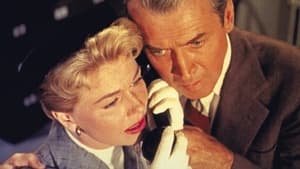
The Man Who Knew Too Much
An American doctor and his wife, a former singing star, witness a murder while vacationing in Morocco, and are drawn into a twisting plot of international intrigue when their young son is kidnapped.
1956
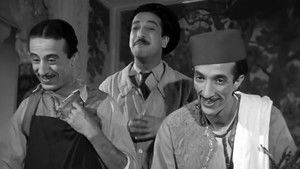
The Unexpected Party
This musical comedy produced in 1953 for the General Government of Algeria, features the comic trio composed of Rouiched, Mohamed Touri and Sid Ali Fernandel, accompanied by the orchestra of the master of the Algiers Chaâbi El Hadj M'hamed El Anka, the singer Fadhéla Dziria, Mustapha Skandrani on the piano. Some scenes were filmed at the Summer Palace (the current Palace of the Algerian Presidency, called the People's Palace). André Zwobada, the director, will play an important role after the independence of Algeria in 1962, in the production and preservation of the first Algerian newsreels.
1953
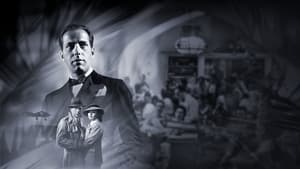
Casablanca
In Casablanca, Morocco in December 1941, a cynical American expatriate meets a former lover, with unforeseen complications.
1943
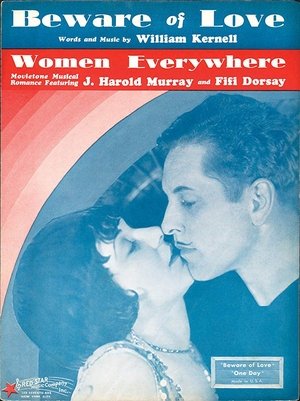
Women Everywhere
Charles Jackson, an American sea-captain and singing soldier-of-fortune, is arrested by the French Foreign Legion for running guns to the rebel forces in Morocco fighting against the rule of the French in north Africa. He is saved by Lili La Fleur, a singer/dance in a Morocco café and, through her, eventually becomes a hero to the Foreign Legion.
1930