Watch Isaac Asimov: Voyage to the Outer Planets & Beyond (1986) Online Free
Travel to the edges of our solar system with this unique blend of photographic images, video and computer animation. Hosted by renowned scientist and author Isaac Asimov, the program is set to Gustav Holst's moving 1917 musical suite "The Planets." The infrequently seen footage from NASA includes images of planets and other impressive galactic bodies, including Jupiter, Saturn's rings, Pluto and much more.
Cast
Isaac Asimov
More Like This
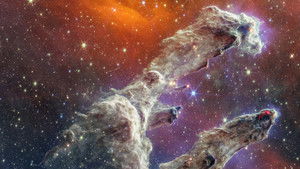
Deep Sky
Explores the $10 billion JWST's engineering and construction process, historic Dec. 25, 2021 launch, and the release of its first full-color, galaxy-sprinkled images on July 12, 2022 witnessed by the entire planet.
2023

Perseverance, une année sur Mars
2022
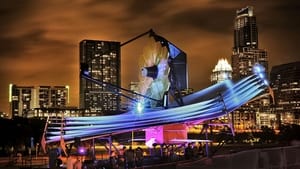
Ultimate Space Telescope
NASA's James Webb Space Telescope, from its conception to completion.
2022
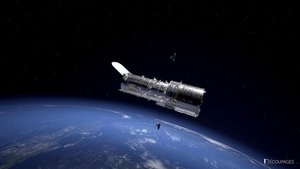
L'odyssée d'Hubble, un œil dans les étoiles
The Hubble Space Telescope has spent more than 30 years scrutinizing the cosmos in an attempt to unravel the secrets of the Universe and go as close as possible to its origin. But Hubble has also become the superstar of space, offering us magnificent paintings of the Universe.
2022
Feeling Right Now
An experimental film about the relation of Time and Space.
2021
In Diretta Da Marte - Missione Perseverance Alla Ricerca Della Vita
2021
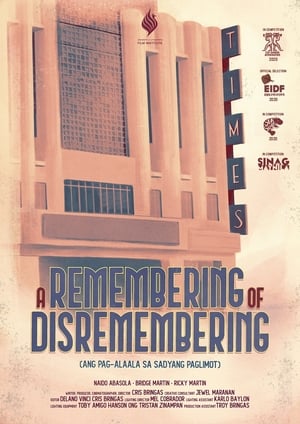
A Remembering of Disremembering
Told through the tales of love of a retiring film projectionist and a late-blooming actress, the short documentary delves into the journey of Manila’s oldest movie theater from grandiosity to obsolescence.
2020
Apollo 11 : Retour vers la lune
2019

Apollo's New Moon
This extraordinary film features NASA film footage enhanced by AI-based software and other image processing. The clarity of the images gives viewers a whole new perspective on what it was like to step onto lunar soil and ramble about the alien landscapes. The film shows how teams of astronauts collected evidence that has revolutionized our understanding of the origin of both Earth and the moon.
2019
Apollo: The Forgotten Films
Recently discovered footage reveals the secret history of NASA's first landing on the moon, and using this brand-new evidence, former astronauts and experts challenge everything known about the Apollo missions.
2019
Searching for Skylab, America's Forgotten Triumph
The first American space station Skylab is found in pieces scattered in Western Australia. Putting these pieces back together and re-tracing the Skylab program back to its very conception reveals the cornerstone of human space exploration.
2019
Homo Spatius
Can Homo sapiens evolve into Homo spatius? For over 50 years now, we have been testing our human nature in our effort to conquer outer space, and still 30 years away from a possible human exploration of Mars, a question remains: Can our body take such travels? Will it ever adapt? Combining human adventure and the exploration of the human body, this film offers unique insights into the physical and psychological effects of space travel on the Astronauts and measures the impact on medical sciences.
2018
One Strange Rock
A mind-bending, thrilling journey exploring the fragility and wonder of planet Earth, one of the most peculiar, unique places in the entire universe, brought to life by the only people to have left it behind – the world’s most well known and leading astronauts. This edit combined episodes one and ten to create a new movie.
2018
Exoplanets
NASA may have just gotten one step closer to the answering the question: are we alone? The Spitzer Telescope has made a groundbreaking discovery of exoplanets that could be similar to our own. And as Kepler also continues its search, our understanding of the universe continues to be redefined.
2017
Comet Collision
Comets pose one of the greatest threats to life on Earth - a threat that can only be countered if we find out more about them. In 2005, in an audacious bid to do just that, NASA scientists launched a space probe to collide with a comet in the emptiness of deep space. This film follows the amazing story of mission Deep Impact, from its inception through to the final nail-biting moments when the probe and comet Tempel 1 met head-on.
2006
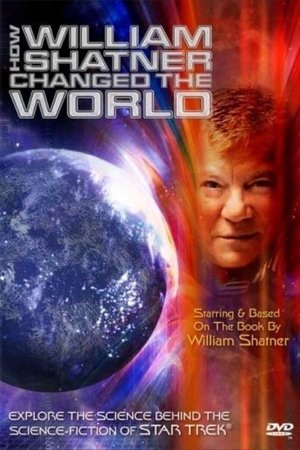
How William Shatner Changed the World
William Shatner presents a light-hearted look at how the "Star Trek" TV series have influenced and inspired today's technologies, including: cell phones, medical imaging, computers and software, SETI, MP3 players and iPods, virtual reality, and spaceship propulsion.
2005
Dark Side of the Moon
A French documentary or, one might say more accurately, a mockumentary, by director William Karel which originally aired on Arte in 2002 with the title Opération Lune. The basic premise for the film is the theory that the television footage from the Apollo 11 Moon landing was faked and actually recorded in a studio by the CIA with help from director Stanley Kubrick.
2002
Destiny in Space
Travel alongside the astronauts as they deploy and repair the Hubble Space Telescope, soar above Venus and Mars, and find proof of new planets and the possibility of other life forming around distant stars.
1994
Raumerfahrungen
What advantage does space travel bring to mankind? A father and his son search for answers during a walk in the forest.
1994

Trauma in These Walls
A filmmaker returns to a house from his past where a great tragedy happened, in order to find a closure within the space that already feels too foreign.