Watch In the Name of Liberty (2024) Online Free
Based on a discursive analysis of historical right-wing forces in Argentina and around the world, the objective is to situate the current Argentine government in the context of a resurgence of reactionary thinking, as well as to warn of the country's potential direction.
More Like This

Someone who takes care of me
In Argentina, almost all adopted children are under 5 years of old. Luis and Valeria open the doors of their home and tell us their family story. A true story full of obstacles, fears and love about paths that connect and people who meet by chance.

Tiempos circulares
2025

Grata
2024

Unearthing. The Books We Didn't Inherit
"Unearths, the books we do not inherit" delves into the family memory of Maria Julia Blanco, its director. The unearthing of his father's student library - recovered in 2018 - is the starting point. Julia guides us through the province of Santa Fe following her family's story. Historian and bibliophile by choice, Julia takes books, which do not know what has happened on the surface, as a starting point to excavate family memory. Little by little it becomes evident that, in the remains of the books, both family history and Argentine history can be reread.
2024

Proyecto muerto v6 (6).mp4
2024
Muchachos
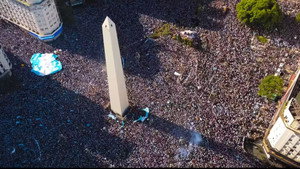
Using home videos from fans from across the globe and never-before-seen drone footage obtained during the victory parade in Buenos Aires, on streets dyed white and sky blue. The film invites viewers to immerse themselves in the world's most football obsessed nation, Argentina, to relive the emotional rollercoaster that was the country’s 2022 World Cup victory in Qatar and the record breaking celebrations that followed.
2023

Zombies in the Sugar Cane Field: The Documentary
Tucumán, Argentina, 1965. Three years before George A. Romero's Night of the Living Dead was released, director Ofelio Linares Montt shot Zombies in the Sugar Cane Field, which turned out to be both a horror film and a political statement. It was a success in the US, but could not be shown in Argentina due to Juan Carlos Onganía's dictatorship, and was eventually lost. Writer and researcher Luciano Saracino embarks on the search for the origins of this cursed work.
2019
Fund
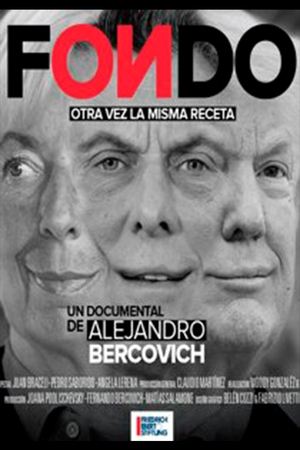
The history of how the International Monetary Fund has been operating in Argentina for years.
2019
Por amor al arte
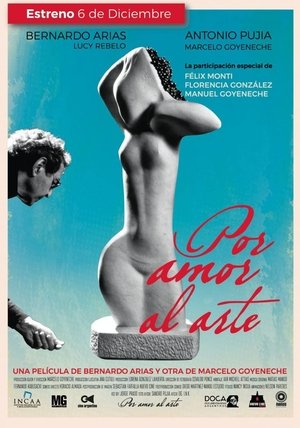
Bernardo has turned 90 and is working to realize a dream: to make a film about art. He spends countless hours writing the script. He understands it's an arduous and complex task: What is art? When is there art? What is the purpose of art? Antonio, his friend, decides to collaborate, lending his knowledge and experience to the project. Marcelo meets Bernardo through Lucy, his partner of over 60 years, and finds him deep in his work, immersed in the uncertainties, frustrations, and joys inherent in any creative process. Watching him work, something of Bernardo's dream awakens in Marcelo a desire, another dream. He offers his help, while also asking to be able to capture Bernardo's daily work with his own eyes, thus creating his film. A dream that gradually shifts from the work Antonio sculpts on Bernardo's camera to Marcelo's gaze.
2017
An Important Premiere
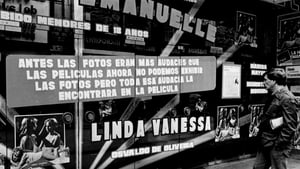
For many years, Buenos Aires, Argentina, was one of the best places in the world for a film buff; but from the mid-sixties onwards, successive authoritarian governments shaped the will of the spectators, dictating what could be seen and what could not, so that the true cinema lovers, in their desire to watch films, had no choice but to embark on the most extraordinary and strange adventures.
2015
The Exact Shape of The Islands
For many, the name Malvinas/Falklands evokes an absurd war between England and Argentina in 1982. For Julieta Vitullo, the protagonist of this film, this tragic history becomes deeply personal 25 years later when she suffers a loss associated with her search to uncover that past, unfolding into a life-affirming struggle for renewal and rebirth. This film tells the story of two trips, one made in 2006 and the other in 2010. In the space between one trip and the next, between past and present, between the public and the private, between what can and cannot be told, the movie reflects on the possibilities of conveying extreme life experiences, presenting landscapes and sounds that suggest subtle contours of that shape, 'The Exact Shape of the Islands.'
2012

1892 1982 Dos Historias de Malvinas
It is a fictionalized documentary, filmed in different locations (San Julián; Estancia La Colmena; Morón, Province of Buenos Aires; Capital Federal and Islas Malvinas). The original idea of the project is to reflect the historical and paradoxical connection that unites continental Patagonia with the Islas Malvinas. It is a story that recreates several moments, both the arrival of Islas Malvinas settlers and the departure of Argentine pilots on combat missions during the 1982 war. The documentary is filmed in a cinematic style, but also incorporates the most rigorous documentary logic: interviews, narration, and careful historical research into the events.
2012
Nadie inquietó más
A peculiar, meticulous, vocationally archeological account of the professional life of the actor, Spanish by birth, Argentinean by adoption, Narciso Ibañez Menta (1912-2004), spiritual disciple of Lon Chaney, the new man of a thousand faces, master of horror, star of Argentinean theater, cinema and television for decades.
2008
Hotel Gondolín
The hotel Gondolín is home to some 30 transvestites who practice prostitution as the only option to survive in a society that excludes them.
2005

Batato
Experimental documentary short starring Batato Barea and Peter Pank, filmed in July 1991
1991

SANTA FE ROCK
A lo Mejor Algún Día

Compañero Fernando
This documentary is a portrait made in Mexico by a group of Argentine exiles, directed by the painter Nicolás Amoroso.
1981
Hoy Como Ayer

UNA Historia: lucha por la educación y la cultura
Through archival footage and testimonies from professors, students, staff, and graduates, the documentary traces the history of the National University of Arts, focusing on the Audiovisual Department, while critically addressing the impact of the current government's underfunding of education and cultural institutions in Argentina.