Watch I Am Your Father (2015) Online Free
David Prowse is an eighty years old actor, who has lived behind Darth Vader's mask during three decades. A group of Star Wars fans find out why he has been apparently forgotten by Lucasfilm during thirty years, and decide to give him back the glory he never had. This is their last opportunity.
Cast
David Prowse, Marcos Cabotá, Marcus Hearn, Jonathan Rigby, Lou Ferrigno, Kenny Baker, Gary Kurtz, Robert Watts, Ben Burtt, Jeremy Bulloch, Manuel M. Velasco, Eduardo Biurrun
More Like This

Therapie per KI?
2024
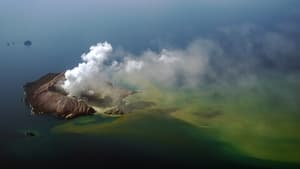
The Volcano: Rescue from Whakaari
A close examination of the Whakaari / White Island volcanic eruption of 2019 in which 22 lives were lost, the film viscerally recounts a day when ordinary people were called upon to do extraordinary things, placing this tragic event within the larger context of nature, resilience, and the power of our shared humanity.
2022

Running with the Devil: The Wild World of John McAfee
Through raw, revealing footage and interviews with fugitive tech pioneer John McAfee, this documentary uncovers new layers of his wild years on the run.
2022
150 Miles of Rotting, Rutted, Lumpy, Dilapidated Pavement
A Woman Watches People.
2021
Ears, Eyes and Throats: Restored Classic and Lost Punk Films 1976-1981
This collection of short films represents a hint of the tectonic shift in the underground film world in connection with the punk rock “movement.” Restored from original negatives, it showcases the reasonably well-known alongside the extremely rare, from music shorts to impressionistic documentary.
2019

King Cohen: The Wild World of Filmmaker Larry Cohen
A feature-length documentary focusing on the acclaimed work and eclectic career of maverick filmmaker Larry Cohen, writer-director of "Black Caesar," "It's Alive," "God Told Me To," "Q," "The Stuff," and many more.
2018

Electric Boogaloo: The Wild, Untold Story of Cannon Films
A documentary about the rise and fall of the Cannon Film Group, the legendary independent film company helmed by Israeli cousins Menahem Golan and Yoram Globus.
2014

Moving Through Time: Fire Walk With Me Memories
Documentary about the making of Twin Peaks: Fire Walk With Me.
2014

My Other Me: A Film About Cosplayers
An eye-opening look at the 'costume play' subculture known as cosplay. "My Other Me" chronicles a year in the life of three different cosplayers, following the subjects as they travel the convention circuit, balancing their home lives with their cosplay alter egos, revealing the profound effects the subculture has played in their lives.
2013

In the Lost City
The city of Madrid as it appears in the Spanish films of the 1950s. A small tribute to all those who filmed and portrayed Madrid despite the dictatorship, censorship and the critical situation of industry and society.
2009
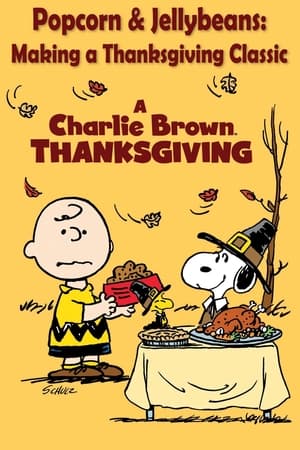
Popcorn and Jellybeans: Making a Thanksgiving Classic
Documentary on the making of the Peanuts Thanksgiving special.
2008

Dog Days: The Making of 'Cujo'
Documentary about the making of the 1983 thriller "Cujo"
2007

Paul Grimault, image par image
2003
Drôle d'oiseau
2003
Thank God I’m in the Film Business!
Eva Ebner is a Berliner who gives the appearance of being rather eccentric. She knows the film business inside out – regardless of whether she’s work- ing behind the camera as an assistant director or in front of it as an actor. Her name is closely associated with a series of now-legendary adaptations of Edgar Wallace’s crime novels which were made in Germany during the 1960s. Upcoming young directors from local film schools have also profited from Ms. Ebner’s unbroken enthusiasm and passion for film. However, this eighty-year-old has a more than broken relationship to the events of her childhood and youth in Gdansk – a time when her life was characterised by an anti-Semitic step-mother and the dangers posed by the Nazi regime. This film portrait does not eschew any of the long dark shadows of that era, nor does it sidestep any friction between portrayer and his subject. (Lothar Lambert)
2003
'Obsession' Revisited
A documentary about the making of 1976's "Obsession" featuring interviews with director Brian De Palma, stars Cliff Robertson and Genevieve Bujold and more.
2001
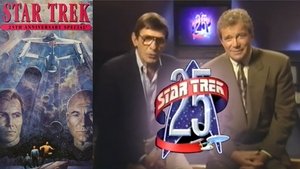
Star Trek: 25th Anniversary Special
This documentary is hosted by William Shatner and Leonard Nimoy and they take us through the history of Star Trek. We also get to see bloopers from the original series and the current space program and how progression has been in reality, hosted by LeVar Burton.
1991
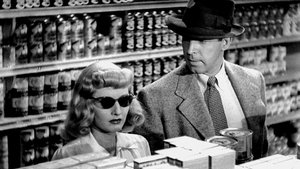
Barbara Stanwyck: Fire and Desire
Actress Sally Field looks at the dramatic life and successful career of the superb actress Barbara Stanwyck (1907-90), a Hollywood legend.
1991
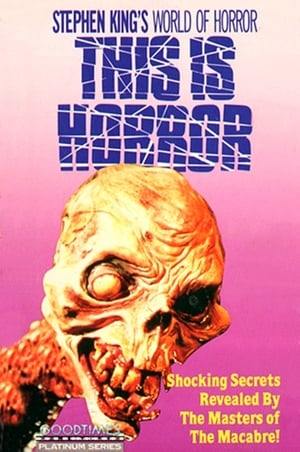
Stephen King's World of Horror
This horror documentary is not the same as the 1986 TV special Stephen King's World of Horror nor the 1988 VHS release of the same name, which runs 45 minutes, was distributed by Front Row Entertainment and is about King himself. Instead, This Is Horror (copyright 1989) was a TV special which ran in four 60 minute increments. This new special used some framing footage from the original 'World of Horror' but is primarily newer interviews and behind-the-scenes footage about what was hot in horror in the late 80s. Here in the U.S., a condensed 90-minute version made its way onto video courtesy of Goodtimes in 1990. Elsewhere, the entire special was released as 2 different tapes running 90 minutes apiece. In the UK these were titled This is Horror: A Video Encyclopedia of Horror (Volumes 1 and 2) and in Germany they were called Best of Stephen King's World of Horror (Parts 1 & 2).
1989
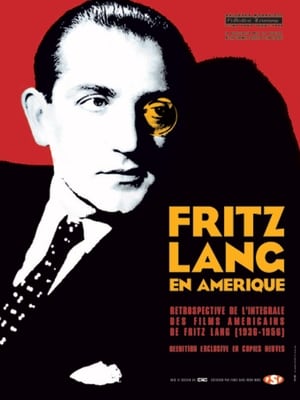
Encounter with Fritz Lang
Interview with Fritz Lang on the roof of Villa Malaparte on Capri during the filming of the fictitious film "Odysseus" and the filming of "Contempt" by Jean-Luc Godard, in which Fritz Lang plays the role of an old film director. During the interview, excerpts from the Lang films "The Nibelungen", "The Tired Death" and "M" are shown.
1964