Watch How You See Me (2026) Online Free
Loading Cinehub...
In an effort to reconnect with her grandfather, a young woman travels to northeast Poland to trace his ancestry.
Cast
Julia Krawcewicz
More Like This

My Dear Theo
In a series of letters to her young son, a mother, soldier and filmmaker documents her thoughts from the Ukrainian frontline.
2025
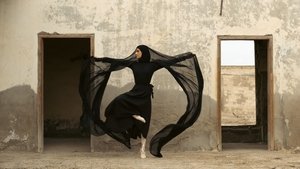
Light Upon Light: A Documentary On Hijab
Light Upon Light: A Documentary on Hijab is an intimate and deeply personal exploration of the diverse, raw, and untold stories of hijabi women. Through open and vulnerable conversations with 7 women, the film dismantles stereotypes, highlights the challenges imposed by society, and celebrates the profound beauty of the hijab beyond a mere clothing choice. It captures the individuality of each woman’s story—how they came to wear the hijab, the struggles they’ve faced, and the strength they’ve found in it. More than just fabric, the hijab is a journey, often misunderstood, and influenced by the way the world perceives it. By amplifying voices that are often unheard, the documentary creates a space for empathy, challenges misconceptions, and invites a deeper understanding of what it truly means to wear the hijab; inspiring everyone to see hijab in a new light.
2025
Le Polyhandicap : Une immersion au plus près de l'humanité
2024
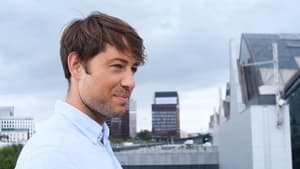
Across the Rails
2021 was a turning point for Belarus and 6 Belarusian students - as well as for the city of Łódź, Poland, in which they found themselves. Across the rails of change and transformation, documenting a time that has not been before and will not repeat again. Heroes of the film have very different fates and experiences, but they are all connected by the place they found themselves in - the post-industrial and post-apocalyptic city, which becomes a part of their story and a hero of its own. Students, transport, quaters, youth, revolution, local apocalypse, changes and turns - they all mix in a documentary kaleidoscope 'Across the Rails'.
2022
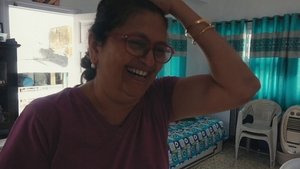
About Love
Three generations of the Phadke family live and work together in South Bombay. As they prepare for a family wedding, director Archana Atul Phadke, who is not in any hurry to marry, observes the shifting, often very funny household dynamics, as both her mother and grandmother wonder how they have tolerated their husbands for so long.
2020
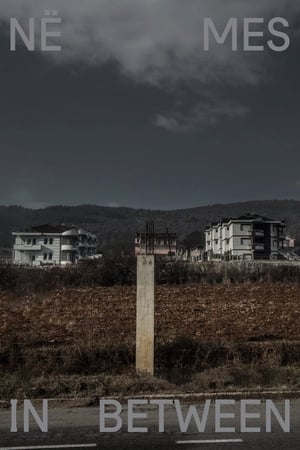
In Between
In rural Kosovo, identical houses are built for family members working abroad, in the hope that they will one day return to settle in their old homeland.
2019
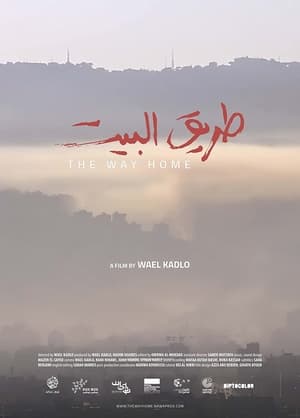
The Way Home
When filmmaker Wael Kadlo picks up his mother from the airport in Beirut, it seems like a rather warm family visit. But Kadlo, who was born in Damascus in 1980, has some questions he needs to ask her.
2018

Arctic Tale
Arctic Tale is a 2007 documentary film from the National Geographic Society about the life cycle of a walrus and her calf, and a polar bear and her cubs, in a similar vein to the 2005 hit production March of the Penguins, also from National Geographic.
2007
Cruising Do's and Don'ts
Tips for what to expect when taking a vacation aboard a cruise ship, and how to make the most of the trip.
2007
Gdzie rosną poziomki?
The forest in Bykovnia near Kyiv hides the remains of more than 30,000 NKVD victims, including several thousand Poles. In 2006, a team of Polish archeologists, with the cooperation of the Ukrainian side, conducted exhumation work there, which confirmed that Poles were buried in the cemetery. At the time, two people whose fathers are believed to be buried there also came to the Bykovsky forest. The film tells the story of the history of the place, the local residents' perception of it, and the search for the fathers' graves.
2006
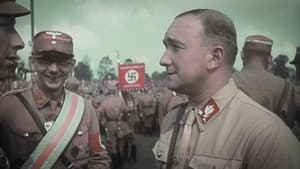
2 or 3 Things I Know About Him
What would your family reminiscences about dad sound like if he had been an early supporter of Hitler’s, a leader of the notorious SA and the Third Reich’s minister in charge of Slovakia, including its Final Solution? Executed as a war criminal in 1947, Hanns Ludin left behind a grieving widow and six young children, the youngest of whom became a filmmaker. It's a fascinating, maddening, sometimes even humorous look at what the director calls "a typical German story." (Film Forum)
2005

Capturing the Friedmans
An Oscar nominated documentary about a middle-class American family who is torn apart when the father Arnold and son Jesse are accused of sexually abusing numerous children. Director Jarecki interviews people from different sides of this tragic story and raises the question of whether they were rightfully tried when they claim they were innocent and there was never any evidence against them.
2003

My Life Part 2
By means of objects, photos, tapes and films, director Angelika Levi, half-German, half-Jewish, examines the story of her family. The film deals with trauma and the way history is produced, filed away, turned into discourse and ordered on macro and micro levels.
2003
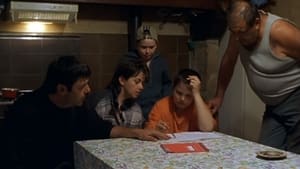
To Be and to Have
The documentary's title translates as "to be and to have", the two auxiliary verbs in the French language. It is about a primary school in the commune of Saint-Étienne-sur-Usson, Puy-de-Dôme, France, the population of which is just over 200. The school has one small class of mixed ages (from four to twelve years), with a dedicated teacher, Georges Lopez, who shows patience and respect for the children as we follow their story through a single school year.
2002
The Acadian Connection
National Film Board of Canada documentary of stories of Acadians (French Canadians from the eastern Maritime provinces). Hundreds of thousands of Acadians emigrated to Louisiana following deportation by the British during the Acadian Expulsion of the mid-18th century, hence the term 'Cajun.'
1995
Berlin ohnegleichen - Vom steinernen Anspruch auf ein Weltreich
The architectural plans for Berlin from 1938 are used as an example to illustrate the fascist claim to power and its aesthetic effect. The basis for this was the "General Building Inspection" under the direction of Albert Speer, whose enormous projects are illustrated by planning models and archive photographs.
1989
The Police Tapes
Filmmakers Alan and Susan Raymond spent three months in 1976 riding along with patrol officers in the 44th Precinct of the South Bronx, which had the highest crime rate in New York City at that time.
1977
Ansichten von Stuttgart
Stuttgart in the mid-1930s: What did it look like in the past, what does it look like now and what will await the city in the future?
1936
Visions of Lourdes
Charles Dekeukeleire, then a questioning Catholic, was spurred into making this documentary on a pilgrimage with the Catholic Young Workers’ Movement. The director’s approach is one of critical reflection; A film emotional and fervent, even acerbic.
1932
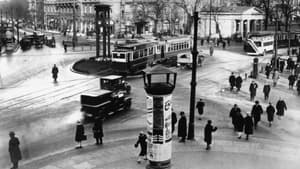
Berlin: Symphony of a Great City
A day in the city of Berlin, which experienced an industrial boom in the 1920s, and still provides an insight into the living and working conditions at that time. Germany had just recovered a little from the worst consequences of the First World War, the great economic crisis was still a few years away and Hitler was not yet an issue at the time.
1927