Watch How Ukrainians Started Speaking Ukrainian (2024) Online Free
An educational film about the birth, development, decline, persecution, and flourishing of the Ukrainian language. It shows how it was formed, changed, filled with borrowed words and formed its own neologisms. The film is divided into five historically important periods: Rus, the Grand Duchy of Lithuania, the Hetmanate, the Russian Empire, and the Soviet Union. Each era “spoke” its own language, and here you will hear for the first time how it sounded in different centuries. The presenter, a famous theater and film actor Oleksii Hnatkovskyi, will guide the viewer through the historical periods. In a simple, accurate, sometimes humorous way, he will tell how our language developed during the periods of creation, development, division, fierce wars and total bans.
Cast
Oleksii Hnatkovskyi
More Like This
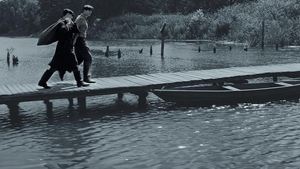
SHTTL
In one continuous shot, SHTTL shows the lives, loves, and inner conflicts within a Yiddish speaking shtetl on the border between Ukraine and Poland - one day before the Nazi invasion of the Soviet Union.
2023
Watch in Ukrainian!
The film tells the story of the development of Ukrainian dubbing. Until 2006, there was almost no Ukrainian dubbing on the big screen. According to the film's screenwriter Alina Stepanets, it is a great achievement that over 90% of films in theatres are now dubbed into Ukrainian. The secrets of working on Ukrainian dubbing are discussed in the film by such well-known film figures as film distributor and owner of the dubbing studio Bohdan Batrukh, dubbing director Olha Fokina, actors Yevhen Malukha, Yurii Kovalenko, Oleh Mykhailiuta (Fahot), translator Oleksa Nehrebetskyi and many others. In addition, the film's characters will recall working on the Ukrainian dubbing of their first films, Cars and Pirates of the Caribbean: Dead Man's Chest.
2019

The Last Supper
Alexandra and Timofeya have a serious problem. A woman lies dead on the living room floor. When they discover that she is Eva and Sveta Kalaschnikova’s wife (the local Russian Mafia boss), and that Alex has been having an affair with Eva, the possibility of three dead women becomes a reality.
2018

I Stop Time
Gunilla Bresky’s new film, “I stop time”, is a story from World War II that is unlike anything else. It is based on the Russian war photographer Vladislav Mikosha’s diaries and photographs. He was filming at the front, but he also visited Hollywood during the war and became a star when he showed his pictures from the front. As Mikosha’s Swedish voice in “I stop time” we have Jonas Karlsson. Gunilla Bresky has made several award-winning documentary films about World War II. The most recent, “Night Witches”, is about female Soviet bomber pilots.
2014

Advanced Style
Advanced Style examines the lives of seven unique New Yorkers whose eclectic personal style and vital spirit have guided their approach to aging. Based on Ari Seth Cohen’s famed blog of the same name, this film paints intimate and colorful portraits of independent, stylish women aged 62 to 95 who are challenging conventional ideas about beauty, aging, and Western’s culture’s increasing obsession with youth.
2014
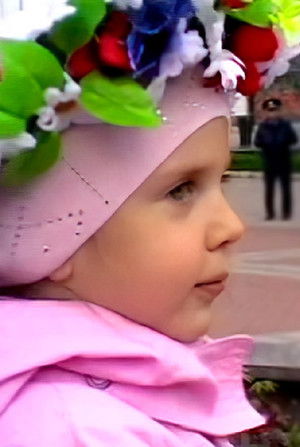
Ukrainian Activists in Donetsk
Chronicles April 2014 Ukrainian protests against Russian occupation intentions in Donetsk, Ukraine.
2014
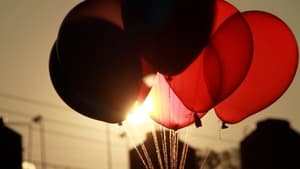
Anything Else Than Air
This film explores the consequences of the decisions we take and shows those things which really matter. After leaving his wife and children and promising he would be back, a man lives in a tent at a Mexico City park. There, he earns his living by selling balloons. After 30 years, he needs to fulfill his promise and return home. Will his family accept him back? Is he going to be able to change a life on the streets for the comfort of his home?
2014
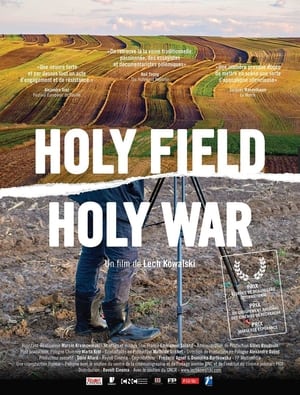
Holy Field Holy War
Film art as a vehicle for denounce. This time, documentary film maker Kowalski chooses the seemingly quiet Polish landscape, a land chosen for gas drilling, making a careful examination through a cautious revision of the tracks left on the fields and the sincere confessions of discontentment of the farmers who witnessed the terrifying consequences of the intervention of great international corporations in the fields of Poland. The landscape in this resource-exploited land is infested by an invisible menace. With a special interest in the gaze of the oppressed, Kowalski delivers a somehow melancholic film, revealing a declaration of love to the land and nature before they go into oblivion.
2014

A Fragile Trust: Plagiarism, Power, and Jayson Blair at the New York Times
Jayson Blair is the most infamous serial plagiarist of our time. He unleashed the massive scandal that rocked the New York Times and the entire world of journalism.
2014
The Donetsk March
Chronicles a Ukrainian march in Donetsk, that happened in solidarity with Euromaidan in November 2013, despite threats from pro-Russian forces.
2013
Derby Crazy Love
Meet Smack Daddy, Suzy Hotrod, Kamikaze Kitten, and the other badass warriors leading the Roller Derby Revolution. Derby Crazy Love chronicles not only the birth and evolution of modern Flat Track Roller Derby, but also shows the people who are changing how we look at women in sport and femininity, one booty block at a time.
2013
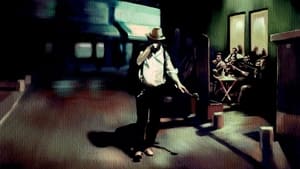
Rebetiko Crisis: Undue Debt
An odyssey across the places of origin of Western civilization: Greece, subsumed by economic crisis; where the mind, the soul, and the music of its people lie, specially the Rebetes, the Rebetiko singers, considered as the Hellenic equivalent to blues; this music against the establishment was born among refugees who arrived to Greece from Asia Minor and proliferated in poor urban neighborhoods. In the journey of composer and musician Vinicio Capossela through the taverns of Athens and Thessalonica, this film records his music, his wandering life, and his travel journal, revealing at the same time the collective scars the crisis has left in a place where everything seems to have lost its value.
2013
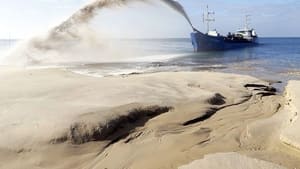
Le sable - Enquête sur une disparition
The massive exploitation and extraction of sand throughout the world is leading to an alarming conclusion: all beaches will have disappeared by the end of the 21st century.
2013
Jai Bhim Comrade
Dalits, in the Indian caste system, belong to the lowest social sphere and are therefore subject to regular discrimination and violation of their basic human rights. Also referred as “untouchables,” this group was vindicated by B. R. Ambedkar, a Dalit who earned doctorate degrees abroad and fought for the emancipation of his people. In 1997 a statue honoring him was desecrated, unleashing the rage of the Dalit community, but instead of getting support by the authorities, ten persons were murdered. This documentary took 14 years to be made and it captures the music and poetry of this people, showing a tradition against superstition and religious bigotry that has strived since the times of Buddha.
2012
Message of Stones - Budapest
The first film in Miklós Jancsó's documentary series Message of Stones.
1994
Message of Stones - Máramaros
The second film in Miklós Jancsó's documentary series Message of Stones.
1994
Kuban Cossacks. And Already Two Hundred Years...
A documentary about the history of Ukrainian Cossacks in the Kuban.
1992
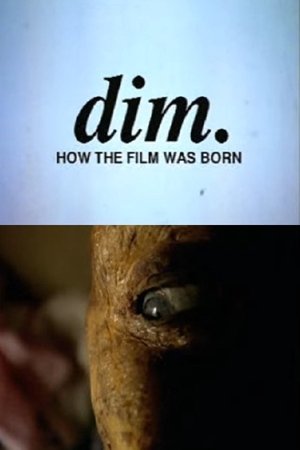
Dim.: How the Film Was Born
Documentary behind the making of the animated short film Dim.
Message of Stones - Hegyalja
The Third film in Miklós Jancsó's documentary series Message of Stones.
1994

The Endless Summer
Bruce Brown's The Endless Summer is one of the first and most influential surf movies of all time. The film documents American surfers Mike Hynson and Robert August as they travel the world during California’s winter (which, back in 1965 was off-season for surfing) in search of the perfect wave and ultimately, an endless summer.
1966