Watch House in the North Country (2010) Online Free
Described as being based on a play by Talaya Delaney, Kevin Jerome Everson' silent HOUSE IN THE NORTH COUNTRY is not your typical stage adaptation. For one, it is unclear where the rehearsal ends and the performance begins. Everson's close-ups offer a distinctly cinematic rendering of theatrical blocking, with the actors' repeated movements (a soldier’s salute, a woman's carrying a lit torch) taking on heightened significance. The plot remains obscure but Everson conjures a psychological intensity comparable to Maya Deren's studies for camera. - Max Goldberg
More Like This
The Making of Michel Petite
The film begins as a documentary about an author known for autofiction. By incorporating multiple making-of layers, it blends the process of making the documentary with the author’s narrative technique.
2025
Portrait of a Motherless Child
The subject grapples with the losses and changes in their life as they're forced by flickering lights to reconcile with their past.
2025
Flowers (III)
An experimental short film capturing the delicate beauty of different flowers.
2025
Digital Smoke
Digital Smoke is an experimental meditation on light, memory, and distortion. Shot at twilight in Minneapolis’s Loring Park, the film captures the moment just after sunset, when street lamps flicker on and reflect across the lake. As Devereaux moves the camera backward and forward, fading light introduces digital noise. Rather than correct it, he amplifies the imperfection, layering light trails until the noise becomes ethereal white clouds—“digital smoke”—that dissolve the boundary between image and abstraction. Frames evoke the hazy textures of J.M.W. Turner and the pixelated aesthetic of early video games, blending painterly romanticism with digital fragmentation.
2025
Aftertaste
2024
Casual Workers
An abstract perspective into two young South African workers in the heart of Johannesburg's industrial sector during Covid-19
2020
The Red Bank. James Joyce: His Greek Notebooks
This documentary aims to register this unknown side of James Joyce: His Greek Notebooks. Trieste. Bloomsday, 2013. Dance in slow motion, accompanied by text. By deconstructing the body, we turn it into a memory: of the body, of life, of texts. The biographical references to Joyce and Mando Aravantinou, combined with the diagonal slicing of the image, cancel the realism of the landscape, including that of the Narrator’s space/study. As a culmination, Joyce’s letter “A request for a loan in Greek” functions as a timely denunciation. Various routes through cities, such as Trieste, London, New York, and Athens; languages such as Greek and English. In addition to the primal myth of Ulysses, there is another issue: Greek is “the language of the subject of Ulysses”
2013
Me, Myself, and My Third Eye: 4 Enlightened Stories For 1 Imperfect God
Features four distinct, bizarre, existential tales about people whose lives are in transition, who are each asking questions about themselves, their environments, and about God(s).
2010

Memory Vague
Created entirely from YouTube videos and edited in Windows Movie Maker, Lopatin recomposes outmoded video graphic landscapes via repetition and abuse.
2009
München, Raphaela
A film about a young woman's future plans in Munich, Germany. MUNCHEN, RAPHAELA (also known as RAPHAELA RING MUNCHEN) is part of Mike Plante's Lunchfilm series of commissioned shorts (made for the cost of a lunch between Plante and filmmaker Kevin Jerome Everson).
2006
The Baby of Mâcon
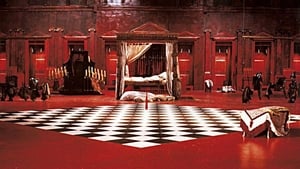
In 17th-century Tuscany, a church play is performed for the benefit of young aristocrat Cosimo. In the play, a grotesque old woman gives birth to a beautiful baby boy. The child's older sister is quick to exploit the situation, selling blessings from the baby, and even claiming she's the true mother by virgin birth. However, when she attempts to seduce the bishop's son, the Church exacts a terrible revenge.
1993
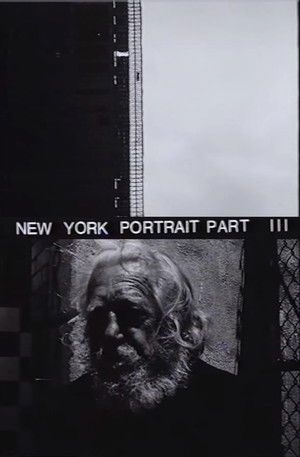
New York Portrait, Chapter III
"[Hutton’s] latest urban film, New York Portrait, Chapter III, takes on a unique tone in relation to Hutton’s ongoing exploration of rural landscape. The very fact that Hutton is dealing with older footage, with archives of memory more than immediacy, gives it a different texture than his earlier New York films. Hutton always found the presence of nature in the city, not only in his many shots of sky and vegetation, but also in the geometry and texture of the city itself, which seemed to project an independence from the human." (Tom Gunning)
1990

I Do Not Know What It Is I Am Like
"I Do Not Know What It Is that I Am Like" juxtaposes images of animals, both wild and domestic, and natural environments with human activity as it takes place in an apartment, and during a fire walking ceremony in Fiji. Documentary-style footage is combined with staged events. Despite the piece's lack of a traditional narrative, it bears some relationship to nature works. The segment features material from "Il Corpo Scuro (The dark body)" - animals and natural environments are seen up close and at a distance.
1986
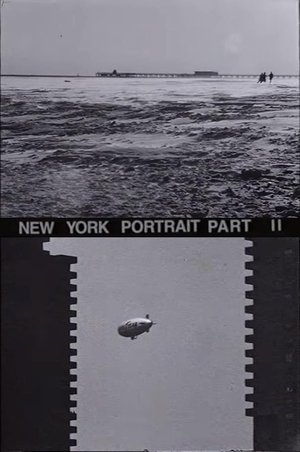
New York Portrait, Chapter II
Chapter Two represents a continuation of daily observations from the environment of Manhattan compiled over a period from 1980-1981. This is the second part of an extended life's portrait of New York.
1981
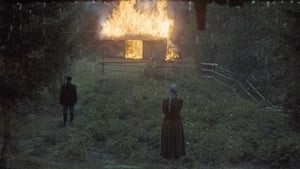
Mirror
A dying man in his forties recalls his childhood, his mother, the war and personal moments that tell of and juxtapose pivotal moments in Soviet history with daily life.
1975
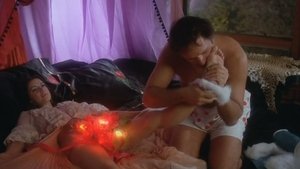
Sweet Movie
The winner of the Miss World Virginity contest marries, escapes from her masochistic husband and ends up involved in a world of debauchery.
1974
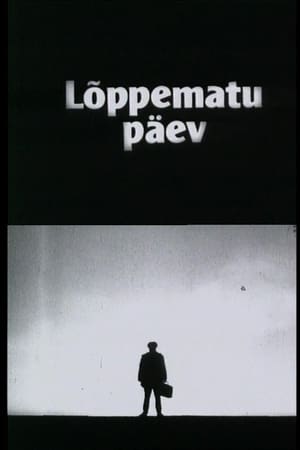
Endless Day
Among Tooming's filmic works, Endless Day provides perhaps the most eloquent material for investigating the radical renewal of visual and narrative form, as well as the shifting registers of spatio-social portrayals and critiques in Estonian cinema. It was banned in 1971 and ordered to be destroyed. However, the film was retained and restored in the 1990s.
1971
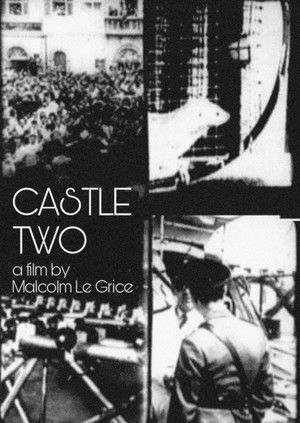
Castle Two
Found film sequences brought together in the paranoia of the cold war and Vietnam.
1968
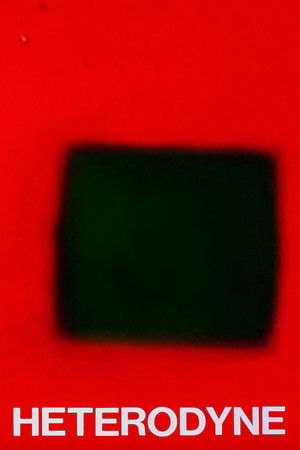
Heterodyne
“Geometric animation made entirely by sculptural methods: cutting, punching, welding colored leader. HETERODYNE is related to some of my other work as RNA to a protein or polypeptide. It was made in abject (if blissful) ignorance of Paul Sharits’ early work.” –Hollis Frampton
1967
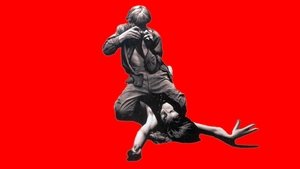
Blow-Up
A successful mod photographer in London whose world is bounded by fashion, pop music, marijuana, and easy sex, feels his life is boring and despairing. But in the course of a single day he unknowingly captures a death on film.
1966