Watch Horse Drawn Magic (1979) Online Free
This documentary short introduces us to the Caravan Stage Company, the world's only horse-drawn open-air theater. Every summer it tours British Columbia and Alberta, bringing live entertainment to communities where television is often the main diversion. In a montage of short sketches, the film shows the troupe on the road and in performance. Hard work and laughter are basic ingredients of this unconventional lifestyle.
More Like This
Off The Beaten Path
At Olivet, some students don’t meander past the Dairy Queen near the stoplight..but those who make the trek to the Sims Building are creative minds who are bursting with ideas. Purpose Productions presents a film that leads you through a journey of inspiration, color, and heart. All you have to do is go off the beaten path.
2025

Michel Blanc, sur un malentendu
2025

Saints And Warriors
Throughout the course of the Haida basketball season, leaders of iconic rez ball team the Skidegate Saints compete for two titles - defending their All Native Basketball Championship, while also battling for title to their land and waters with the government that stole it from them with the Indian Act.
2025

Scenic Field
On a boring Sunday, Rebeca is taken by chance to a distant relative she has not seen for a long time. Curious about her uncle's life, her search opens the curtains into a previously unexplored but strangely familiar theatrical universe.
2025
Gentleman Bandit
Documentary on the Canadian career of train robber Billy Miner, who became a folk hero in British Columbia. Locations near Kamloops and Mission are explored in present day.
2024
The Haida in Canada
Haida Gwaii, an archipelago off the west coast of Canada, is home to Skil Jaadee and her family. They live in harmony with nature and have made it their mission to save their language and preserve their history.
2022
Call Of The Coastal Wolves
Some of the most secluded beaches of British Columbia are home to a unique wolf species that has evolved to gather their sustenance from both land and sea. Call of the Coastal Wolves follows a group of filmmakers over a two week expedition as they endeavour to film the elusive wolf. This short film asks us to reflect on our impacts to the natural world as we witness these compassionate, loving animals that deserve more attention and respect.
2020
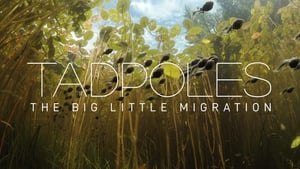
Tadpoles: The Big Little Migration
Short documentary, shot over fours years, showing the incredible daily migration of the western toad tadpoles, a designated indicator species on Vancouver Island, British Columbia.
2020
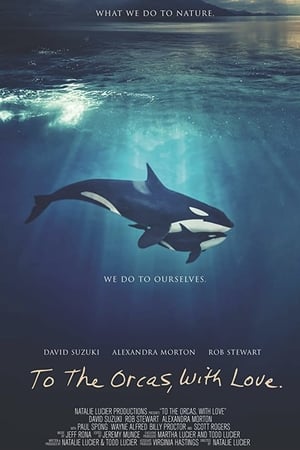
To the Orcas with Love
Stories of personal connections with orcas, beautiful cinematography featuring B.C’s resident orcas, and an evocative soundscape composed by Jeff Rona and Ben MacDougall provide an uplifting contrast to the environmental challenges we face. Inspired by elders including environmentalist and CBC Broadcaster, David Suzuki, whale researchers Alexandra Morton and Paul Spong, totem carver Wayne Alfred, and lifelong resident of the Broughton archipelago Billy Proctor, this film is anchored by Rob Stewart’s invitation to rise up and create the world we dream for ourselves. Viewers will come to understand the importance of the personal choices we make; it becomes clear that what we do to nature, we do to ourselves.
2017
The Wolf: Marine Mammal
The wolf of British Columbia is on a quest to master water, fishing and swimming. According to several specialists, the wolf is at the first stage of a process that could turn it into a marine mammal. How will its evolution unfold?
2014

Vocation
Vocation is a documentary on artists who knew from a very early age they wanted to be an artist. A decision that for them was instinctual and some may even say it is 'a calling' based on faith and perhaps even fate alone. Artists Andy Jones, Deepa Mehta, Marie Brassard, Christopher Pratt, Brad Peyton and Bif Naked are committed to creating work in theatre, literature, music, film and performance based on an innate desire to succeed while working in the precarious profession of art.
2013
Le Temps de cerveau disponible
Cruelty, psychological and sexual violence, humiliations: reality television seems to have gone mad. His debut in the early 2000s inaugurated a new era in the history of the audio-visual. Fifty years of archives trace the evolution of entertainment: how the staging of intimacy during the 80s opened new territories, how the privatization of the biggest channels has changed the relationship with the spectator. With the contribution of specialists, including philosopher Bernard Stiegler, this documentary demonstrates how emotion has made way for the exacerbation of the most destructive impulses.
2010
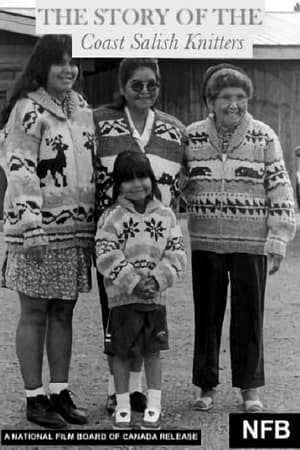
The Story of the Coast Salish Knitters
For almost a century, the Coast Salish knitters of southern Vancouver Island have produced Cowichan sweaters from handspun wool. These distinctive sweaters are known and loved around the world, but the Indigenous women who make them remain largely invisible.
2000
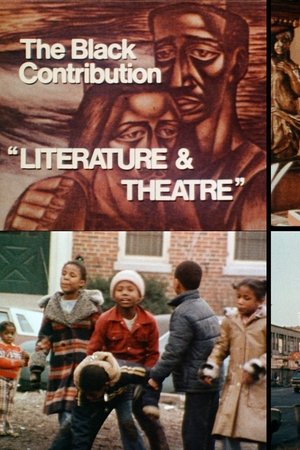
The Black Contribution: Literature and Theatre
The Black Contribution – Literature and Theater 1978 is a rare documentary highlighting the voices and cultural impact of African American writers and performers during the civil rights era. Introduced by NAACP leader Benjamin Hooks and narrated by Roscoe Lee Brown, the film weaves together dramatic readings, theatrical excerpts, and candid urban street footage. Margaret Walker’s poem For My People is performed alongside scenes of daily Black life in New York City — children playing, families on stoops, open fire hydrants, and the realities of poverty in 1970s neighborhoods. James Baldwin appears in interview footage, while signs for his play The Amen Corner and stage excerpts from Lorraine Hansberry’s A Raisin in the Sun underscore the powerful presence of Black voices in American theater. With rare shots of Harlem life, literature, and performance, this film documents the enduring contributions of African American artists to U.S. culture and history.
1978
Salmon People
Contrasting ancient myth and modern reality, this short documentary examines the legendary relationship between West Coast Indigenous people and salmon, once their staple food. In the mythical realm, we learn how Raven finds riches in the harvest of the salmon, only to lose everything through a thoughtless act against the Spirit of the Salmon. So too does modern man jeopardize his living from the sea by heedless action. Images of ancient spear-fishing and smoke-houses contrast with images of today's Indigenous people operating a seiner and working in a cooperative cannery.
1976

This Was the Time
When Masset, a Haida village in Haida Gwaii (formerly known as the Queen Charlotte Islands), held a potlatch, it seemed as if the past grandeur of the people had returned. This is a colourful recreation of Indigenous life that faded more than two generations ago when the great totems were toppled by the missionaries and the costly potlatch was forbidden by law. The film shows how one village lived again the old glory, with singing, dancing, feasting, and the raising of a towering totem as a lasting reminder of what once was.
1970
Theatre In Israel
An English-speaking film produced on behalf of the Israeli Center of the International Theater Institute, providing international audience with an overview of modern Israeli theater, including scenes of renowned Israeli theater productions from the theater season of 1967. The film opens with excerpts from “The Dybbuk” at Habima Theater, and includes scenes from the successful musicals of the Cameri Theater “Utz Li Gutz Li” (Rumpelstiltskin) and “King Solomon and Shalmai The Shoemaker”. Other excerpts include scenes from the plays “The American Princess” by Nissim Aloni at the Seasons Theater, “He Walked Through the Fields” by Moshe Shamir at the Haifa Theater, Ibsen’s “Hedda Gabler”, “Who’s Afraid of Virginia Wolf”, and more.
1967
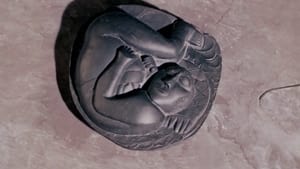
Haida Carver
On Canada's Pacific coast this film finds a young Haida artist, Robert Davidson, shaping miniature totems from argillite, a jet-like stone. The film follows the artist to the island where he finds the stone, and then shows how he carves it in the manner of his grandfather, who taught him the craft.
1964
The Water Dwellers
This short documentary introduces us to a town where no one pays rent: Simoom Sound in central British Columbia, where loggers live on sturdy river craft. Every week there are visitors: the general storekeeper, the flying postman and most importantly, the forest ranger, who is ever alert to the threat of fire.
1963
Cattle Ranch
This short documentary offers a portrait of life on a cattle ranch, for both its human and animal inhabitants. Featuring sprightly music by folk singer Pete Seeger and narration by theatre actress Frances Hyland, the film is shot through the seasons on a large Canadian cattle ranch near Kamloops, British Columbia. With hundreds of cows and calves on the ranch, there’s no shortage of work to be done: soil cultivation and crop maintenance are taken care of by seasonal ranch hands while the resident cowboys—“anxious guardians”—brand and breed their bovine charges.
1961