Watch Hitler's Britain (2008) Online Free
A "What if?" alternative history sees Nazi Germany prevailing in the second World War. First the occupiers establish their power bases, before they find themselves under attack from the underground resistance.
Cast
Diego Matamoros
More Like This

The Polio Crusade
The film interweaves the personal accounts of polio survivors with the story of an ardent crusader who tirelessly fought on their behalf while scientists raced to eradicate this dreaded disease. Based in part on the Pulitzer Prize-winning book Polio: An American Story by David Oshinsky, Features interviews with historians, scientists, polio survivors, and the only surviving scientist from the core research team that developed the Salk vaccine, Julius Youngner.
2009

Valkyrie
Wounded in Africa during World War II, Nazi Col. Claus von Stauffenberg returns to his native Germany and joins the Resistance in a daring plan to create a shadow government and assassinate Adolf Hitler. When events unfold so that he becomes a central player, he finds himself tasked with both leading the coup and personally killing the Führer.
2008
My Führer
Hitler no longer believes in himself, and can barely see himself as an equal to even his sheep dog. But to seize the helm of the war he would have to create one of his famous fiery speeches to mobilize the masses. Goebbels therefore brings a Jewish acting teacher Grünbaum and his family from the camps in order to train the leader in rhetoric. Grünbaum is torn, but starts Hitler in his therapy ...
2007
Sophie Scholl: The Final Days
In 1943, as Hitler continues to wage war across Europe, a group of college students mount an underground resistance movement in Munich. Dedicated expressly to the downfall of the monolithic Third Reich war machine, they call themselves the White Rose. One of its few female members, Sophie Scholl is captured during a dangerous mission to distribute pamphlets on campus with her brother Hans. Unwavering in her convictions and loyalty to the White Rose, her cross-examination by the Gestapo quickly escalates into a searing test of wills as Scholl delivers a passionate call to freedom and personal responsibility.
2005

Rosenstrasse
When Ruth's husband dies in New York, in 2000, she imposes strict Jewish mourning, which puzzles her children. A stranger comes to the house - Ruth's cousin - with a picture of Ruth, age 8, in Berlin, with a woman the cousin says helped Ruth escape. Hannah, Ruth's daughter engaged to a gentile, goes to Berlin to find the woman, Lena Fisher, now 90. Posing as a journalist investigating intermarriage, Hannah interviews Lena who tells the story of a week in 1943 when the Jewish husbands of Aryan women were detained in a building on Rosenstrasse. The women gather daily for word of their husbands. The film goes back and forth to tell Ruth and Lena's story. How will it affect Hannah?
2003
Bloody Sunday
The dramatised story of the Irish civil rights protest march on January 30 1972 which ended in a massacre by British troops.
2002

Aimée & Jaguar
In 1943, while the Allies are bombing Berlin and the Gestapo is purging the capital of Jews, a dangerous love affair blossoms between two women – one a Jewish member of the underground, the other an exemplar of Nazi motherhood.
1999
The Film Narrator
Germany in the Thirties. A movie teller realizes that his profession is not longer needed. Silent movies are not produced any longer. Telling stories is the only thing the man was ever good in, so he does not know what to do now. As political circumstances are changing dramatically these days in Germany, he gets new hope that things will again be going better for him...
1993

Fatal Deception: Mrs. Lee Harvey Oswald
The story of the widow of Lee Harvey Oswald, the man accused of shooting President Kennedy. Via flashbacks, the story traces the woman's life from her days in Russia, the turmoil following the assassination, raising her family, and coming to grips with the fact that she too may have been a pawn in a grand conspiracy.
1993
The Nasty Girl
When a young woman investigates her town's Nazi past, the community turns against her.
1990
The French Revolution
A history of the French Revolution beginning from the decision of the king to convene the Etats-Generaux in 1789 in order to deal with France's debt problem. Part one spans the event until August 10, 1792 (when the King Louis XVI lost all authority and was imprisoned). Part two carries the story through the end of the terror in 1794.
1989

God Does Not Believe in Us Anymore
After his father is murdered by the Nazis in 1938, a young Viennese Jew named Ferry Tobler flees to Prague, where he joins forces with another expatriate and a sympathetic Czech relief worker. Together with other Jewish refugees, the three make their way to Paris, and, after spending time in a French prison camp, eventually escape to Marseille, from where they hope to sail to a safe port.
1982

Lola
Germany in the autumn of 1957: Lola, a seductive cabaret singer-prostitute exults in her power as a temptress of men, but she wants out—she wants money, property, and love. Pitting a corrupt building contractor against the new straight-arrow building commissioner, Lola launches an outrageous plan to elevate herself in a world where everything, and everyone, is for sale. Shot in childlike candy colors, Fassbinder’s homage to Josef von Sternberg’s classic The Blue Angel stands as a satiric tribute to capitalism.
1981

Teheran '43
This story starts in 1980 in Paris as the memories of Andrei Borodin, a Soviet agent, take the action back to 1943 during the Teheran meetings of Stalin, Roosevelt and Churchill. A high-ranking Nazi officer developed a plan to assassinate the three world leaders in order to undermine the Allied forces. He commissioned the German agent Max Richard to carry out his plan, but it failed miserably due to the quick action and thinking of Andrei. While in Teheran, Andrei met a French woman, Marie Louni, living in the city and they had a brief but intense affair. Nearly four decades later, the Nazi officer has been captured - but not for long. Freed by terrorists, the officer is hunting down the German agent who failed to carry out the planned assassinations. Max lives at Françoise, a young French woman, who hides him.
1981
Two Lines in Small Font
While studying the history of the revolutionary movement in Russia, a historian decides to restore the good name of one of the revolutionaries, who was accused of betrayal by his comrades-in-arms and committed suicide.
1981
Salò, or the 120 Days of Sodom
Four corrupted fascist libertines round up 9 teenage boys and girls and subject them to 120 days of sadistic physical, mental and sexual torture.
1976

The Black Parachute
A paratrooper drops behind enemy lines to rescue the deposed king of a mythical Balkan nation.
1944
Junge Deutsche im Mai
Every year, the most beautiful, best and proudest representatives of German youth meet in Dresden to take to the streets together.
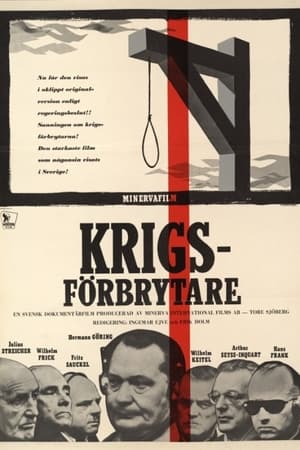
Secrets of the Nazi Criminals
Documents the major trial of the Nazi war criminals and the violent acts that they were accused of.
1963
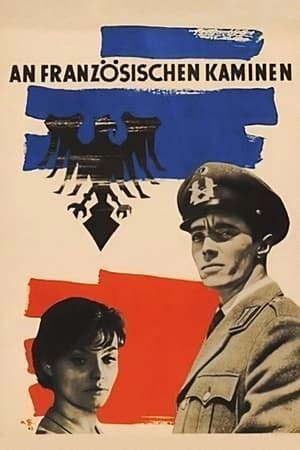
At a French Fireside
Bundeswehr soldier Klaus’ regiment is stationed in France, to take part in NATO maneuvers. The soldiers are ordered to be kind to the populace, since the West German High Command wishes the French to forget the atrocities that were committed during the Second World War. Klaus falls in love with Jeanne, the daughter of the local mayor. He discovers that his commanders intend to demolish the ruins of a local church, in which civilians were murdered by the German occupation forces at 1944. A local journalist who researches the event discovers that West German General Rucker ordered the massacre, but he is mysteriously murdered. Klaus defies his commanding officer Siebert, who instructs him to steal the documents indicting Rucker, and hands the evidence over to Jeanne.
1962