Watch Hitler Versus Picasso (2018) Online Free
In 1937 the Nazi regime held two exhibitions in Munich: one to stigmatize “Degenerate Art” (which they systematically looted and destroyed) and one, personally curated by Hitler, to glorify “Classic Art”. This immersive new documentary reveals the Nazi’s complicated relationship with classical and modern art, displaying an incredible number of masterpieces by Botticelli, Klee, Matisse, Monet, Chagall, Renoir and Gauguin amongst others, intertwined with human stories from the most infamous period of the twentieth century. A state-of-the-art detective story exploring the Nazis’ obsession with creative expression, Hitler versus Picasso combines history, art and human drama for an unforgettable cinema experience.
Cast
Toni Servillo, Jean-Marc Dreyfus, Edgar Feuchtwanger, Simon Goodman, Timothy Garton Ash, Berthold Hinz, Meike Hoffmann, Eva Kleeman, Markus Krischer, Daaf Ledeboer, Agnieszka Lulinska, Bernhard Maaz
More Like This
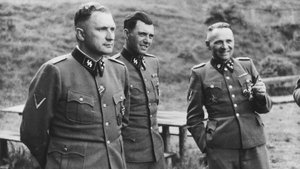
Bullets And Blueberries
The Holocaust began with the indiscriminate mass shootings by the Einsatzgruppen in the bloodlands of Eastern Europe and was perfected in the gas chambers at Auschwitz. “Bullets And Blueberries” explores the motives, methods and madness of the perpetrators, using never-before-seen images captured by the killers themselves — images that fully capture the banality of evil.
2025
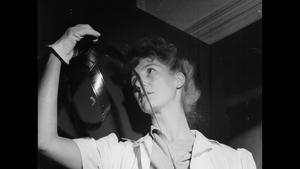
A Return to Memory
When Canada entered World War II, the National Film Board suddenly had an urgent new mission—and hundreds of women stepped forward, helping to create Canadian cinema as we now know it.
2024

The Final Days of Adolf Hitler
2024

Skip Liberty: Shooting in Vietnam
Skip Liberty enlisted in the Army in 1968. During his tour in Vietnam he shot 3,100 feet of Super 8 film, over 3 hours worth. Upon returning to the states the film was placed in storage, Skip had never seen the footage he shot. Until now.
2024
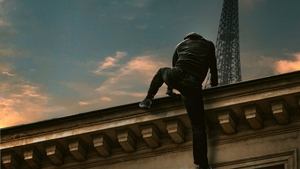
Vjeran Tomic: The Spider-Man of Paris
In his own words, the burglar behind the 2010 robbery of the Paris Museum of Modern Art tells how he pulled off the biggest art heist in French history.
2023
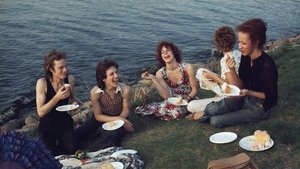
All the Beauty and the Bloodshed
The life of internationally renowned artist and activist Nan Goldin is told through her slideshows, intimate interviews, ground-breaking photography, and rare footage of her personal fight to hold the Sackler family accountable for the overdose crisis.
2022
A Compassionate Spy
Physicist Ted Hall is recruited to join the Manhattan Project as a teenager and goes to Los Alamos with no idea what he'll be working on. When he learns the true nature of the weapon being designed, he fears the post-war risk of a nuclear holocaust and begins to pass significant information to the Soviet Union.
2022
Five Came Back
The extraordinary story of how Hollywood changed World War II – and how World War II changed Hollywood, through the interwoven experiences of five legendary filmmakers who went to war to serve their country and bring the truth to the American people: John Ford, William Wyler, John Huston, Frank Capra, and George Stevens. Based on Mark Harris’ best-selling book, “Five Came Back: A Story of Hollywood and the Second World War.”
2017
Schama on Rembrandt: Masterpieces of the Late Years
Simon Schama explains the style, theme and concept of Rembrandt's late masterpieces.
2014
David Hockney: A Bigger Picture
Filmed over three years, the documentary is an unprecedented record of a major artist at work. It captures David Hockney's return to England after 25 years in California. As he approaches the age of 70, he decides to re-invent his painting from scratch, working through the seasons and in all weathers out in the Yorkshire countryside - ending up with the largest picture ever made outdoors. It is at once the story of a homecoming and an intimate portrait of what inspires and motivates today's greatest living British-born artist as time runs out. Winner of Best Essay award at the International Festival for Films on Art in Montreal and nominated Best Arts Documentary by the Grierson and International Emmy Awards. Premiered on BBC1, the documentary appears in a special extended 60' version.
2009
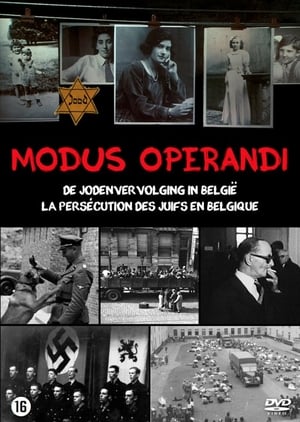
Modus Operandi
Between 1942 and 1944 some 24,916 Jews were deported from Belgium to Auschwitz. The roundups and deportations were organized and carried out by the Nazis with the - not always conscious - cooperation of Belgian authorities. The attitude of the authorities here varied from outright resistance to voluntary or unwitting collaboration.
2008

Zeitgeist: The Movie
A documentary examining possible historical and modern conspiracies surrounding Christianity, the 9/11 terrorist attacks, and the Federal Reserve bank.
2007
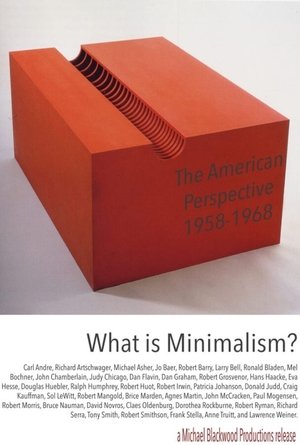
What is Minimalism? : The American Perspective 1958-1968
Featuring notable Minimalist artists such as Bride Marden, Claes Oldenburg, and Donald Judd, What is Minimalism: The American Perspective 1958-1968 explores the movement during an explorative exhibit at the Museum of Contemporary Arts in Los Angeles. Exhibition curator, Ann Goldstein, walks us through multiple rooms of the exhibit and offers her insight on Minimalism and its role in our society, stating that "It marked a fundamental, and critical and pivotal and irrevocable change in the course of art history," (Ann Goldstein). This film observes and analyzes the compelling creative choices behind some of the featured artists most applauded works of art.
2004
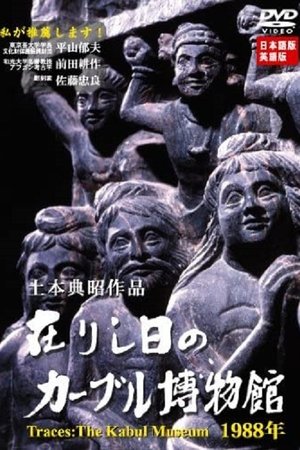
Traces: The Kabul Museum 1988
The Kabul National Museum, once known as the "face of Afghanistan," was destroyed in 1993. We filmed the most important cultural treasures of the still-intact museum in 1988: ancient Greco-Roman art and antiquitied of Hellenistic civilization, as well as Buddhist sculpture that was said to have mythology--the art of Gandhara, Bamiyan, and Shotorak among them. After the fall of the Democratic Republic of Afghanistan in 1992, some seventy percent of the contents of the museum was destroyed, stolen, or smuggled overseas to Japan and other countries. The movement to return these items is also touched upon. The footage in this video represents that only film documentation of the Kabul Museum ever made.
2003
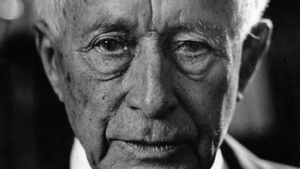
102 Years in the Heart of Europe: A Portrait of Ernst Jünger
102 Years in the Heart of Europe: A Portrait of Ernst Jünger (Swedish: 102 år i hjärtat av Europa) is a Swedish documentary film from 1998 directed by Jesper Wachtmeister. It consists of an interview by the journalist Björn Cederberg with the German writer, philosopher and war veteran Ernst Jünger (1895-1998). Jünger talks about his life, his authorship, his interests and ideas. The actor Mikael Persbrandt reads passages from some of Jünger's works, such as Storm of Steel, The Worker, On the Marble Cliffs and The Glass Bees.
1998
Colours of Absence
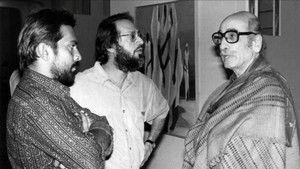
The film documents the life and art of painter Jehangir Sabavala, capturing the intricate relationship between the artist’s vision and his environment. Khopkar describes the challenges of conveying Sabavala’s creative spirit through film, emphasizing the need to engage with the subtleties of colour, light, and composition.
1993
Łódź Ghetto
The Polish city of Łódź was under Nazi occupation for nearly the entirety of WWII. The segregation of the Jewish population into the ghetto, and the subsequent horrors are vividly chronicled via newsreels and photographs. The narration is taken almost entirely from journals and diaries of those who lived–and died–through the course of the occupation, with the number of different narrators diminishing as the film progresses, symbolic of the death of each narrator.
1989
The Liberation of Auschwitz
This chilling, vitally important documentary was produced to mark the 40th anniversary of the liberation of Auschwitz Concentration Camp. The film contains unedited, previously unavailable film footage of Auschwitz shot by the Soviet military forces between January 27 and February 28, 1945 and includes an interview with Alexander Voronsov, the cameraman who shot the footage. The horrifying images include: survivors; camp visit by Soviet investigation commission; criminal experiments; forced laborers; evacuation of ill and weak prisoners with the aid of Russian and Polish volunteers; aerial photos of the IG Farben Works in Monowitz; and pictures of local people cleaning up the camp under Soviet supervision. - Written by National Center for Jewish Film
1986
Raoul Wallenberg: Buried Alive
A profile of Swedish diplomat Raoul Wallenberg, the film covers his role in saving the lives of Jewish refugees from the Holocaust, as well as exploring the evidence that he may still have been alive in a Soviet gulag as late as the early 1980s.
1983
The World of Lygia Clark
Artistic experimental documentary short that explores the universe of Brazilian artist Lygia Clark. Sensorial experiences, the perception of the body, forms and tactile sensations are mixed and reflect the human race as part of the cosmos, getting lost to find itself. Art, stripped of its virtuous image, as an action of the common human being, the expression of living things, runs from the mechanical repetition of movements and attitudes.
1973