Watch Histoire(s) du Cinéma 1a: All the (Hi)stories (1989) Online Free
A very personal look at the history of cinema directed, written and edited by Jean-Luc Godard in his Swiss residence in Rolle for ten years (1988-98); a monumental collage, constructed from film fragments, texts and quotations, photos and paintings, music and sound, and diverse readings; a critical, beautiful and melancholic vision of cinematographic art.
Cast
Jean-Luc Godard, Julie Delpy
More Like This
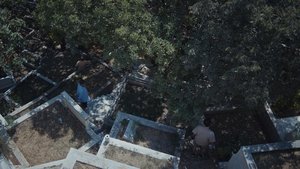
The Making of Michel Petite
The film begins as a documentary about an author known for autofiction. By incorporating multiple making-of layers, it blends the process of making the documentary with the author’s narrative technique.
2025

Lumière, Le Cinéma!
In one of those wonderful coincidences of history, lumière, the French word for “light,” was also the last name of brothers Auguste and Louis, whose brilliant invention, the cinematograph, helped to inaugurate the most beloved art form of the last 130 years. Institute Lumière director Thierry Frémaux uses Lumière, Le Cinema! to guide the viewer through over a hundred shorts—some famous, some forgotten, some never before seen—directed by Lumière and company. In the process, Frémaux illuminates how the brothers employed the camera as a creative instrument as they (and their operators) mastered framing, staging, and subject selection for quotidian and exotic microdocumentaries as well as the first ever fictional motion pictures. The result is not only a glorious re(telling) of the genesis of cinema but a profound meditation on the beautiful world captured—and the mysterious world imagined—by the Lumières.
2024

In Search of Tomorrow
A nostalgic journey through ’80s Sci-Fi-films, exploring their impact and relevance today, told by the artists who made them and by those who were inspired to turn their visions into reality.
2022
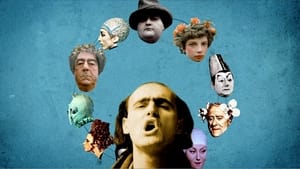
Fellinopolis
Ferruccio Castronuovo was the only authorized eye, between 1976 and 1986, to film the brilliant Italian filmmaker Federico Fellini (1920-1993) in his personal and creative intimacy, to capture the gears of his great circus, his fantastic lies and his crazy inventions.
2021
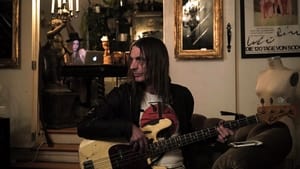
Parallel Lives
Born June 8, 1964, Frank Matter films four "twins", born the same day as him, but in other latitudes. Interweaving their life stories with rich archival material, the filmmaker links these Parallel Lives with elements from his own biography, to compose a fascinating fresco where intimate trajectories are part of the advent of the global village.
2021
Aquela Mesma Estação
2021
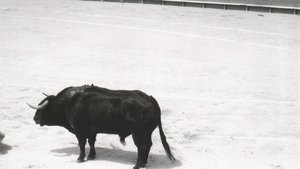
Artémis et la mort
During the Feria of Nîmes, a bullfight is filmed from the perspective of the animal, relegating the matador and public to off-screen spectators. A ritual at the frontiers of mysticism, carried by the sacrificial figure of the bull, revealer of our humanity.
2017
Kapry
Roaming through the traditional Christmas stands of live carp fish on the street of Prague.
2015
SP
The biggest, most populated, and frantic city in South America. While Cariocas are like tropical birds, Paulistas are like frenetic ants. Distances are longer and they're always in a hurry. A busy journey through this beautiful Brazilian beast which cannot help but beating irregularly.
2015
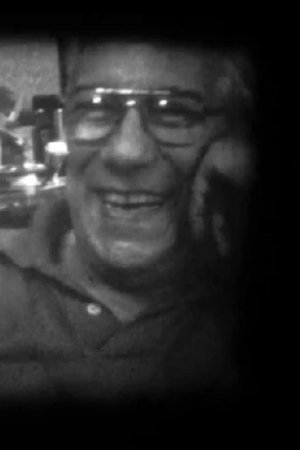
Intermission (Potrait of Daniel Vicino)
This is the filmic portrait of Daniel Vicinos, one of the most characteristic figures of Argentina's film industry: inventor, technician, collector, ironwork lover, but above all, in love with cinema.
2014
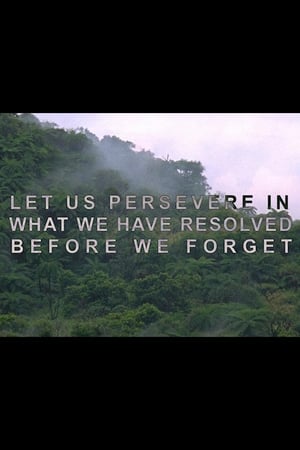
Let Us Persevere in What We Have Resolved Before We Forget
On the island of Tanna, a part of Vanuatu, an archipelago in Melanesia, strange rites are enacted and time passes slowly while the inhabitants await the return of the mysterious John.
2013
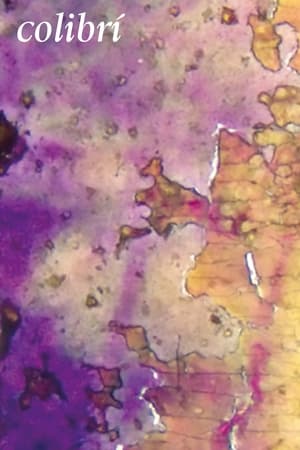
Colibrí
Performance with live audio equalization.
2013
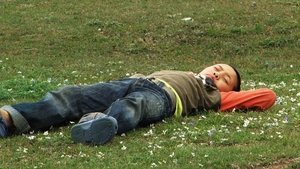
OLO, the Boy from Tibet
A 6-year-old Tibetan boy leaves his family and flees to a refugee camp in northern India.
2012
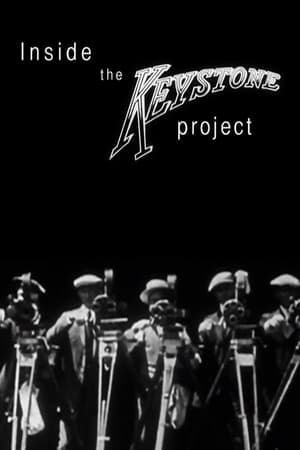
Inside the Keystone Project
Documentary short regarding the preservation and restoration of the worldwide remains of the Keystone films.
2010
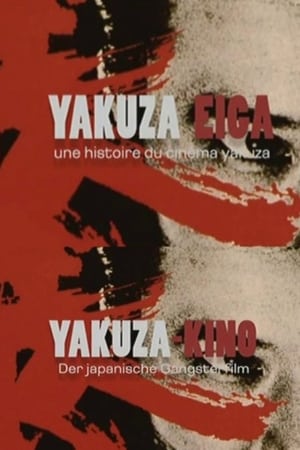
Yakuza Eiga, une histoire du cinéma yakuza
The history of the Yakuza Eiga at the TOEI studio is roughly outlined. Real Yakuza and also their connections to the movie business are discussed, and many important actors and directors of the genres are interviewed. Former real yakuza boss turned actor Noboru Ando, Takashi Miike, Sonny Chiba and many more get a chance to speak.
2009
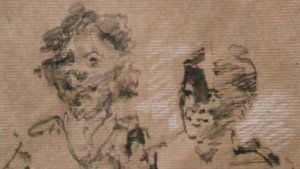
The Role of Chance
"The Role of Chance" ("La part du hasard") focuses exclusively on drawing and painting techniques used by the painter Henri Dimier. Shot over several weeks in the same artist's studio, the film shows works in their different phases, processes rarely explained or little known. It also addresses many practical issues (choice of paper, pigment grinding, reports drawings, put the tiles, cliches, etc) as well as broader questions of method and inspiration (use of space, the role of contours, power of suggestion perspectives, use of random processes). Patrick Bokanowski sought with this film to restore the spirit of this teaching, showing how to bend a note or sometimes revealing an essential mystery of creation.
1984
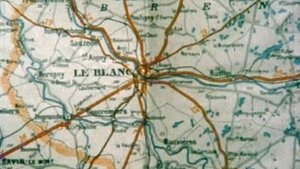
Jeune femme à sa fenêtre lisant une lettre
Jean-Claude Rousseau's Jeune femme à sa fenêtre lisant une lettre is not only his first medium-length film, but a chance to discover this filmmaker whom Jean-Marie Straub has called, along with Frans Van de Staak and Peter Nestler, the greatest working in Europe. With this newly restored print there is also a possibility to discover the relationship between Rousseau's art of filming and Jan Vermeer's famous painting. As Prosper Hillairet wrote in 1988, four years after Rousseau had finished Jeune femme ... (for the first time as we know today): «Without adopting the usual systematic spirit and form of cinéma structurel, Rousseau presents us with simple images and leaves it at that. Keeps the image in hand. A minimalist and ascetic expression of cinema: a shot that lasts.»
1983
Color of Korea
It shows Korea’s traditional colors and culture through the use of superimposing. It is an experimental film, which not only tries to show Korean traditional culture through the use of color, but also tries to show the modern history of Korea.
1976

The Middle Dog's Day
shows visual and metaphorical representation using rope as a motif through various rope images and meanings.
1974

Escape to Paradise/Water Birds
A behind-the-scenes show on the filming of Swiss Family Robinson on the West Indian island of Tobago. Then the True Life Adventure Water Birds.
1960