Watch Hidden Worlds Online Free
More Like This
A Wild Window: Coral Kingdoms
Majestic corals magnificently presented in full screen format accompanied by a soothing soundtrack.
2016

Stegophilia
Artemis: To the Moon and Back
The inside story of the Artemis II mission - filmed over three and a half years at NASA. How did four astronauts travel to the moon, going deeper into space than ever before?
2026
Artemis II - Zurück zum Mond
For the first time since the legendary Apollo missions over 50 years ago, humans are once again setting out for the Moon on April 1, 2026. NASA’s Artemis II mission marks the beginning of a new era in space exploration, and Germany will play a key role. This documentary follows the four astronauts during their preparations and offers exclusive insights into the Orion spacecraft. German astronauts Alexander Gerst and Matthias Maurer, along with other space experts, explain how the mission will proceed and why it is being undertaken. It's a journey that blends science, adventure, and the fundamental question: Why do people risk their lives to reach other celestial bodies and distant worlds?
2026
Antarctica, a legacy mission
While emptying her grandparents' house, director Jeanne Lefevre discovers the journal kept by her grandfather during a scientific mission to Adélie Land, French Antarctic Territory, in 1960. Atomic engineer Bruno Parlier had never spoken of this trip to his family. With her archives in hand, Jeanne decides to follow in his footsteps, to Antarctica.
2026

Belov: A Life at Sea
The first biographical documentary film about the greatest Brazilian sailor by miles traveled. Setting sail from Salvador - Bahia - Brazil, Capital of the Blue Amazon, the Ukrainian Brazilian personality Aleixo Belov has already circumnavigated the globe five times, three of them alone, aboard a little sailboat built in his own backyard.
2025
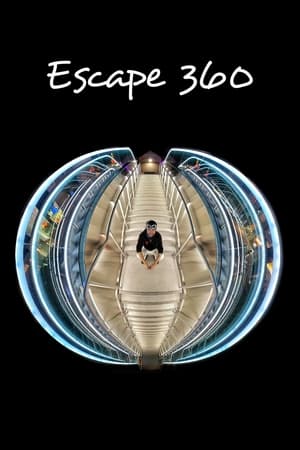
Escape 360
One man, one camera, one goal...to capture the essence of adventure. An experimental, often abstract new type of filmmaking process creating color rich visuals combined with a lush soundtrack that grounds the project. A unique cinematic experience.
2021
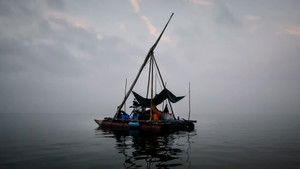
When the Road Ends
Growing up in poverty as a child, Dylan dreamt of travelling the world on a motorcycle. Many years later he broke the shackles of a normal life and took to the road. After journeying 200,000km across four continents, the road from Panama to Colombia comes to an end, swallowed up by an impenetrable jungle. Dylan has no choice but to take to the sea, building a raft powered by his motorcycle engine in the hope of reaching Colombia's road network 700km away. He must brave strong ocean currents and storm batterings in his journey from Central to South America.—Journeyman Pictures
2020
Searching for Skylab, America's Forgotten Triumph
The first American space station Skylab is found in pieces scattered in Western Australia. Putting these pieces back together and re-tracing the Skylab program back to its very conception reveals the cornerstone of human space exploration.
2019

Packing for Mars
Humanity is constantly pushing its limits... In the field of space exploration, Mars is now the number one objective. Reaching the Red Planet presents immense challenges: which rockets will be capable of traveling such a distance? Can the body adapt to weightlessness for such a long time? Will the crew, in complete isolation, withstand such an ordeal, both physically and mentally? Around the world, the scientific community is trying to find solutions to send the first human to Mars. This documentary invites us to discover the behind-the-scenes story of the greatest expedition of all time.
2017
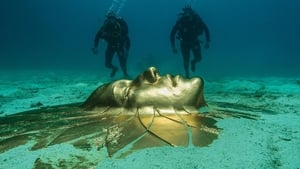
Treasures from the Wreck of the Unbelievable
This cinematic journey into the waters off East Africa chronicles the story behind artist Damien Hirst's massive exhibition of oceanic treasures.
2017
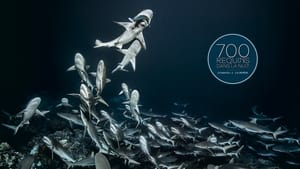
700 Sharks (Gombessa 4, Genesis)
Originally, in 2014, Laurent Ballesta had just one precise objective: to unravel the mystery of groupers. To understand the issues involved in their collective reproduction. But although focused on the study of groupers, the real surprise came from the sharks. Never before had the team been confronted with such a density of grey reef sharks. The divers took up the challenge of counting them. Methodically, they repeated the operation many times to arrive at the impressive figure of 700 grey reef sharks. Each year, the team returned to the southern pass of Fakarava in French Polynesia. Until 2019, for the fourth expedition, "Gombessa 4" is the synthesis of precise and unique scientific protocols. The mission demonstrated that shark hunts are not anarchic, but rely in part on social organization within the horde, following in the footsteps of the 700 grey sharks in "700 sharks in the night (Gombessa 4, Genesis)".
2016
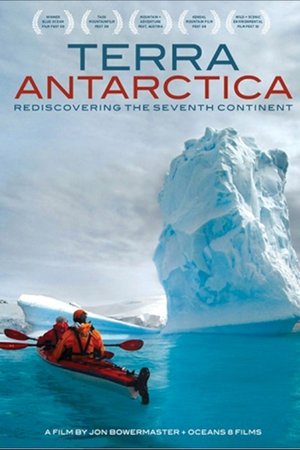
Terra Antarctica, Re-Discovering the Seventh Continent
For six weeks we explored the Antarctic Peninsula by sea kayak, sailboat, foot and small plane, observing the fast changing evolution of this most remote place. Impacted by climate change - temperatures have warmed along the Peninsula faster than anywhere on the planet during the past 50 years - this part of Antarctica is also experiencing a boom in tourism and nations fighting over who owns what as its ice slowly disappears. This National Geographic-sponsored exploration is a one-of-a-kind look at Antarctica from a unique perspective - sea level.
2009
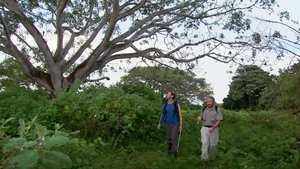
The Real Lost World
A modern team of explorers venture to the legendary "Lost World"- the remote jungle plateau of Roraima in Venezuela. Cut off from time and the jungle below, feared by natives because of "evil spirits", flying reptiles and other beasts, Roraima has sparked human imagination since the time of the 19th century explorers. Sherlock Holmes author Sir Arthur Conan Doyle based his book "The Lost World" (1912) about men and dinosaurs on the tales from early explorers to this plateau. This was the inspiration for Jurassic Park. The modern expedition team encounters the animals, people and extreme habitat on its route across the Gran Sabana and up the 9000 ft. mountain. Once there they explore a new cave system, that may well contain new forms of life.
2006
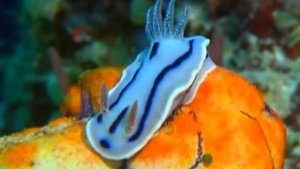
Underwater Impressions
Deep-sea diver/former propagandist Leni Riefenstahl explores the undersea world of coral reefs in various oceans around the world.
2002
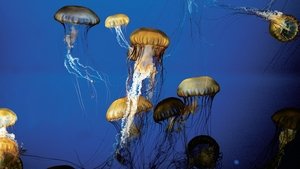
The Living Sea
The Living Sea celebrates the beauty and power of the ocean as it explores our relationship with this complex and fragile environment. Using beautiful images of unspoiled healthy waters, The Living Sea offers hope for recovery engendered by productive scientific efforts. Oceanographers studying humpback whales, jellyfish, and deep-sea life show us that the more we understand the ocean and its inhabitants, the more we will know how to protect them. The film also highlights the Central Pacific islands of Palau, one of the most spectacular underwater habitats in the world, to show the beauty and potential of a healthy ocean.
1995
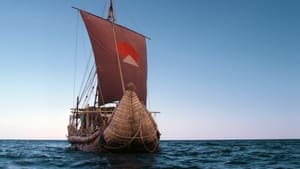
The Tigris Expedition
Explorer Thor Heyerdahl and his ten-man crew sailed their reed boat, the Tigris, over routes he believes were followed by Sumerian traders 5,000 years ago. The film goes beyond science to focus on the man, Heyerdahl, in an effort to explain what motivates him to risk his life in the search for knowledge.
1979
Blue Water, White Death
Peter Gimbel and a team of photographers set out on an expedition to find and film, for the very first time, Carcharodon carcharias—the Great White Shark. The expedition lasted over nine months and took the team from Durban, South Africa, across the Indian Ocean, and finally to southern Australia.
1971
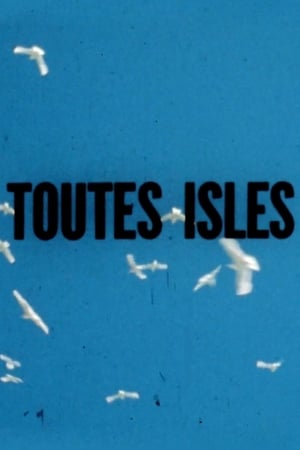
The Land of Jacques Cartier
Did Cartier dream of making a country from this land of a million birds? In his records of his exploration he certainly marvelled at seeing the great auks that have since disappeared from Isle aux Ouaiseaulx, the razor-bills and gannets that are gone from Blanc-Sablon, and the kittiwakes from Anticosti, all the winged creatures of all the islands which he described as being "as full of birds as a meadow is of grass". And that's not even counting the countless snow geese.
1963
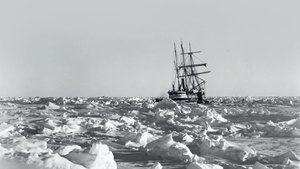
South
The story of the 1914-1916 Antarctic exploration mission of Sir Ernest Shackleton.
1919