Watch Hell on Earth: The Desecration & Resurrection of The Devils (2002) Online Free
Hell on Earth is a documentary about Ken Russell's 1971 film, The Devils. Film critic Mark Kermode chats to Russell as well as two of the film’s stars, Georgina Hale and Murray Melvin. Also included are scenes that were cut from the released film for being too controversial.
Cast
Mark Kermode, Ken Russell, Vanessa Redgrave, Dudley Sutton, Murray Melvin, Georgina Hale, Imogen Claire, Judith Paris, Izabella Telezynska, Selina Gilbert, Doremy Vernon, David Watkin
More Like This
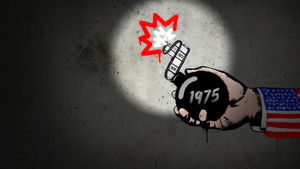
Breakdown: 1975
In 1975, as America faced social and political upheaval, filmmakers turned chaos into art.
2025
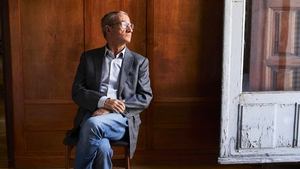
The Critic
A portrait of film critic Carlos Boyero, one of the most followed and feared figures in Spanish cinema, surrounded by controversy and both love and hate.
2022
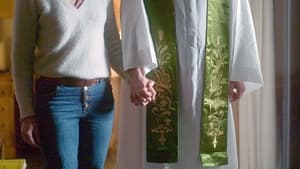
Célibat des prêtres, le calvaire de l'Église
Priests, theologians and bishops are increasingly confessing that the majority of clergy no longer keep celibacy. They condemn the institution of the church and its treatment of priests. And they refuse to obey the ecclesiastical laws imposed by the Vatican. They no longer want to keep their private lives secret. Many are calling for an end to compulsory celibacy.
2022
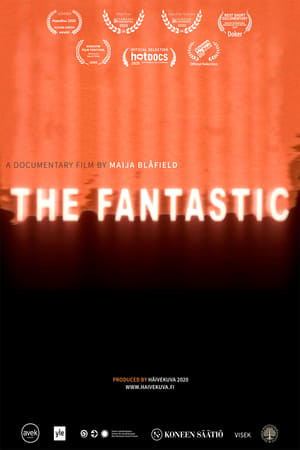
The Fantastic
In Maija Blåfield’s documentary, eight former North Koreans talk about what it was like to watch illegal films in a closed society. In addition to the 'waste videos', South Korean films were also smuggled into the country via China.
2021

The Blade Runner Phenomenon
Ridley Scott's cult film Blade Runner, based on a novel by Philip K. Dick and released in 1982, is one of the most influential science fiction films ever made. Its depiction of Los Angeles in the year 2019 is oppressively prophetic: climate catastrophe, increasing public surveillance, powerful monopolistic corporations, highly evolved artificial intelligence; a fantastic vision of the future world that has become a frightening reality.
2021
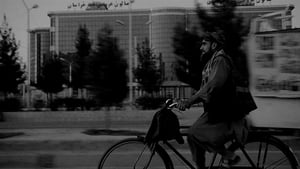
The Forbidden Reel
According to the official history of Afghanistan, ruthless destruction has always prevailed over art and creation; but there is another tale to be told, the forgotten account of a diverse and progressive country, seen through the lens of innovative filmmakers, a story that survives thanks to a few brave Afghans, a small but very passionate group that secretly fought to save a huge film archive that was constantly menaced by war and religious fanaticism.
2020

Discovering Christmas Films
Gathering for a Christmas lunch, the film critics and writers of Discovering Film discuss the merits of 20 films from Bill Murray's star turn in Scrooged, the James Stewart classic It's a Wonderful Life, Ingmar Bergman's Fanny & Alexander, to Bruce Willis' memorable Die Hard.
2018
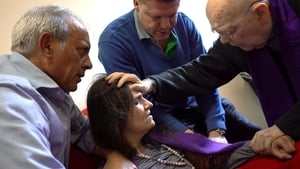
The Devil and Father Amorth
William Friedkin attends an exorcism with Father Gabriele Amorth, as he treats an Italian woman named Cristina for the ninth time. Prior to filming, Cristina had purportedly been experiencing behavioural changes and “fits” that could not be explained by psychiatry, and which became worse during Christian holidays.
2018
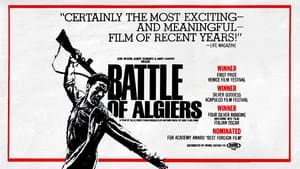
La Bataille d'Alger, l'empreinte
Cheikh Djemaï looks back on the genesis of Gillo Pontecorvo’s feature film, The Battle of Algiers (1965). Through archive images, extracts from the film and interviews with personalities, the filmmaker retraces the journey of a major work - from the events of the Algiers Casbah (1956-1957) to the presentation of the Lion of 'Or causing the anger of the French delegation in Venice - which left its mark as much in the history of cinema as in that of Algeria.
2018
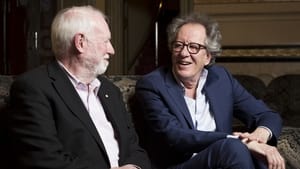
David Stratton: A Cinematic Life
A compelling personal journey with David Stratton, as he relates the fascinating development of our cinema history. David guides us from his boyhood cinema experience of Australia in England, where he saw the first images of this strange and exotic landscape via the medium of film, to his migration to Australia as a ‘ten pound pom’ in 1963 and onto his present day reflections on the iconic themes that run through our cinematic legacy. All of this reflects a passionate engagement in a uniquely Australian medium. Parallel and at the heart of the series is the story of an industry whose growing pains David has witnessed over a lifetime. Alongside David, the protagonists of this history are the giants of Australian cinema – both behind the camera and in front of it.
2017
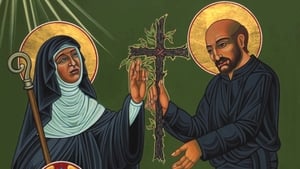
The Boy Who Found Gold
William Hart McNichols is a world renowned artist, heralded by Time magazine as "among the most famous creators of Christian iconic images in the world". As a young Catholic priest from 1983-1990 he was immersed in a life-altering journey working as a chaplain at St. Vincent's AIDS hospice in New York city. It was during this time that he became an early pioneer for LGBT rights within the Catholic church. "The Boy Who Found Gold" is a cinematic journey into the art and spirit of William Hart McNichols. The film follows his colorful life as he crosses paths with presidents, popes, martyrs, and parishioners, finding an insightful lesson with each encounter. McNichols' message as a priest, artist and man speaks to the most powerful element of the human spirit: Mercy.
2016
The Face of Mercy
Since his election to the papacy, Pope Francis has inspired millions by urging us to embrace Mercy, ultimately revealed in the face of Christ. Now comes an extraordinary new film on this powerful message that brings hope, healing and forgiveness to a broken world. Narrated by Jim Caviezel, The Face of Mercy explores the history and relevance of Divine Mercy in our turbulent times. (Released 2016)
2016
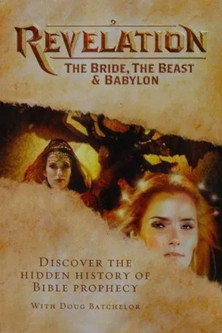
Revelation - The Bride, The Beast & Babylon
Going to the very heart of the Bible's most challenging Book, this one hour documentary decodes the visions of Revelation 12 and 17 for everyone to understand. Journeying from the birth of Christ through the Christian era, this amazing video pulls aside the veil of hidden history to reveal the rise of Babylon, the persecution of the bride of Christ, and the real-world identity of the beast. Educational and inspiring, Revelation delivers the keys to understanding the epic conflict between Christ and Satan and what it means for your life today.
2013
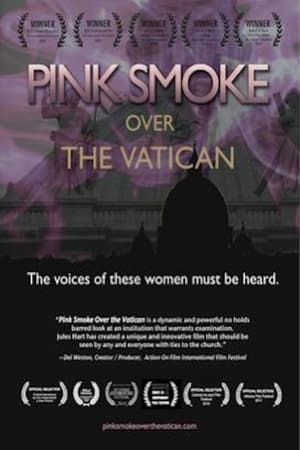
Pink Smoke Over the Vatican
Documentary film about the controversial movement of women seeking ordination in the Roman Catholic Church. More and more women are answering a spiritual calling to take on the vestments of priesthood and seek equality in the religion they love. These daring women have risked banishment, loss of livelihood, and even excommunication to take part in what the Church calls illicit ordinations. The Vatican has vowed to end this threat to the male hierarchy, even forbidding the mere discussion of female priests. The papacy has reached a time of crisis and the controversy over women's role, and their place in the Church, must be addressed if the Vatican is to have any relevance in the 21st century.
2011
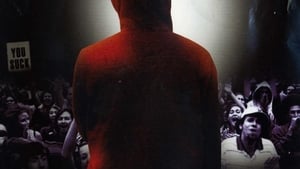
Heckler
HECKLER is a comedic feature documentary exploring the increasingly critical world we live in. After starring in a film that was critically bashed, Jamie Kennedy takes on hecklers and critics and ask some interesting questions of people such as George Lucas, Bill Maher, Mike Ditka, Rob Zombie, Howie Mandel and many more. This fast moving, hilarious documentary pulls no punches as you see an uncensored look at just how nasty and mean the fight is between those in the spotlight and those in the dark.
2007

This Film Is Not Yet Rated
Kirby Dick's provocative documentary investigates the secretive and inconsistent process by which the Motion Picture Association of America (MPAA) rates films, revealing the organization's underhanded efforts to control culture. Dick questions whether certain studios get preferential treatment and exposes the discrepancies in how the MPAA views sex and violence.
2006
Holy Water-Gate: Abuse Cover-up in the Catholic Church
The film begins as a personal journey of filmmaker, Mary Healey, who was also a Catholic. She films a series of historic events where we meet key players involved in the sexual abuse scandal, including victims, whistle-blower priests and a senior ranking US Cardinal who is called upon by the Vatican to control a waxing maelstrom.
2004
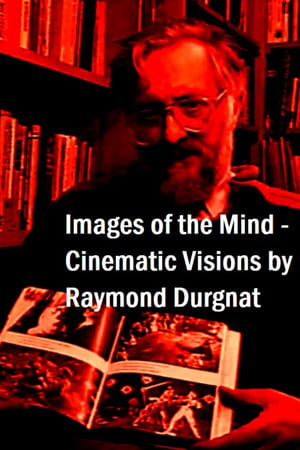
Images of the Mind: Cinematic Visions by Raymond Durgnat
An introduction to the great film critic Raymond Durgnat's appreciation of the nature of cinema.
1992
Alfonso Sánchez
Famous Spanish film critic Alfonso Sánchez talks about his personal life, his work and Anouk Aimée. A sentimental tribute to one of the most relevant figures on the Spanish film scene.
1980
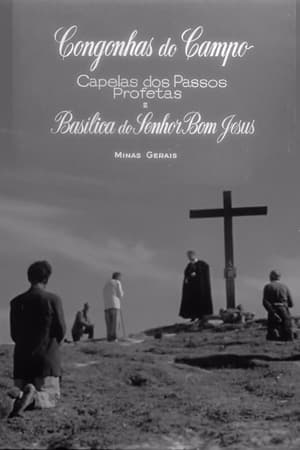
Congonhas do Campo
Aspects of the city of Congonhas do Campo. The preponderance of baroque architecture, the Basilica of Senhor Bom Jesus de Matozinho, the six chapels on the terrace leading to Morro do Maranhão. Each chapel contains statues representing moments of the Passion of Christ. While in the first chapel there is Santa Ceia figuration, in the second there is the Passo Horto scene. The kiss of betrayal and the imprisonment of Christ before the scene of the third chapel. In the fourth, two scenes are gathered: the coronation and the flagellation. On the fifth, the Christ bears the cross and the crucifixion is featured in the sixth chapel. The twelve apostles of Aleijadinho and the Latin inscriptions of each one. The interior of the Basilica and its main altar, with the figure of the Lord Dead.
1957