Watch Heart of a Tiger (2009) Online Free
Somewhere between a diary and a filmed letter made while Caroline Champetier was shooting Benoît Jacquot's film L'Intouchable in India.
More Like This

So Closely Far Away
Inspired by the works of Jonas Mekas, Chantal Akerman and Angela Schanelec, Ive made what is my longest film diary so far. One that spans my two week vacation out to the New England region of North America. What i have here is another cerebral experience into a world that is so closely far away.

10/26
2026
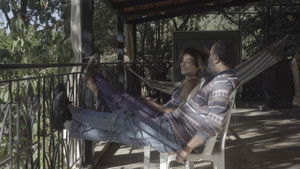
The cats, the sea, and everything in between.
In 2022, when the economic crisis in her native country was at its peak, she decided to visit her family there. She turned her short trip into a collage-like diary in which she reflects on her relationship with her homeland, which is in a state of protracted decay. The film is composed of spontaneous snapshots capturing the author's stay, interspersed with inserted captions serving as personal, often poetically formulated comments and observations. As a result, the film does not hide its strongly subjective perspective, but at the same time builds on it to make an important statement that shows the transformation of Lebanese society in everyday details such as the appearance of the city itself or in the intimate sphere of the author's family life.
2025

Focus | Short Film
An average nobody explores the struggle of self-recognition through the lens of a photographer who has spent his life documenting everything.
2025

Voicemails For The Unknown Receiver
Through phone call conversations, an aspiring Ilocano filmmaker relates to his mother working in Italy about his dreams and struggles while documenting the invisible betweenness of their language and distance.
2024
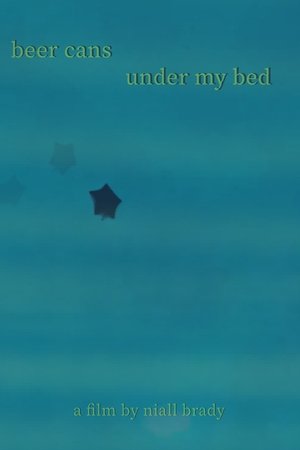
beer cans under my bed
This short, started early on into sobriety, finished about nine months in, is a collage of diaries and notes, collected from within addiction and into recovery.
2024

Omniac
2023
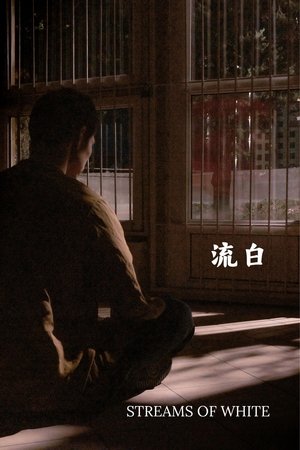
Streams of White
A sitting man listens to his thoughts, but can't catch any of them.
2023
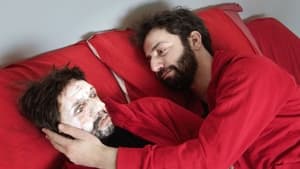
Play Dead!
If there is one person Matthew Lancit can’t get out of his mind, it is his uncle Harvey. Dark rings around his eyes, pale, blind, his legs amputated. Like Harvey, the filmmaker also suffers from diabetes. He has the disease under control, but one question is always nagging at him: How much longer? His long-term (self-)observation reliably revolves around fears of infirmity and mutilation. He translates the feared body horror into film, stages himself as a zombie, vampire, a desolate figure. Lancit playfully anticipates his potential decline, serving up a whole arsenal of effects which – as video recordings prove – go back to his youth. It is not for nothing that the “dead” in the title is also reminiscent of “dad.” Because “Play Dead!” also negotiates his own role as a father.
2023
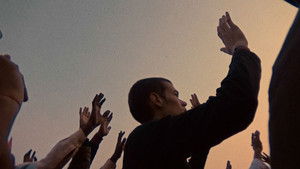
Kitana Time
As we follow the wandering of a young father and his son through the Valley of Ganga, in India, we listen the issues which across the story of a couple: from the unexpected birth of their child and the joy of the beginnings to their common decision to separate.
2023
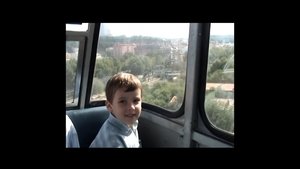
Mestre-espenya
"Mestre-espenya" is a self-portrait of Guillermo Amengual where he talks and thinks about his childhood and all the themes that have always been present in his life and films: death, family and innocence.
2022
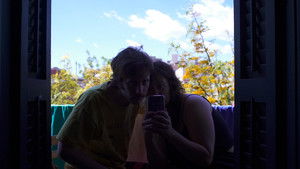
Ventana en Carrer de Badajoz
Sara and Alberto spend their days at home. They look out the window and watch: spring is approaching and the sun is setting later and later. Alberto entertains himself by playing with the light, the shadows and the nooks and crannies they leave on the living room. Sara goes out on the balcony in the evenings and examines the neighborhood with her camera. When they are in bed, they talk about what worries them. About job expectations. About being creative and why keep trying, if someone else has done it before you. About living in confinement, but at the same time, realizing that things haven't changed as much as they seem.
2021
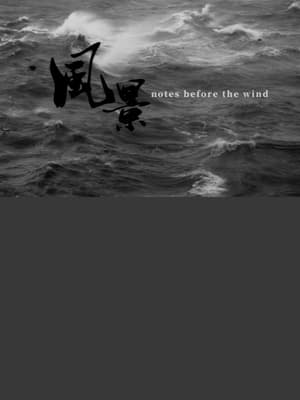
Notes before the Wind
A loose collection of scenes in Hong Kong shot over a five-year period, this film begins with the Umbrella Movement in 2014 and ends right before the summer of 2019, when large-scale social unrest and violent resistance erupted. The everyday scenes capture the ambience and the landscape of change in the city, standing as a quiet prelude to the ensuing conflicts.
2020
Listen to Me Marlon
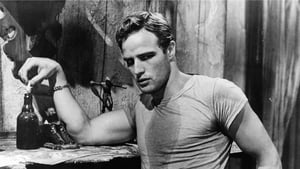
With exclusive access to his extraordinary unseen and unheard personal archive including hundreds of hours of audio recorded over the course of his life, this is the definitive Marlon Brando cinema documentary. Charting his exceptional career as an actor and his extraordinary life away from the stage and screen with Brando himself as your guide, the film will fully explore the complexities of the man by telling the story uniquely from Marlon's perspective, entirely in his own voice. No talking heads, no interviewees, just Brando on Brando and life.
2015

Hotel Diaries
Made over six years in the hotels of six different countries, Hotel Diaries charts the 'War on Terror' era of Bush and Blair through a seven-part series of video recordings that relate personal experiences to the ongoing conflicts in Afghanistan, Iraq and Israel/Palestine. In these works, which play upon chance and coincidence, hotel rooms are employed as 'found' film sets, where architecture, furnishing and decoration become the means by which the filmmaker’s small adventures are linked to major world events.
2007
Birth of a Nation
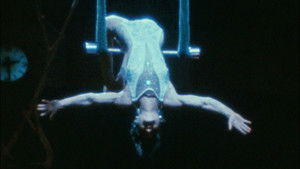
Jonas Mekas assembles 160 portraits, appearances, and fleeting sketches of underground and independent filmmakers captured between 1955 and 1996. Fast-paced and archival in spirit, the film celebrates the avant-garde as its own “nation of cinema,” a vital community existing outside the dominance of commercial film.
1997
Detrás del espejo
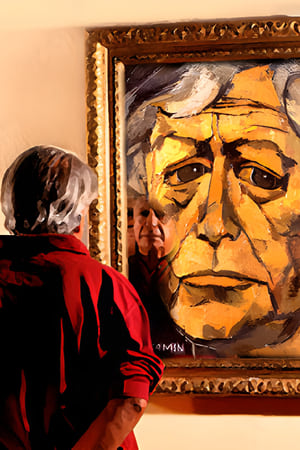
Oswaldo Guayasamín, one of the most renowned Latin American artists, with more than 600 portraits in his pictorial career, (among which are F. Mitterrand, Carolina de Mónaco, Juan Carlos I, Rigoberta Menchu) paints his self-portrait, while he tells us the foundations of his art.
1997

Always/Never (Together Forever)
An unhinged, diaristic examination of devastating friendship breakups.
Autorretrato
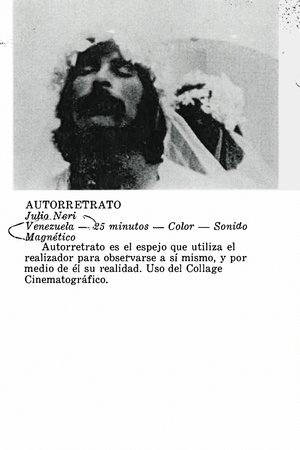
Autorretrato is the mirror the filmmaker uses to look at himself, and through it, at his reality, using the cinematic collage.
1976
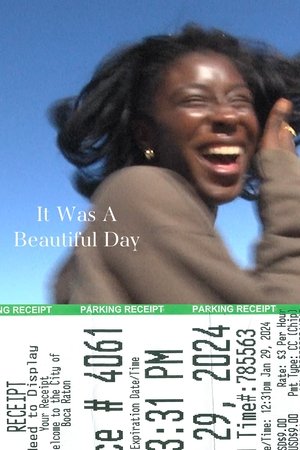
It Was A Beautiful Day
A group of hometown friends come together after the loss of a loved one.