Watch Harvest of Peace (1985) Online Free
Portrait of a group of 150 U.S. citizens who spent two weeks participating in the cotton harvest in a remote village in Nicaragua, seeing for themselves the impact of the U.S.-backed Contra war.
More Like This
Dual Citizens
Three Nicaraguan-American artists from the Washington D.C. Metro area discuss growing up in two cultures and how it influences their art.
2024
El Soldador
A naturalistic story about the realities of healthcare and houselessness from the perspective of Ramon Duarte, a houseless welder who receives care from Miami Street Medicine, a street medicine team. In Miami, where rising housing costs are forcing folks onto the streets, the doctor's work is more important than ever.
2024
Ein Traum von Revolution
When the revolution in Nicaragua won its victory nearly 40 years ago, the world began to dream. A young generation was taking the reins in a country of grand utopias. From West Germany alone, 15,000 “brigadists” travelled to help rebuild the war-torn country: liberals, greens, unionists, social democrats, leftists and church representatives harvested coffee and cotton, built schools, kindergartens and hospital wards. No movement has mobilised so many people. What became of the hopes and dreams of the revolutionaries and their supporters?
2024
Operation Guardabarranca
On the morning of February 9th, 2023, the dictatorship of Daniel Ortega and Rosario Murillo exiled 222 political prisoners to the United States, in a plane provided by President Joe Biden's administration. It was an unprecedented operation for Nicaragua and put diplomacy and international solidarity with the victims of the Sandinista regime to the test.
2024
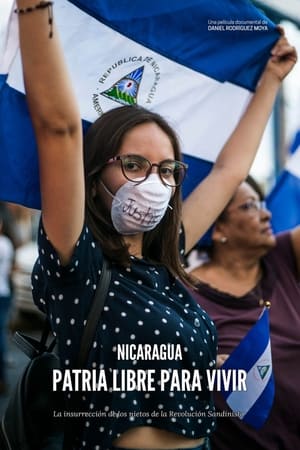
Nicaragua, una patria libre para vivir (la insurrección de los nietos de la revolución sandinista)
2021
Haulover, Baiki Sakan
Halouver is a small community in the Northern Caribbean of Nicaragua. In November of 2020, two hurricanes divided the village in two and destroyed its infrastructure. Now, its villagers must decide between coming back and rebuilding their homes from the rubbles in spite of the risks that conveys or starting their lives somewhere else, leaving behind their lives in front of the sea. This documentary was made by Hora Cero.
2021

Always Forward
Plastic artist Aparicio Arthola talks with his student about the catarsis in his creative process, the loss, death and uncertainty of art life in Nicaragua
2021
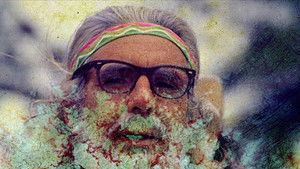
Solentiname
Solentime (2020), directed by Carlos Henríquez Consalvi and Camilo Henríquez, revisits the memory of poet-priest Ernesto Cardenal and the Christian community he founded in the Solentiname archipelago, where art, faith, and revolutionary consciousness converged. The film reconstructs a failed 1973 documentary project, when a young Consalvi traveled from Venezuela to film Cardenal with a 16mm Bolex, only to discover the footage was ruined. Nearly five decades later, during the COVID-19 lockdown and after Cardenal’s death, father and son assemble photographs, archival images, and sound to evoke that encounter and the fragile persistence of memory, turning loss, decay, and time into the material of the film itself.
2020

Exiled
She accused the leader of the Sandinista revolution of sexual abuse. Now he is president of Nicaragua and she lives in exile.
2019
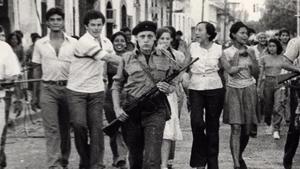
¡Las Sandinistas!
¡Las Sandinistas! uncovers the disappearing stories of women who shattered barriers to lead combat and social reform during Nicaragua’s 1979 Sandinista Revolution, and who continue to lead Nicaragua’s current struggle for democracy and equality.
2018
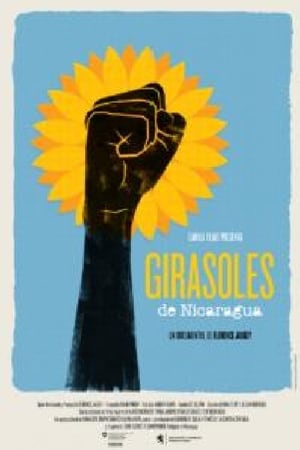
Sunflowers of Nicaragua
Sixteen female sex workers have been named judicial aides by Nicaragua’s Supreme Court to facilitate the resolution of conflicts that come up in their work. It is the first time in the world that sex workers have had access to this function. The film accompanies some of these women in their mediation work and in the actions they promote through their association, Girasoles (Sunflowers) of Nicaragua, to gain recognition and regulations for autonomous sex work.
2017
Hakim Chajar - Projet Nicaragua
2016
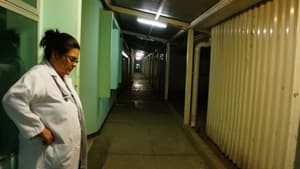
A Quiet Inquisition
At a public hospital in Nicaragua, Ob/Gyn Dr. Carla Cerrato must choose between following a law that bans all abortions and endangers her patients or taking a risk and providing the care that she knows can save a woman's life. In 2007, Dr. Cerrato’s daily routine took a detour. The newly elected government of Daniel Ortega, a former Marxist revolutionary who converted to Catholicism to win votes, overturned a 130-year-old law protecting therapeutic abortion. The new law entirely prohibits abortion, even in cases of rape, incest, or when a woman’s life is at stake. As Carla and her colleagues navigate this dangerous dilemma, the impact of this law emerges—illuminating the tangible reality of prohibition against the backdrop of a political, religious, and historically complex national identity. The emotional core of the story—the experiences and situations of the young women and girls who are seeking care—illustrate the ethical implications of one doctor's response.
2014

Big Boys Gone Bananas!*
The conflict between Dole Food Company and Swedish filmmaker Fredrik Gertten unfolds dramatically in the documentary "BIG BOYS GONE BANANAS!" as the corporation attempts to suppress Gertten's earlier film, "BANANAS!"—chronicling Nicaraguan workers' lawsuit against Dole. Initially selected for the 2009 Los Angeles Film Festival, "BANANAS!" was abruptly removed from competition, followed by a negative article in the Los Angeles Business Journal and legal threats from Dole's attorneys. Gertten captures this saga of corporate intimidation, media manipulation, and legal challenges in his documentary, showcasing the struggles documentary filmmakers face and highlighting the threat to freedom of speech posed by powerful corporations protecting their reputations.
2011
Zurück in Bismuna
Christian, Finn and Moritz became addicted to drugs as teenagers. In 1999, the film "Bismuna - Ein Abenteuerfilm" was made about the three teenagers and their counselor as they traveled to an indigenous tribe for the drug cure. Now, some 10 years later, it shows what the men have done with their lives.
2011
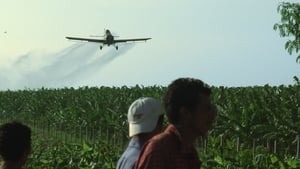
Bananas!*
Juan “Accidentes” Dominguez is on his biggest case ever. On behalf of twelve Nicaraguan banana workers he is tackling Dole Food in a ground-breaking legal battle for their use of a banned pesticide that was known by the company to cause sterility. Can he beat the giant, or will the corporation get away with it?
2009
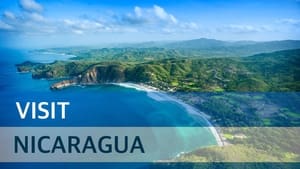
Visit Nicaragua
Looking for a few reasons why you should visit Nicaragua? Considering the country's two incredible coastlines, almost 20 volcanoes, lively colonial cities, abundant wildlife, rich culture, and delicious food, it won't be hard to convince you to put “visiting Nicaragua” at the top of your travel bucket list! Nicaragua, set between the Pacific Ocean and the Caribbean Sea, is a Central American nation known for its dramatic terrain of lakes, volcanoes and beaches. Vast Lake Managua and the iconic stratovolcano Momotombo sit north of the capital Managua. To its south is Granada, noted for its Spanish colonial architecture and an archipelago of navigable islets rich in tropical bird life.
2001
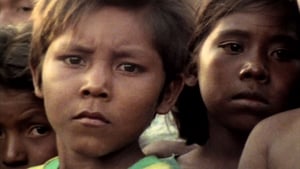
Ballad of the Little Soldier
A group of Miskito Indians use Nicaraguan child soldiers in their resistance against the Sandinistas.
1984
Nicaragua: A Nation's Right to Survive
How can a country survive when its jungle borders hold 4000 hostile troops?
1983

Monimbo Is Nicaragua
A documentary about Monimbo, a town in Nicaragua.
1981