Watch Ägypten - Wissen des Altertums (2013) Online Free
More Like This

La Cité oubliée de Ramsès II
2023
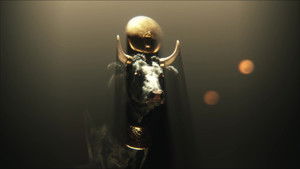
Égypte - Enquête sur la nécropole des taureaux sacrés
On the mythical site of Saqqara, the Apis bulls were buried for more than a thousand years in the immense underground necropolis of the Serapheum. Discovered in 1850 by the French Egyptologist Auguste Mariette, this place shelters a treasure of which a part is preserved in the Louvre. The collapse of the ceiling of one of the galleries had however prevented the archaeologist from venturing into the entire necropolis. More than 170 years later, the museum's Egyptologists are continuing the work of their famous predecessor. Investigating the cult of the Apis bull and the mysterious rituals that surrounded it, the team is especially looking for access to the unexplored parts, which have at least eight burial chambers, with the hope of finding intact tombs.
2023

The Egypt Code Breakers
By decoding ancient hieroglyphic texts, Jean-François Champollion gave voice to an enigmatic civilization, but behind his legendary feat is a mysterious brother who made it possible. The recent discovery of correspondence between Jean-François Champollion and his brother Jacques-Joseph now allows us to fully understand how a young, self-taught genius was able to make one of the most important discoveries of the 19th century. Without the ingenuity and unfailing support of his older brother, Jean-François would never have succeeded in solving this enigma, which had international repercussions. With animated sequences of their private correspondence, and with the help of archives and expert analysis, this film revisits this unique scientific, human and intellectual adventure to celebrate the bicentenary of the decoding of hieroglyphics.
2022

Tutankhamon: Titkok a sírból
Tutankhamun: Secrets of the Tomb (2022) In 1922, the tomb of Egyptian boy king Tutankhamun was unearthed. Now the extraordinary scientific truth of the 'Pharaoh's Curse' is revealed.
2022

Valley of the Kings: The Lost Tombs
With over 60 tombs, the Valley of the Kings is the most-famous burial ground on Earth. In the biggest Egyptian excavation ever, a team of archaeologists led by Zahi Hawass heads into the Western Valley to hunt for evidence of an undiscovered tomb.
2021
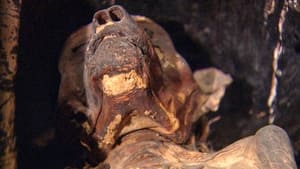
The Mysterious Mummified Dogs of Ancient Egypt
This documentary examines the mysterious practice of mummifying animals in ancient Egypt as researchers explore the labyrinth of Tuna el-Gebel.
2020
Le pouvoir des prêtresses égyptiennes
2019
Le monde de Khéops
2018
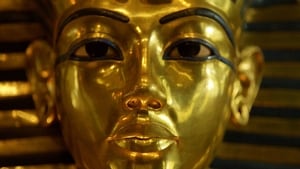
Tutankhamun: The Truth Uncovered
What killed King Tutankhamun? Ever since his spectacular tomb was discovered, the boy king has been the most famous pharaoh of all ancient Egypt. But his mysterious death, at just 19 years old, has never been explained. In this BBC One special, presenter Dallas Campbell reveals new scientific research and carries out unique experiments to get to the truth. For the first time, a virtual autopsy of Tut's mummified body reveals astonishing secrets about the pharaoh. Using CT scan data, the programme creates the first ever full size, scientifically accurate image of the real Tutankhamun. Brand new DNA analysis uncovers a shocking secret about Tut's family background, and the genetic trail of clues leads to a radical and revolutionary new theory to explain Tut's sudden and unexpected death. This is an epic detective story that uncovers the extraordinary truth of the boy behind the golden mask.
2014
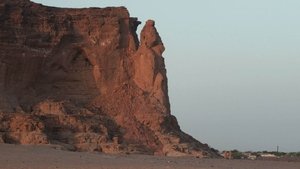
Rise of the Black Pharaohs
Around 800 BC, Kush, a little-known subject state of Egypt, rose up and conquered the Egyptians, enthroned its own Pharaohs, and ruled over the empire of King Tut for nearly 100 years. This unlikely chapter of history has been buried by the Egyptians and belittled by early archaeologists, who refused to believe that dark skinned Africans could have risen so high. But now, in the heart of Sudan, archeologists Geoff Emberling and Tim Kendall are bringing the truth about the Black Pharaohs to life.
2014
Die Pharaonin und das Goldland - Hatschepsuts Reise nach Punt
2010
The Pharaoh's Lost City
2008
Engineering Egypt
Egypt's two greatest Pharaohs, Khufu and Ramesses II, built their way to immortality through architectural marvels including the temples of Abu Simbel and the Great Pyramid of Giza
2007
Nefertiti and the Lost Dynasty
It is one of Egypt's enduring mysteries. What happened to Nefertiti and her husband, Akhenaten - the radical king, and likely father of King Tut? In a dark and mysterious tomb located in the Valley of the Kings, there is a small chamber with two mummies without sarcophagi or wrappings. At times, both have been identified as Queen Nefertiti by scholars, filmmakers and historians. But the evidence has been circumstantial at best.
2007
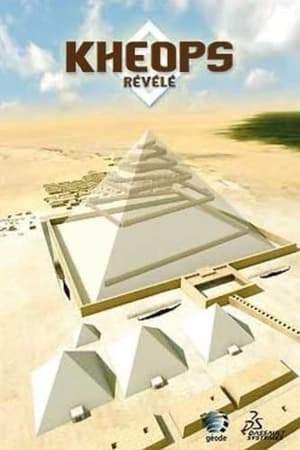
Khufu Revealed
The Great Pyramids are the only wonder of the ancient world that still stand today, the greatest of which is the pyramid of Khufu. Many theories have been offered to explain its construction, but none as convincing or unique as this one.
2007
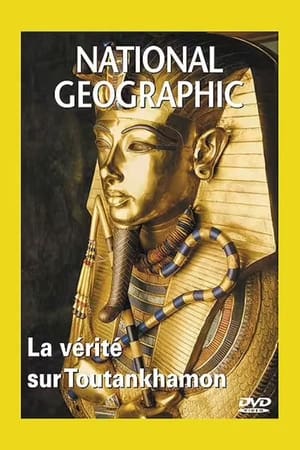
King Tut's Final Secrets
As part of a high-tech forensic probe into the demise of Egyptian Pharaoh Tutankhamun, scientists use X-rays and CT scans as they attempt to reach a conclusion about just how this famed king died. In addition, they explore the mysterious curse on explorers linked to Tut's tomb excavation.
2005

Egypt: Rediscovering a Lost World
Dramatization of the great discoveries of ancient Egypt, from the exploration of tombs in the early 1800s, to the unraveling of the Rosetta Stone to translate the ancient language on the tombs, to the discovery of Tutankhamun's tomb.
2005
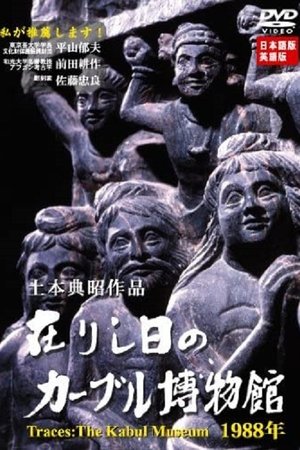
Traces: The Kabul Museum 1988
The Kabul National Museum, once known as the "face of Afghanistan," was destroyed in 1993. We filmed the most important cultural treasures of the still-intact museum in 1988: ancient Greco-Roman art and antiquitied of Hellenistic civilization, as well as Buddhist sculpture that was said to have mythology--the art of Gandhara, Bamiyan, and Shotorak among them. After the fall of the Democratic Republic of Afghanistan in 1992, some seventy percent of the contents of the museum was destroyed, stolen, or smuggled overseas to Japan and other countries. The movement to return these items is also touched upon. The footage in this video represents that only film documentation of the Kabul Museum ever made.
2003
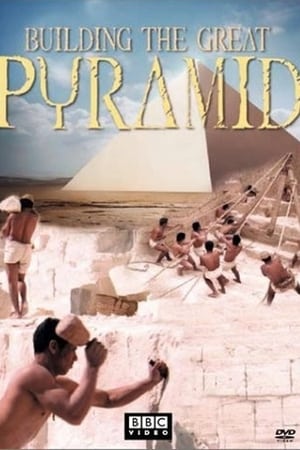
Pyramid
Of the Seven Wonders of the Ancient World, the Pyramid is the only one to survive. Many believe that even with our 21st-century technology, we could not build anything like it today. Based on the most up-to-date research and the latest archaeological discoveries, here is how the Pyramid came to be.
2002
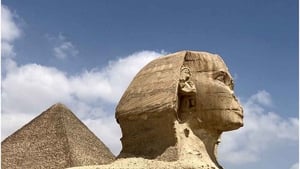
The Mystery of the Sphinx
Hosted by Charlton Heston, it explores the possibility that the Sphinx maybe older than expected. John Anthony West examines that water erosion on the Sphinx can pre-date it to 10,000 years old?. Other mysteries such as how they moved 200 ton stone blocks to build the pyramids, the secret chambers under the Sphinx and the links to the pyramids that are suggested on Mars.
1993