Watch Gypsy Blood (2014) Online Free
Roma are an important part of Ukraine's population. There are quite a large number of them living in the country—between fifty and one hundred thousand. This documentary shows the peculiarities of the Gypsy people's life in modern society. You will see the stories of five Gypsy barons who will talk about the traditions of their people and reveal some secrets that were previously known only to the Roma.
More Like This
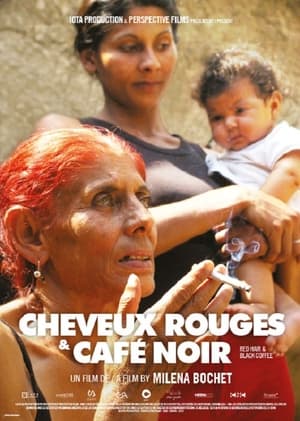
Red Hair and Black Coffee
Hermanovce, Slovak Republic. A Romani village located deep down in the valley, with old shacks and newer concrete ones. Four Romani women tell us about their day-to-day life through ancient habits, along with words that travel near borders with different worlds...
Vers d'autres chemins
Milana, Sephora, and Mario are between seventeen and twenty-six years old. They grew up in modest, stigmatized rural Manouche families. Unlike their parents, they have degrees and work as employees. They have dreams to fulfill.
2025

Figlio di Giano
2025
De caballos y guitarras
A musical, and also a reflection on watching, on trying to escape an anthropocentric gaze and also on watching itself in cinema. Featuring mares and horses: Triana, Víctor K, Bambi Sailor, San Special Solano, Buck Red Skin, Onkaia, Cool Boy, the donkey Agostino, the mule Guapa. And also Alfredo Lagos, Raül Refree, María Marín, Pepe Habichuela, Virgina García del Pino, María García Ruiz, Pilar Monsell, María Pérez Sanz.
2024
Suno
An experimental short documentary essay about the dreams of Roma women living in the ghetto in Kosice. Roma are one of the largest ethnic groups living in Slovakia. Despite this, integration into all spheres of society is difficult. And it should be noted that this applies not only to Slovakia. Luník IX houses the largest community of Romani people in Slovakia. Although originally built for 2,500 inhabitants, it is estimated that the population is now three times larger. Living standards are low, with services such as gas, water, and electricity cut off, as the majority of inhabitants are not paying rent or utilities fees.
2022
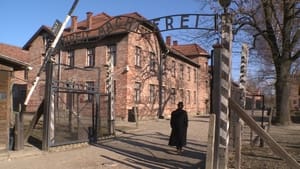
Requiem for Auschwitz - the film
13 years ago, director Bob Entrop made the film A piece of blue in the sky, the first film in the Netherlands that depicted the murder of almost 1 million Sinti and Roma during the Second World War. There is a taboo on what happened during the war, you don't talk about it with anyone and certainly not in front of a camera. Requiem for Auschwitz is a sequel, with the most valuable moments from the first film, supplemented with the grandchildren and the creation and performance of the 'Requiem for Auschwitz' by Sinti composer Roger Moreno Rathgeb by the Sinti and Roma Philharmonic from Frankfurt and a Jewish choir in the Berliner Dom in Berlin, during Holocaust Memorial Day. During his visit to Auschwitz in 2020 with four musicians from the Dutch Accompaniment Orchestra, Roger shows them the places that inspired him.
2022
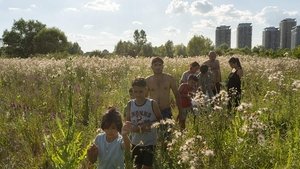
Acasă, My Home
In the wilderness of the Bucharest Delta, nine children and their parents lived in perfect harmony with nature for 20 years – until they are chased out and forced to adapt to life in the big city.
2020
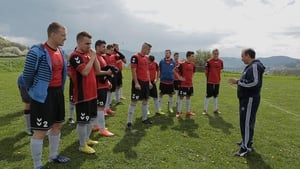
FC Roma
A team of Romany football players try to overcome prejudice in this Czech documentary.
2016
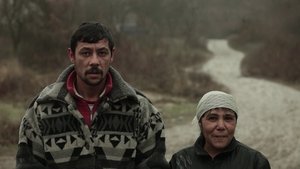
Loli Kali Shuba
Prominent Ukrainian/Italian documentary film director Oleksandr Balahura (most known for link) visits Roma neighborhoods and social events in Zakarpattia (Western Ukraine) and re-visits his earlier work, "Widow-Street", shot on same locations in 1991. He also screens "Widow-Street" to its characters, whom he meets again in 2013.
2013
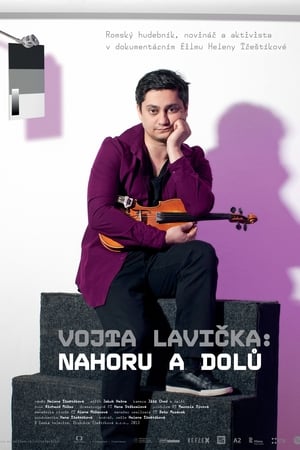
Vojta Lavička: Ups and Downs
Longitudinal documentary film was shot for past 16 years and the main protagonist is Roman musician and activist Vojta Lavička. Vojta is a master in violin play, who focuses not only on music but also deals with problems of his origin Roman nationality. Vojta is very active in media - he worked in the national radio and television, he worked in the NGO that organize street work for Roman ghettos around the Czech republic, Vojta worked also as a social worker. All together we can watch him struggling with the main topic of his life - his national minority and problems that are caused by living next to Czech majority. Aside this topic films discovers Vojta's private life and his fight for being a good musician and a good man.
2013
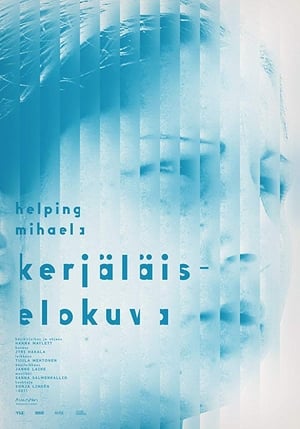
Helping Mihaela
A Roma beggar on his knees raises many extreme emotions: guilt, rage, sympathy and frustration. Most people just walk on by, but there is always someone willing to help. In this film, the director follows the confrontations between the Roma beggars from Romania and Finnish people, and is forced to question, over and over again, her own ideas about helping.
2011
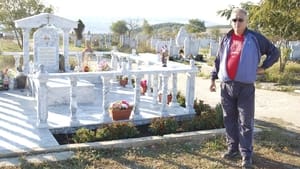
Concrete Pharaohs
Welcome to the picturesque world of the Kaldarash Roma – a closed community of no more than 1 million people all over the world. 'Concrete Pharaohs' take us on a journey into the lifestyle and traditions of the most hidden and intriguing Roma communities. A charismatic Gypsy baron will walk us through his stories and his new house. We will learn the hot trends in Roma tombstone design. We will go down into the underground homes of African granite, furnished with beds, wardrobes, stereos and a charged cell phone – a direct line to the other world. A celebration of life and afterlife in all of their manifestations.
2010

Django Reinhardt, trois doigts de génie
2010
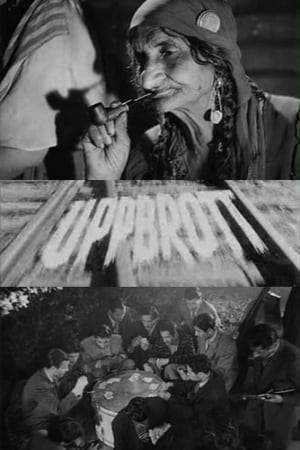
Break Up
A short about Romanis in Sweden breaking up camp and moving on.
1949
Tongóbriga (El espíritu de un lugar)
Roma Boys – The Love Story
The film explores the taboo subject of homosexuality within the Roma community through the personal story of a Roma activist who happens to be gay. Though his job has earned him respect among his peers, by coming out his status is in jeopardy. However, the desire to share his complex story prompted him to write a screenplay based on his life. Partly a documentary about his autobiographical script, the film switches between documentary and narrative storytelling. Owing to its distinctive style, the film offers a glimpse into the protagonist's world as he faces triple discrimination: as a Roma, as a gay man, and as a gay man in the Roma community.
2009
Romazsaruk
Carmen
A documentary about a young Finnish Romany Carmen, 11, who lives with her grandmother and aunt in the suburb of a small town in Northern Finland.
Pretty Dyana
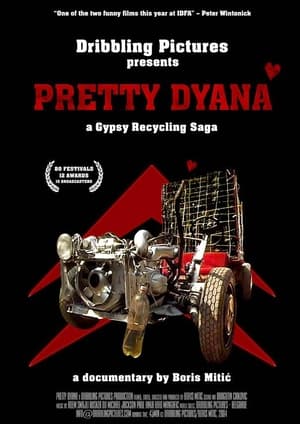
An intimate look at Gypsy refugees in a Belgrade suburb who make a living by transforming Citroen´s classic 2cv and Dyana cars into Mad Max-like recycling vehicles, which they use to collect card-board, bottles and scrap metal. These modern horses are much more efficent than the cart-pushing competition, but even more important, they also mean freedom, hope and style for their crafty owners. Even the car batteries are used as power generators in order to get some light, watch TV and recharge mobiles ! Almost an alchemist´s dream come true ! But police doesn´t always find these strange vehicles funny... Pretty Dyana is a very funny documentary, but sad in a way... " If Mitic had focused only on the terrible misery these people live in, the film would have been unbearable. Instead, you never know whether you should cry after you laugh, or the other way around " Sara Hultmanm, Goteborg Film Festival
2003
Nous, les Gitans
Alberto Spadolini, filmmaker and choreographer, dances to traditional Andalusian music. He pays tribute to the gypsy culture.
1951