Watch Glasgow, Love and Apartheid (2018) Online Free
In the year of Nelson Mandela’s centenary, Glasgow, Love and Apartheid is the story of one family’s fight against apartheid from Scotland and South Africa. Director, Dhivya Kate Chetty, follows her parents – a mixed, and once ‘illegal’, couple – on a trip back to South Africa where the family stories begin to unfold – protests, an uncle in jail, an ANC arms cache, a doctor on the run and a surprise connection with Mandela in hiding.
Cast
Dhivya-Kate Chetty
More Like This
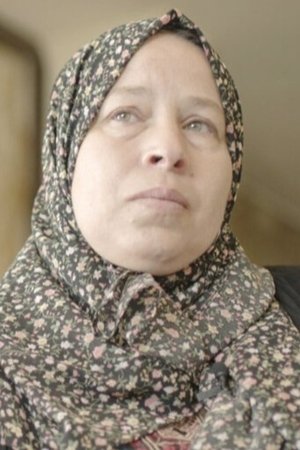
’48 | Resisting the big settlement
An attempt to express the daily experience of Palestinians excluded by an apartheid regime, exploring various aspects of the Israeli occupation. Through narratives from four different regions of Palestine, it culminates in a collective narrative of Palestinian resistance as an everyday act of survival and struggle.
2025

London Recruits
The story of the Londoners recruited to be freedom fighters during the South African apartheid during the 1960s.
2024

Excretapolitics
In Cape Town's informal settlements, created to segregate the racialized population during Apartheid, the South African government never built a sewage system, hence the absence of flush toilets. Each resident must therefore invent an individualized solution for disposing of his or her excrement. Excrétapolitiques is a documentary based on meetings with some twenty people who are fighting against this infrastructural injustice.
2024
An Orange Waiting to Be Eaten
2023

No Māori Allowed
When an academic unearths a forgotten history, residents of the small township of Pukekohe, including kaumātua who have never told their personal stories before, confront its deep and dark racist past.
2022
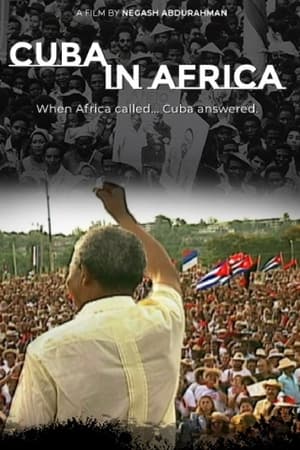
Cuba in Africa
The dramatic untold story of 420,000 Cubans– soldiers and teachers, doctors and nurses– who gave everything to end colonial rule and apartheid in Southern Africa.
2021
Cold Case Hammarskjöld
Ndola, Northern Rhodesia (currently Zambia), September 18, 1961. Swedish economist and diplomat Dag Hammarskjöld, Secretary General of the UN, dies mysteriously in a plane crash. Decades later, Danish journalist and filmmaker Mads Brügger and Swedish researcher Göran Björkdahl investigate the case in search of definitive closure.
2019
The State Against Mandela and the Others
South Africa, July 11th, 1963. Several members of the African National Congress, an organization declared illegal, are arrested in Rivonia, a country house near Johannesburg. The detainees, along with Nelson Mandela, imprisoned since 1962, are charged with serious crimes for their radical activism against the apartheid regime.
2018
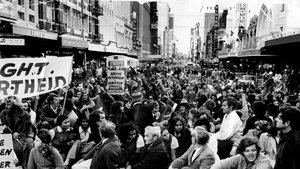
Born Free - Filhos da Revolução
2015
Palme's Secret Agent
At the height of the cold war a struggle broke out between Governments from all over the world as to which position to take about the system of apartheid in South Africa. Leading the fight was Olof Palmes' Swedish Government, which covertly funneled over US$ 1 billion to the resistance movement. This money was given without the knowledge of either the Parliament or the Swedish populace. At the center of the net in South Africa was a Swedish diplomat called Birgitta Karlström Dorph. Meanwhile at the UN the Swedes with their Scandinavian counterparts attempted to win the argument for economic sanctions. This led to bitter arguments which saw Palme leading the fight against the Reagan and Thatcher administrations.
2015

The Great Wall
‘The Great Wall has been completed at its most southerly point.’ So begins Kafka’s short story ‘At the Building of the Great Wall of China’, and so, at Europe’s heavily militarised south-eastern frontier, begins this film. In the shadow of its own narratives of freedom, Europe has been quietly building its own great wall. Like its famous Chinese precursor, this wall has been piecemeal in construction, diverse in form and dubious in utility. Gradually cohering across the continent, this system of enclosure and exclusion is urged upon a populace seemingly willing to accept its necessity and to contribute to its building.
2015

The 16th Man
Rugby Union has long been viewed in South Africa as a game for the white population, and the country’s success in the sport has been a true source of Afrikaner pride. When the 50-year-old policies and entrenched injustices of apartheid were finally overthrown in 1994, Nelson Mandela’s new government began rebuilding a nation badly in need of racial unity. So the world was watching when South Africa played host to the 1995 Rugby World Cup. Though they had only one non-white player, the South African Springboks gained supporters of all colors as they made an improbable run into the final match where they beat the heavily favored New Zealand team. When Mandela himself marched to the center of the pitch cloaked in a Springbok jersey and shook hands with the captain of the South African team, two nations became one. Oscar winner Morgan Freeman and director Cliff Bestall will tell the emotional story of that cornerstone moment and what it meant to South Africa’s healing process.
2010
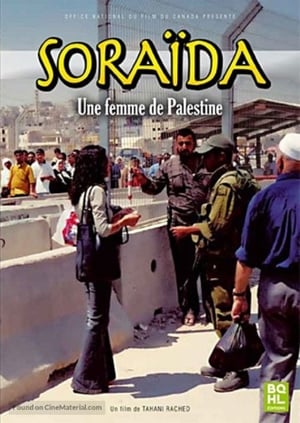
Soraida, a Woman of Palestine
Soraïda is a Palestinian woman living in Ramallah, in the occupied territories. In this city under siege and a strict curfew, she fights her own battle: despite the military occupation, violence and oppression, she is determined not to lose her humanity.
2004
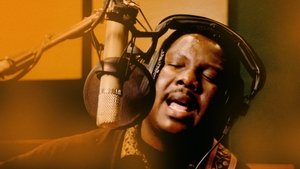
Amandla! A Revolution in Four-Part Harmony
The struggle to eradicate apartheid in South Africa has been chronicled over time, but no one has addressed the vital role music plays in this challenge. This documentary by Lee Hirsch recounts a fascinating and little-known part of South Africa's political history through archival footage, interviews and, of course, several mesmerizing musical performances.
2002
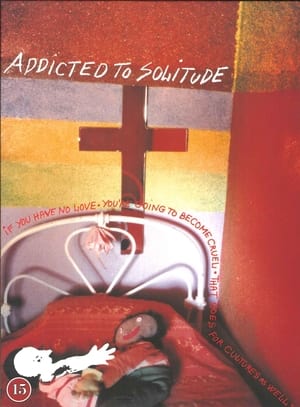
Addicted to Solitude
I traveled to South Africa to find a white family living on a desolate farm. I wanted to film how they faced the new days of equality after the fall of Apartheid. But I soon lost my way both on the endless roads and in my way. Instead, the film became a story about two very different women who both experienced a tragic loss in the midst of a white community not too fond of the future.
1999
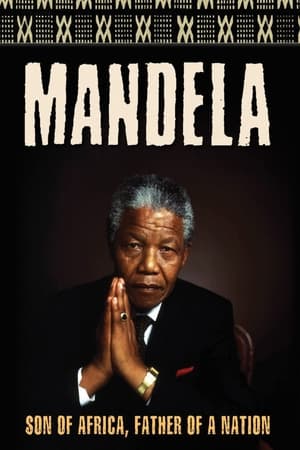
Mandela
A documentary that chronicles the life of South African leader Nelson Mandela. Mandela is probably best known for his 27 years of imprisonment, and for bringing an end to apartheid. But this film also sheds light on the little-known early period of Mandela's life.
1996
Death of Apartheid
The secret history of the negotiations that led to Mandela's release from prison, the ANC becoming the government of South Africa, and the end of apartheid.
1995
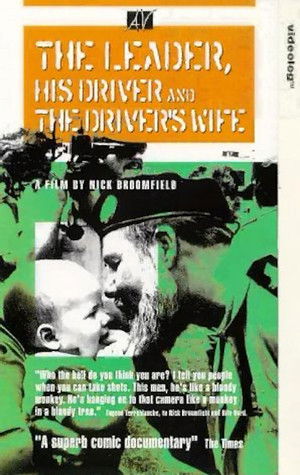
The Leader, His Driver, and the Driver's Wife
Nick Broomfield tries to interview Eugene Terre'Blanche, leader of the sinister neo-nazi AWB Afrikaner Party in South Africa. Cameras capture awkward interactions with skittish AWB supporters, combat training of militant youth, and the coveted interview itself. Broomfield's access to these events is made possible by the leader's driver, whose wavering allegiance to the movement is explored as well.
1991
South Africa: The White Laager
Explores the history of the Afrikaners and Afrikaner nationalism, and the development of apartheid and its relevance to South Africa's political situation today.
1977
End of Dialogue
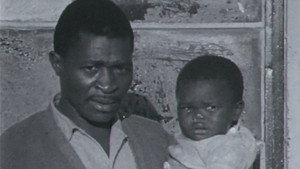
The first film to ever show what life was in South-Africa under the Apartheid state. The film was released as an anonymous production under the aegis of the Pan Africanist Congress in 1970.
1970