Watch Gasland (2010) Online Free
It is happening all across America-rural landowners wake up one day to find a lucrative offer from an energy company wanting to lease their property. Reason? The company hopes to tap into a reservoir dubbed the "Saudi Arabia of natural gas." Halliburton developed a way to get the gas out of the ground-a hydraulic drilling process called "fracking"-and suddenly America finds itself on the precipice of becoming an energy superpower.
Cast
Josh Fox, Aubrey K. McClendon, Maurice Hinchey, Pat Fernelli, Ron Carter, Jean Carter, Norma Fiorentino, Debbie May, Debbie May, Mike Markham, Marsha Mendenhall, Dave Neslin
More Like This
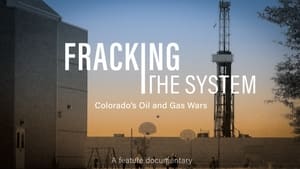
Fracking the System: Colorado's Oil and Gas Wars
Fracking the System is a political thriller documentary from the front lines of climate justice activism in Colorado. When a fracking mega-site gets moved from a White neighborhood to a BIPOC neighborhood, a concerned mother fights to try and stop it. This is an investigative exposé about the harms of fracking, the lengths to which the government is complacent with industrial pollution, and the nefarious tactics that the oil and gas industry uses to undermine democratic elections.
2024
Changing Landscapes
Changing Landscapes meditates upon the care and carelessness humans brought to bear on the environment in Scotland. Rare archive combines with performances from the BBC Scottish Symphony Orchestra.
2022
Amazônia, a Nova Minamata?
2022
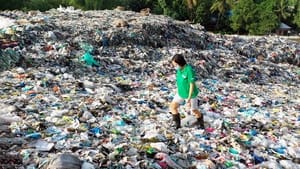
Why Plastic: Coca Cola/American Plastic
Whales beached after ingesting plastic, oceans soiled: a quarter of marine waste today comes from cans and plastic bottles. The drinks industry produces 470 billion single-use bottles each year, 25% of which come from Coca-Cola. Although the world's largest soft drink producer has set ambitious targets to prevent this environmental pollution, it has often failed to do so. In the 1950s, the company sold its drink exclusively in returnable glass bottles, which it washed and refilled. Two decades later, these were replaced by disposable bottles - a decision whose devastating effects still linger.
2021
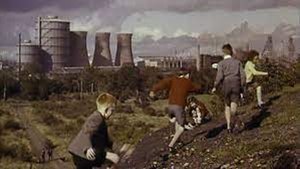
Living Proof: A Climate Story
The film reveals Scotland's post-war history as seen through the lens of current debate, inviting audiences on a journey to revisit the promises of the past and consider how they relate to our future on this planet. Was climate change inevitable? Can we break free from a boom-and-bust mentality?
2021

The Cost of Cobalt
In the cobalt mining areas of Katanga in the Democratic Republic of the Congo (DRC), babies are being born with horrific birth defects. Scientists and doctors are finding increasing evidence of environmental pollution from industrial mining which, they believe, may be the cause of a range of malformations from cleft palate to some so serious the baby is stillborn. More than 60% of the world’s reserves of cobalt are in the DRC and this mineral is essential for the production of electric car batteries, which may be the key to reducing carbon emissions and to slowing climate change. In The Cost of Cobalt we meet the doctors treating the children affected and the scientists who are measuring the pollution. Cobalt may be part of the global solution to climate change, but is it right that Congo’s next generation pay the price with their health? Many are hoping that the more the world understands their plight, the more pressure will be put on the industry here to clean up its act.
2021
La bataille de Rabaska
2018
Unfractured
Chanda Chevannes follows scientist Dr. Sandra Steingraber as she makes speeches against fracking and gets arrested protesting “the industrialization of the Finger Lakes.”
2017
The Bentley Effect
When the Northern Rivers of NSW community found their home being threatened by gas field industrialization, a critical mass of citizens from all walks of life responded to the call.Told through the eyes of the "Protectors" over a five-year period and inter-cut with fresh insight from some of the world's leading social commentators, this feature documentary captures and celebrates what is described as the non-violent 'Eureka Stockade' of our time.
2017
From the Ashes
Capturing Americans in communities across the country as they wrestle with the legacy of the coal industry and what its future should be under the Trump Administration. From Appalachia to the West’s Powder River Basin, the film goes beyond the rhetoric of the “war on coal” to present compelling and often heartbreaking stories about what’s at stake for our economy, health, and climate.
2017
Th (Part 11: Dr. Helen Caldicott)
Dr. Helen Caldicott is the most prominent anti-nuclear activist in the world. She's been featured on CNN, 60 Minutes, CBC and Democracy Now. In the 80s, Helen Caldicott campaigned against nuclear weapons testing in the pacific (still responsible today for the majority of tritium we're exposed to), and against the notion of a winnable nuclear war. She was nominated for a Nobel Peace Prize for her efforts. She has always made inaccurate statements regarding civilian nuclear power. But, since the Fukushima-Diachii radiation release has caused (and is projected to cause) zero fatalities... http://www.unis.unvienna.org/unis/en/... ...her tone has changed when speaking to supporters. This has not been acknowledged by prime-time media, as they continue to use her as a source. Any person or media outlet should check Caldicott's history of statements (on any subject) against a domain expert before using her as a source.
2014
IceDream The Iceberg Project
2010
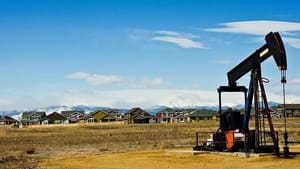
Split Estate
This compelling Emmy Award winning documentary shows the dirty side of hydraulic fracturing and natural gas, an energy source the industry touts as a clean alternative to fossil fuels.
2009
The End of Suburbia: Oil Depletion and the Collapse of the American Dream
Since World War II North Americans have invested much of their newfound wealth in suburbia. It has promised a sense of space, affordability, family life and upward mobility. As the population of suburban sprawl has exploded in the past 50 years Suburbia, and all it promises, has become the American Dream. But as we enter the 21st century, serious questions are beginning to emerge...
2004
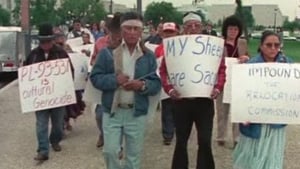
Broken Rainbow
Documentary chronicling the government relocation of 10,000 Navajo Indians in Arizona.
1985

Propaganda Message
A cartoon film about the whole heterogeneous mixture of Canada and Canadians, and the way the invisible adhesive called federalism makes it all cling together. That the dissenting voices are many is made amply evident, in English and French. But this animated message also shows that Canadians can laugh at themselves and work out their problems objectively.
1974
Survival of Spaceship Earth
Earth's environmental crisis--brought about by uncontrolled technological progress--is endangering life on a global scale. At the core of the threats to the planet - wars, overpopulation, pollution, and the depletion of natural resources - is the inadequacy of the nation state to come to terms with the surmounting problems of twentieth century living. What is urgently needed is the kind of international cooperation where nation states relinquish part of their sovereignty to a world body entrusted with the management of mankind's future.
1972
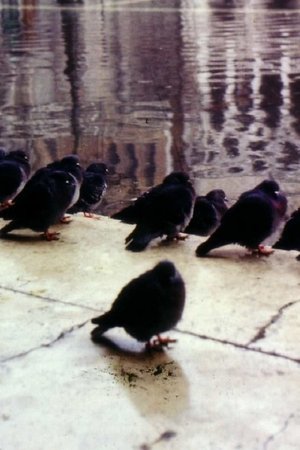
City by the Sea, or how to survive in Venice
Yannick Bellon's documentary paints a portrait of a city torn between the problem of unsanitary housing, pollution corroding walls and statues, and the recurring and increasing floods—all consequences of human activity. Faced with job shortages and rampant speculation, the overarching question arises of how industries can coexist with the city of Venice. Allowing them to develop risks destroying it; driving them out risks turning it into a museum, causing its inhabitants, and thus its soul, to leave.
1970
Voda na venkově
1951
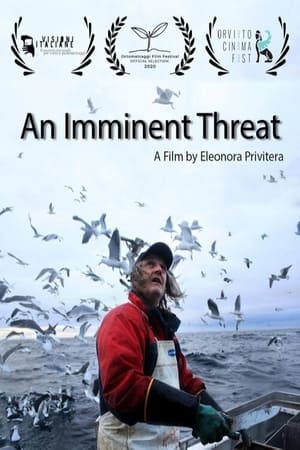
An Imminent Threat
“An Imminent Threat” follows a fisherman activist, Yngve Larsen, who fights against oil and gas drilling activities in north of Norway. Will Yngve succeed in avoiding the extinction of many species of fish and thus irreversible damage to our planet?